

Understanding Lip-Tie: A Hidden Breastfeeding Challenge
Breastfeeding is one of the most beautiful bonds between mother and baby, providing essential nutrition, immunity, and emotional connection. However, when breastfeeding becomes painful, frustrating, or impossible, many Dubai mothers don’t realize that a simple anatomical condition called lip-tie might be the cause.
At myPediaClinic Dubai, our team of pediatricians and pediatric dentists specialize in diagnosing and treating lip-tie, helping mothers and babies overcome breastfeeding challenges and establish successful feeding patterns. This comprehensive guide explains everything you need to know about lip-tie and how early intervention can transform your breastfeeding journey.
What is Lip-Tie?
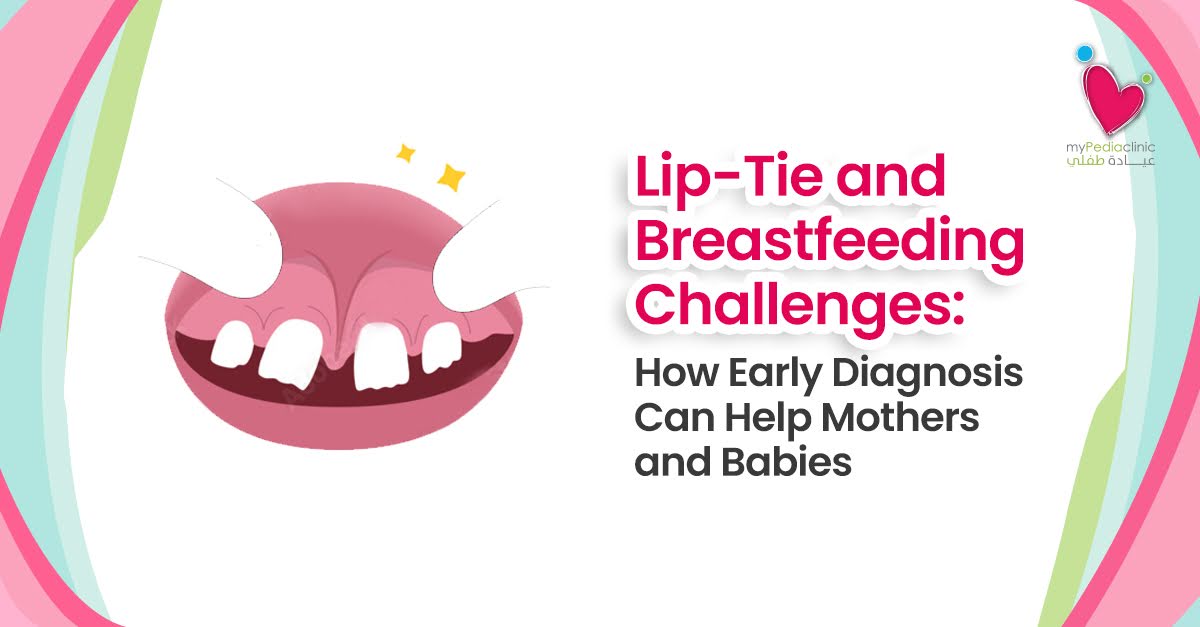
Lip-tie, also known as maxillary labial frenulum restriction, occurs when the frenulum (the thin band of tissue connecting the upper lip to the upper gum) is abnormally tight, thick, or short. This restricts the upper lip’s mobility, preventing it from flanging outward properly during breastfeeding.
Types of Lip-Tie
Lip-ties are classified by severity using the Kotlow classification system:
- Class I (Mild): Frenulum attaches in the mucosa, minimal restriction
- Class II (Moderate): Attachment extends into the gingiva (gum tissue)
- Class III (Severe): Frenulum extends into the papilla (tissue between front teeth)
- Class IV (Very Severe): Attachment extends into the palate, significant restriction
While mild lip-ties may cause no problems, moderate to severe cases often create significant breastfeeding difficulties that warrant treatment.
How Lip-Tie Affects Breastfeeding
Successful breastfeeding requires your baby to achieve a deep latch, creating a seal with both upper and lower lips flanged outward around the areola. A lip-tie prevents this proper seal, leading to multiple challenges:
Impact on Baby
- Poor latch: Unable to flange upper lip, resulting in shallow latch
- Inefficient milk transfer: Baby works harder but gets less milk
- Excessive air intake: Broken seal allows air swallowing during feeding
- Inadequate nutrition: Insufficient milk intake affects growth
- Slow weight gain: Failure to meet expected growth milestones
- Prolonged feeding sessions: May feed for 45+ minutes trying to get enough milk
- Frequent feeding: Cluster feeding due to incomplete feeds
- Clicking sounds: Audible loss of suction during nursing
- Gassiness and colic: Swallowed air causes discomfort
- Reflux: Incomplete digestion and air intake
- Frustration at breast: May cry, pull away, or refuse to nurse
Impact on Mother
- Nipple pain and trauma: Shallow latch causes compression rather than proper suction
- Cracked or bleeding nipples: Severe tissue damage from improper latch
- Nipple blanching: White, painful nipples due to compression
- Mastitis: Incomplete breast drainage increases infection risk
- Plugged ducts: Poor milk removal causes blockages
- Low milk supply: Inadequate breast stimulation reduces production
- Premature weaning: Pain and frustration lead mothers to give up
- Emotional distress: Anxiety, guilt, or depression about feeding difficulties
Recognizing the Signs and Symptoms
Physical Signs in Baby
- Visible tight band of tissue from upper lip to gum when lip is lifted
- Upper lip doesn’t flange outward (tucks under instead)
- White milk line visible across upper lip after feeding (indicating shallow latch)
- Heart-shaped or notched appearance when lip is pulled up
- Gap between upper front teeth (diastema) in older infants/toddlers
- Difficulty lifting upper lip voluntarily
Feeding Symptoms
- Difficulty latching or maintaining latch
- Repeated latching and unlatching
- Clicking or smacking sounds while feeding
- Milk dribbling from corners of mouth
- Feeding sessions exceeding 30-45 minutes
- Baby appears hungry shortly after feeding
- Excessive gassiness, hiccups, or spit-up
- Weight gain below expected curve (less than 5-7 oz per week initially)
- Falling asleep at breast from exhaustion rather than fullness
Maternal Symptoms
- Sharp, burning, or stabbing nipple pain during and after feeds
- Nipple shape distortion (flattened, creased, or lipstick-shaped) after nursing
- Visible cracks, bleeding, or scabbing on nipples
- Breast engorgement persisting despite frequent feeding
- Feeling like breasts never fully empty
- Low milk supply despite pumping and frequent nursing
Lip-Tie Often Occurs with Tongue-Tie
Research shows that 25-50% of babies with lip-tie also have tongue-tie (ankyloglossia). Both conditions affect breastfeeding, and addressing only one may not fully resolve feeding difficulties. During assessment at myPediaClinic Dubai, our pediatric dentists perform comprehensive oral examinations to identify all restrictions.
Combined Impact
When both conditions are present:
- Breastfeeding challenges are typically more severe
- Milk transfer is significantly compromised
- Maternal pain is often intense
- Both restrictions should ideally be released in the same procedure
- Recovery and improvement may be more dramatic after release
Diagnosis: What to Expect
Clinical Examination
A pediatric dentist or pediatrician trained in infant oral restrictions will:
- Visually inspect the frenulum attachment and thickness
- Assess lip mobility and elasticity
- Check for tongue-tie and other oral restrictions
- Evaluate palate shape and oral structures
- Observe compensatory movements
Functional Assessment
- Observe a complete feeding session
- Assess latch depth and quality
- Listen for clicking or signs of poor seal
- Examine infant’s suck pattern and strength
- Review infant’s weight gain pattern
- Discuss maternal symptoms and pain levels
Diagnostic Criteria
According to research, lip-tie diagnosis should be based on functional impact rather than appearance alone. Treatment is recommended when the restriction demonstrably affects feeding, not simply because a tight frenulum is visible.
Treatment: Frenectomy Procedure
When lip-tie significantly impairs breastfeeding, a frenectomy (also called frenotomy) is performed to release the restriction.
Laser Frenectomy at myPediaClinic Dubai
We use advanced radiofrequency laser technology offering significant advantages:
- Precision: Controlled, accurate tissue removal
- Minimal bleeding: Laser cauterizes as it cuts
- Reduced pain: Less tissue trauma than scissors
- Lower infection risk: Laser sterilizes while cutting
- No sutures needed: Wound heals naturally
- Faster healing: Typically 1-2 weeks for complete healing
- Immediate feeding: Baby can breastfeed right after procedure
The Procedure
- Preparation: Baby is swaddled securely for safety
- Anesthesia: Topical numbing gel applied (local anesthesia for older infants if needed)
- Release: Laser precisely releases the frenulum (takes 30-60 seconds)
- Post-procedure: Baby returned to mother immediately
- First feed: Breastfeeding attempted right away for comfort and assessment
Pain and Discomfort
The upper lip has fewer nerve endings than other oral tissues, so discomfort is typically minimal:
- Most babies cry briefly during restraint, not from pain
- Babies usually calm immediately when returned to mother
- Many feed successfully within minutes of procedure
- Mild fussiness may occur for 24-48 hours
- Over-the-counter pain relief (acetaminophen) rarely needed
Post-Procedure Care and Exercises
Why Exercises Matter
Unlike other surgical wounds that benefit from staying still, lip-tie release sites must be kept mobile to prevent reattachment. Stretching exercises are essential for optimal healing.
Lip Stretches
Perform 4-6 times daily for 2-3 weeks:
- Wash hands thoroughly
- Gently lift upper lip to expose the release site
- Use clean finger to stretch lip upward toward nose
- Hold for 3-5 seconds
- Release and comfort baby
- Repeat 4-6 times per session
Additional Care Instructions
- Breastfeed frequently for comfort and wound care (breast milk has antibacterial properties)
- Avoid introducing bottles for 48 hours if possible (to encourage optimal latch practice)
- Keep the area clean; no special cleaning required beyond normal feeding
- White/yellow film at release site is normal healing tissue, not infection
- Contact your provider if you notice excessive bleeding, signs of infection, or severe pain
Expected Outcomes and Timeline
Immediate Improvements (Hours to Days)
- Deeper latch immediately noticeable
- Baby’s lips flange outward properly
- Reduced clicking sounds
- Longer periods of sustained sucking
- Less air intake and gassiness
Short-Term Improvements (1-2 Weeks)
- Significant reduction in nipple pain
- Healing of damaged nipples
- More efficient milk transfer
- Shorter feeding sessions
- Baby more satisfied after feeds
- Improved weight gain trajectory
Long-Term Benefits (Weeks to Months)
- Established successful breastfeeding relationship
- Adequate milk supply
- Healthy weight gain
- Reduced reflux and digestive issues
- Better oral development
- Prevention of future dental problems
- Reduced risk of speech difficulties
Success Rates
Research indicates that 80-95% of mothers report significant improvement in breastfeeding after lip-tie release when:
- Diagnosis is accurate and functional
- Procedure is performed correctly
- Post-procedure exercises are completed diligently
- Support from lactation consultant is provided
Working with a Lactation Consultant
Lip-tie release is most successful when combined with lactation support:
Pre-Procedure
- Assessment of current latch and feeding patterns
- Identification of all breastfeeding challenges
- Confirmation that lip-tie is contributing to problems
- Establishing baseline measurements
Post-Procedure
- Guidance on achieving optimal latch with new lip mobility
- Helping baby unlearn compensatory feeding patterns
- Addressing any remaining breastfeeding challenges
- Monitoring milk transfer and weight gain
- Emotional support during adjustment period
At myPediaClinic Dubai, we work closely with certified lactation consultants to provide comprehensive feeding support before and after frenectomy procedures.
Long-Term Implications of Untreated Lip-Tie
While some mild lip-ties cause no lasting problems, untreated moderate to severe cases can lead to:
Dental Issues
- Gap between front teeth (diastema)
- Increased risk of tooth decay (tight frenulum traps food and bacteria)
- Gum recession in front teeth
- Difficulty with oral hygiene
Speech Challenges
- Difficulty with sounds requiring upper lip mobility (B, P, M, W)
- Articulation problems
- May require speech therapy
Social and Functional Issues
- Difficulty playing wind instruments
- Challenges with kissing or social activities
- Self-consciousness about gap between teeth
- Messy eating due to poor lip seal
Frequently Asked Questions
How do I know if my baby’s breastfeeding problems are caused by lip-tie or something else?
Answer: Lip-tie is one of several possible causes of breastfeeding difficulties. Other factors include tongue-tie, poor positioning, low milk supply, nipple confusion, oral dysfunction, or medical conditions. The key indicators suggesting lip-tie include: visible tight frenulum restricting lip movement, inability of upper lip to flange outward during nursing, shallow latch despite positioning changes, clicking sounds, and persistent nipple pain even with proper positioning. However, professional assessment is essential. At myPediaClinic Dubai, our specialists perform comprehensive evaluations examining all potential causes of feeding difficulty. We only recommend frenectomy when the lip-tie demonstrably contributes to functional problems, not based on appearance alone.
At what age should lip-tie be treated?
Answer: Lip-tie can be treated at any age, but earlier is generally better if it’s causing breastfeeding problems. The ideal time for treatment is when feeding difficulties become apparent, often within the first few weeks of life. Early release allows mothers and babies to establish successful breastfeeding without weeks or months of pain and frustration. However, successful procedures can be performed on older infants, toddlers, and even adults. For older children, treatment may be recommended before permanent teeth erupt (around age 6-7) to prevent dental complications, or if speech difficulties develop. The procedure itself is actually simpler in newborns because there are fewer nerve endings and blood vessels in the infant frenulum.
Will the frenulum grow back after release?
Answer: True regrowth is very rare, but reattachment can occur if post-procedure exercises aren’t performed diligently. The reattachment rate is approximately 5-10% when parents don’t complete the recommended stretches. This is why aftercare exercises are crucial. By lifting the lip and stretching the release site 4-6 times daily for 2-3 weeks, you keep the wound edges separated during healing, preventing them from fusing back together. While these exercises may seem uncomfortable for your baby, they last only seconds and prevent the need for repeat procedures. Most babies tolerate stretches well when done confidently and quickly. If reattachment does occur, a second release procedure may be necessary, emphasizing the importance of proper aftercare the first time.
Can lip-tie affect bottle-feeding too?
Answer: Yes, lip-tie can affect bottle-feeding, though typically less severely than breastfeeding. Bottle-feeding challenges from lip-tie include: poor seal around bottle nipple causing milk leakage, excessive air intake leading to gas and colic, prolonged feeding times, and clicking sounds. However, bottle nipples are firmer and shaped differently than the breast, sometimes allowing babies to compensate more effectively. Some parents notice their lip-tied baby manages bottles better than breast, which can paradoxically make breastfeeding seem like the problem when the anatomical restriction is actually the cause. If your baby struggles with both breast and bottle, or if you want to establish exclusive breastfeeding, addressing the lip-tie can help. Our Dubai pediatric team evaluates the full feeding picture to determine if treatment would benefit your child.
How soon after the procedure will breastfeeding improve?
Answer: Improvement timeline varies between mother-baby pairs. Many families notice immediate differences: deeper latch, lips flanging properly, reduced clicking, and less nipple pain right away. However, complete improvement typically takes 1-4 weeks as both mother and baby adjust. Babies who developed compensatory feeding patterns (aggressive sucking, using gums instead of proper latch) need time to unlearn these habits and develop new muscle memory. Mothers’ damaged nipples need time to heal before feeding becomes comfortable. Most mothers report 50-70% improvement within the first week and 80-95% improvement by 2-4 weeks. Working with a lactation consultant accelerates this process. Rarely, if no improvement occurs after 2 weeks, other factors may be contributing, and additional support should be sought. Patience and continued practice are key during this adjustment period.
Why Choose myPediaClinic Dubai for Lip-Tie Treatment?
At myPediaClinic Dubai, we provide comprehensive, family-centered care for lip-tie and all breastfeeding challenges:
Expert Team
- Board-certified pediatricians specializing in infant feeding
- Experienced pediatric dentists trained in frenectomy procedures
- Collaboration with certified lactation consultants
- Hundreds of successful lip-tie releases performed
Advanced Technology
- State-of-the-art radiofrequency laser for precise, comfortable procedures
- Minimal bleeding, pain, and recovery time
- Sterile, child-friendly environment
Comprehensive Support
- Thorough pre-procedure assessment
- Clear demonstration of aftercare exercises
- Written instructions for home care
- Follow-up appointments to monitor healing and feeding improvement
- Lactation consultant coordination
- Support for mothers struggling with feeding challenges
Convenient Dubai Location
- Centrally located for easy access
- Flexible appointment scheduling
- Same-week appointments for urgent feeding concerns
- Multilingual staff supporting diverse families
Take the First Step Toward Breastfeeding Success
If you’re experiencing breastfeeding pain, frustration, or challenges that make nursing feel impossible, don’t suffer in silence. Lip-tie is a treatable condition, and help is available.
Contact myPediaClinic Dubai today to schedule a comprehensive feeding assessment. Our caring team will evaluate your baby for lip-tie and other oral restrictions, discuss your feeding challenges, and develop a personalized treatment plan to help you and your baby succeed.
Breastfeeding shouldn’t hurt. With expert care, you and your baby can enjoy the beautiful bonding experience that breastfeeding was meant to be. Let us help you overcome lip-tie and achieve the feeding relationship you deserve.