

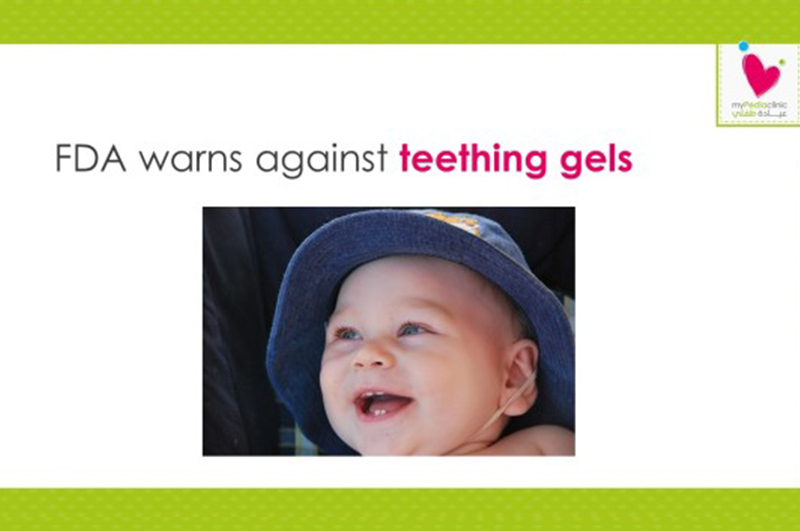
FDA Warns Against Homeopathic Teething Tablets and Gels: Safe Alternatives for Parents in Dubai
Is your baby experiencing teething discomfort? Are you considering homeopathic teething tablets or gels to help soothe your child? At myPediaClinic in Dubai Healthcare City, we want parents to understand the important FDA warning about homeopathic teething products and learn about safe, effective alternatives for managing teething pain.
Dr. Medhat Abu-Shaaban and Dr. Yasmin Kottait, our award-winning pediatricians in Dubai, strongly advise parents to avoid homeopathic teething tablets and gels due to serious safety concerns. This comprehensive guide explains the FDA warning, why these products are dangerous, what symptoms to watch for, and safe alternatives that actually work to relieve your baby’s teething discomfort.
Understanding the FDA Warning
The United States Food and Drug Administration (FDA) issued a strong warning to parents and caregivers about homeopathic teething tablets and gels. This warning has important implications for families worldwide, including those in Dubai and the UAE.
What the FDA Found
The FDA issued warnings about homeopathic teething products after discovering:
- Inconsistent ingredient amounts: Products contained varying levels of active ingredients, sometimes far exceeding labeled amounts
- Toxic levels of belladonna: Some products had dangerous amounts of this poisonous plant
- Serious adverse events: Reports of seizures, difficulty breathing, lethargy, excessive sleepiness, muscle weakness, skin flushing, constipation, difficulty urinating, and agitation in infants and children
- Deaths: Ten infant deaths were associated with these products
- Lack of proven benefit: No evidence that these products are safe or effective for teething
Which Products Are Affected
The FDA warning applies to homeopathic teething products including:
- Tablets: Dissolvable tablets marketed for teething relief
- Gels: Topical gels applied to babies’ gums
- Various brands: Multiple manufacturers’ products were found to be dangerous
- Products with belladonna: Especially those listing belladonna as an ingredient
Why This Matters for Families in Dubai
While the FDA is a US regulatory body, its findings are based on scientific evidence that applies universally:
- Global distribution: These products are sold internationally, including in Dubai
- Universal risk: The dangers affect all babies regardless of location
- Unregulated market: Homeopathic products often face less regulation than conventional medicines
- Parental awareness: Many parents worldwide are unaware of these risks
The Dangers of Belladonna
Belladonna, also known as deadly nightshade, is a poisonous plant that has no place in products for babies. Understanding why this ingredient is dangerous helps parents appreciate the seriousness of the FDA warning.
What Is Belladonna?
Belladonna comes from the Atropa belladonna plant:
- Toxic plant: All parts of the plant are poisonous
- Active compounds: Contains atropine, scopolamine, and hyoscyamine
- Historical uses: Used in very controlled medical applications
- Dangerous for children: Especially risky for infants and young children
How Belladonna Affects the Body
Belladonna interferes with normal body functions:
- Nervous system: Affects nerve signal transmission
- Heart rate: Can cause rapid or irregular heartbeat
- Breathing: May lead to respiratory problems
- Consciousness: Can cause drowsiness, lethargy, or agitation
- Multiple systems: Affects various organs and body functions
Symptoms of Belladonna Poisoning
Parents should recognize these warning signs:
- Seizures: Uncontrolled muscle movements
- Difficulty breathing: Labored or irregular breathing
- Lethargy: Unusual sleepiness or lack of responsiveness
- Excessive sleepiness: More sleep than normal
- Muscle weakness: Reduced muscle tone or strength
- Skin flushing: Red, warm skin
- Constipation: Difficulty passing stool
- Difficulty urinating: Reduced urine output
- Agitation: Unusual irritability or restlessness
The Problem with Homeopathic Products
Beyond the specific issue of belladonna, homeopathic products in general raise safety and effectiveness concerns that parents should understand.
What Is Homeopathy?
Homeopathy is an alternative medicine system based on:
- “Like cures like”: The idea that substances causing symptoms can cure those symptoms when diluted
- Extreme dilution: Active ingredients are diluted many times
- Unproven theory: Scientific evidence does not support homeopathic principles
- Controversial practice: Not accepted by mainstream medicine
Regulatory Issues
Homeopathic products face different regulations than conventional medicines:
- Less stringent testing: Not required to prove safety and effectiveness
- Manufacturing standards: May not meet the same quality control standards
- Labeling inconsistencies: Actual contents may differ from labels
- Variable regulation: Rules differ by country
Why They Are Dangerous for Babies
Infants are particularly vulnerable:
- Small body size: Even small amounts of toxic substances are dangerous
- Developing systems: Immature organs are more sensitive to toxins
- Cannot communicate: Babies cannot tell you they feel unwell
- Rapid progression: Symptoms can worsen quickly in infants
Understanding Teething
To manage teething effectively, parents need to understand what teething is and what to expect. This helps distinguish normal teething symptoms from signs of illness.
When Does Teething Begin?
Teething typically follows this timeline:
- First teeth: Usually appear around 6 months of age
- Can vary: Some babies get teeth as early as 3 months or as late as 12 months
- Lower front teeth first: Central incisors typically emerge first
- Complete by age 3: All 20 primary teeth usually in by age 3
Normal Teething Symptoms
Common signs that your baby is teething:
- Drooling: Increased saliva production
- Gum swelling: Red, swollen gums where teeth are emerging
- Irritability: Fussiness and general discomfort
- Chewing: Desire to bite and chew on objects
- Mild temperature: Slight increase in temperature (not a true fever)
- Changes in eating: May be less interested in feeding
- Sleep disruption: May wake more frequently at night
What Is NOT Caused by Teething
Parents often blame teething for symptoms that actually indicate illness:
- High fever: Fever above 38°C (100.4°F) is not from teething
- Diarrhea: Not a teething symptom despite common belief
- Vomiting: Indicates illness, not teething
- Rash: Except mild rash around mouth from drool
- Cough: Not caused by teething
- Ear infection: Separate illness that may coincide with teething
Safe and Effective Teething Relief
Parents don’t need dangerous homeopathic products to help their teething babies. Many safe, effective alternatives provide real relief.
Cold Therapy
Cold numbs gums and reduces inflammation:
- Cold washcloth: Wet a clean washcloth, refrigerate it, and let baby chew on it
- Refrigerated teething rings: Solid teething rings (not gel-filled) can be chilled
- Cold spoon: A clean, refrigerated metal spoon applied to gums
- Cold food: For babies eating solids, cold applesauce or yogurt
- Never freeze: Frozen items are too hard and can damage gums
Gentle Pressure
Counter-pressure helps relieve discomfort:
- Clean finger: Gently rub baby’s gums with a clean finger
- Firm teething toys: Rubber or silicone teething rings
- Textured toys: Various textures for baby to explore
- Mesh feeders: For older babies, frozen fruit in a mesh feeder
Distraction
Keeping baby occupied helps:
- Extra cuddles: Comfort and attention
- Play activities: Engaging toys and games
- New experiences: Change of scenery or routine
- Songs and stories: Soothing activities
Over-the-Counter Pain Relief
When other methods aren’t enough:
- Acetaminophen: For babies 3 months and older (with pediatrician approval)
- Ibuprofen: For babies 6 months and older (with pediatrician approval)
- Correct dosing: Always use the correct dose for your baby’s weight
- Consult first: Check with your pediatrician at myPediaClinic before giving any medication
Products to Avoid
Besides homeopathic teething products, other items should be avoided for teething relief.
Benzocaine Gels
Topical oral pain relievers containing benzocaine:
- FDA warning: Also warned against by FDA
- Methemoglobinemia risk: Can cause a rare but serious blood disorder
- Reduced oxygen: Affects the blood’s ability to carry oxygen
- Dangerous for infants: Especially risky for children under 2
Amber Teething Necklaces
Popular but dangerous accessories:
- Choking hazard: Beads can break off and be aspirated
- Strangulation risk: Necklace can get caught on objects
- No proven benefit: No scientific evidence they help with teething
- Not recommended: Pediatricians advise against these
Gel-Filled Teething Rings
These pose safety concerns:
- Can leak: If punctured, baby could ingest gel
- Unknown ingredients: Gel contents may not be safe if swallowed
- Choose solid instead: Solid rubber or silicone is safer
Alcoholic Remedies
Never use alcohol on baby’s gums:
- Dangerous practice: Some traditional remedies involve alcohol
- Toxic to babies: Even small amounts are harmful
- No benefit: Does not help teething pain
- Potentially fatal: Can cause serious harm or death
When to Call Your Pediatrician
Sometimes symptoms that seem like teething indicate illness requiring medical attention.
Warning Signs
Contact your pediatrician at myPediaClinic if your baby has:
- Fever over 38°C (100.4°F): Not caused by teething
- Diarrhea or vomiting: Signs of illness, not teething
- Excessive fussiness: Inconsolable crying that lasts for hours
- Refusing to eat or drink: Risk of dehydration
- Rash: Beyond mild drool rash around mouth
- Difficulty breathing: Any breathing problems
- Unusual symptoms: Anything that concerns you
Emergency Situations
Seek immediate medical care if your baby shows:
- Seizures or convulsions
- Severe difficulty breathing
- Extreme lethargy or unresponsiveness
- Signs of severe dehydration
- Any symptoms of poisoning if they consumed a homeopathic product
Caring for Emerging Teeth
Once teeth appear, proper care is essential for your baby’s oral health.
Cleaning Baby’s First Teeth
Start oral care early:
- Before teeth: Wipe gums with soft, damp cloth after feeding
- First tooth: Begin brushing with soft infant toothbrush
- Fluoride toothpaste: Use rice grain-sized smear from first tooth
- Twice daily: Morning and before bed
- Parent responsibility: Parents should do all brushing for babies
First Dental Visit
Schedule early dental care:
- By first birthday: First dental visit should occur by age one
- Establish dental home: Build relationship with pediatric dentist
- Preventive care: Early intervention prevents problems
- Parent education: Learn proper oral care techniques
Preventing Tooth Decay
Protect emerging teeth:
- No bottles in bed: Don’t give bottles of milk or juice at bedtime
- Limit sugary drinks: Water is best between meals
- Wean from bottle: By 12-18 months
- Regular cleaning: Brush teeth twice daily
Natural vs. Safe: Understanding the Difference
Many parents believe “natural” products are inherently safe. This misconception can lead to dangerous choices.
Natural Does Not Mean Safe
Important facts to understand:
- Poison is natural: Many toxic substances come from nature
- Dosage matters: Natural substances can be deadly in wrong amounts
- Unregulated claims: “Natural” is often a marketing term
- Evidence needed: Natural products should still be proven safe and effective
Questions to Ask
Before using any product on your baby:
- Has this been tested for safety in infants?
- Is there scientific evidence it works?
- What are the potential side effects?
- Is it regulated by health authorities?
- What does my pediatrician recommend?
Consulting Your Pediatrician
Always check with your healthcare provider:
- Before starting: Any new product or treatment
- Get recommendations: For safe, effective options
- Report problems: Any adverse reactions
- Ask questions: No question is too small when it comes to your baby’s safety
What to Do If Your Baby Used These Products
If your baby has been using homeopathic teething products, here’s what to do.
Stop Use Immediately
Take action right away:
- Discontinue product: Stop giving the product to your baby
- Remove access: Dispose of the product safely
- Don’t finish the package: Even if baby seems fine
- Check other products: Review all baby products for similar ingredients
Monitor Your Baby
Watch for any symptoms:
- Observe closely: For several hours after last dose
- Watch for changes: In behavior, breathing, or alertness
- Document symptoms: Write down anything unusual
- Seek care if needed: Contact pediatrician with any concerns
Report Adverse Events
Help protect other children:
- Contact FDA: Report problems to health authorities
- Inform your doctor: Tell your pediatrician about any reactions
- Save the product: Keep packaging for identification
- Share information: Warn other parents you know
Teething in Dubai’s Climate
Dubai’s hot weather creates additional considerations for teething babies.
Hydration Importance
Extra fluids are crucial:
- Increased drooling: Can lead to fluid loss
- Hot climate: Dubai’s heat increases hydration needs
- Breast or bottle: Offer frequent feeding
- Water for older babies: Small amounts for babies eating solids
Keeping Cool
Temperature considerations:
- Air conditioning: Comfortable indoor temperature
- Light clothing: Dress baby in breathable fabrics
- Cool washcloths: Extra soothing in hot weather
- Avoid overheating: Can increase irritability
Frequently Asked Questions
Why did the FDA warn against homeopathic teething products?
The FDA issued a warning after discovering that homeopathic teething tablets and gels contained inconsistent and sometimes dangerous levels of belladonna (deadly nightshade). These products were linked to serious adverse events including seizures, difficulty breathing, and even infant deaths. Laboratory testing found that actual ingredient amounts varied significantly from what was listed on labels, making these products unpredictable and unsafe for babies.
Are homeopathic teething products sold in Dubai safe?
No, homeopathic teething products are not safe regardless of where they are purchased. The safety concerns identified by the FDA apply to these products globally. Products sold in Dubai may be the same brands affected by the FDA warning or similar products with the same dangerous ingredients. At myPediaClinic in Dubai, we strongly advise parents to avoid all homeopathic teething tablets and gels.
What should I use instead of homeopathic teething products?
Safe alternatives for teething relief include cold washcloths or refrigerated teething rings for baby to chew on, gentle gum massage with a clean finger, age-appropriate pain relievers like acetaminophen or ibuprofen (with pediatrician approval), and distraction through extra cuddles and play. These methods are proven safe and can effectively relieve teething discomfort without the risks associated with homeopathic products.
How do I know if my baby is teething or sick?
Normal teething symptoms include drooling, gum swelling, mild fussiness, and desire to chew on objects. However, high fever (over 38°C/100.4°F), diarrhea, vomiting, and rash are NOT caused by teething and indicate illness. If your baby has these symptoms, contact myPediaClinic for evaluation. Teething should not make your baby severely ill or cause high fever.
Can I use teething gels with benzocaine?
No, the FDA also warns against using benzocaine-containing oral gels for babies and young children. Benzocaine can cause a rare but serious condition called methemoglobinemia, which reduces the amount of oxygen carried in the blood. This is especially dangerous for children under 2 years old. Look for alternative pain relief methods recommended by your pediatrician at myPediaClinic.
Are amber teething necklaces safe?
No, amber teething necklaces are not safe and are not recommended by pediatricians. They pose choking hazards if beads break off and strangulation risks if the necklace gets caught on objects. Additionally, there is no scientific evidence that amber necklaces provide any teething relief. Stick to proven safe methods like cold teething rings and gentle gum massage.
At what age do babies start teething?
Most babies begin teething around 6 months of age, though the timing varies considerably. Some babies get their first tooth as early as 3 months, while others may not get teeth until 12 months or later. Both early and late teething are usually normal variations. By age 3, most children have all 20 primary teeth. If your baby has no teeth by 18 months, consult your pediatrician at myPediaClinic for evaluation.
Can teething cause fever?
Teething may cause a slight increase in body temperature, but it should not cause a true fever (temperature above 38°C or 100.4°F). If your baby has a fever while teething, the fever is likely due to an illness that coincidentally occurred during the teething period, not from the teething itself. Contact your pediatrician if your baby has a fever to rule out illness.
How long does teething pain last?
Teething discomfort typically lasts a few days for each tooth, with the worst pain occurring in the days just before the tooth breaks through the gum. Since babies get 20 primary teeth over about 2-3 years, teething is an on-and-off process. Not every tooth causes the same level of discomfort, and many teeth emerge with minimal fussiness.
What if my baby won’t eat while teething?
Decreased appetite is common during teething due to gum soreness. Offer soft, cold foods if your baby is eating solids. For breastfed or bottle-fed babies, continue offering regular feedings but don’t force eating. Most babies will eat when hungry. If your baby refuses to eat or drink for more than 24 hours, or shows signs of dehydration, contact myPediaClinic immediately.
Can I give my baby frozen foods to chew on?
While cold foods can help soothe teething pain, avoid giving anything frozen solid as it can be too hard and damage delicate gums. Instead, offer refrigerated (not frozen) items like cold washcloths, chilled teething rings, or for babies eating solids, cold applesauce or yogurt. For older babies, you can offer frozen fruit in a mesh feeder designed for this purpose.
Should I clean my baby’s gums before teeth come in?
Yes, oral hygiene should begin before the first tooth appears. After each feeding, gently wipe your baby’s gums with a soft, damp cloth or gauze pad. This removes bacteria and helps your baby get accustomed to having their mouth cleaned, making the transition to tooth brushing easier. Once the first tooth appears, begin using a soft infant toothbrush with a tiny smear of fluoride toothpaste.
When should I schedule my baby’s first dental visit?
Schedule your baby’s first dental visit by their first birthday or within six months of the first tooth appearing, whichever comes first. Early dental visits allow the pediatric dentist to check for proper development, identify any problems early, and educate parents about oral care. At myPediaClinic in Dubai, Dr. Yasmin Kottait provides comprehensive pediatric dental care and can address any concerns about your baby’s oral health.
What should I do if I think my baby had a reaction to a homeopathic teething product?
If you suspect your baby had an adverse reaction to a homeopathic teething product, stop using the product immediately and contact myPediaClinic or seek emergency care if symptoms are severe. Watch for signs like seizures, difficulty breathing, extreme lethargy, or unusual behavior. Save the product packaging and report the reaction to health authorities. Your pediatrician can evaluate your baby and provide appropriate treatment.
Are there any safe teething medications?
The safest approach is using non-medication methods first like cold teething rings and gum massage. If these don’t provide enough relief, age-appropriate doses of acetaminophen (for babies 3 months and older) or ibuprofen (for babies 6 months and older) can be given with pediatrician approval. Always consult your pediatrician at myPediaClinic before giving any medication to your baby, and use the correct dose based on your baby’s weight.
Can teething cause diarrhea?
No, teething does not cause diarrhea. This is a common misconception. If your baby has diarrhea, it is likely due to an illness or dietary issue, not teething. The timing may coincide with teething, but the diarrhea is not caused by the teething process. If your baby has diarrhea, especially with fever or lasting more than 24 hours, contact your pediatrician for evaluation and guidance.
How can I tell the difference between safe and unsafe teething products in Dubai stores?
Avoid any product labeled as homeopathic, especially those listing belladonna as an ingredient. Also avoid benzocaine gels and amber necklaces. Safe products include solid silicone or rubber teething rings (not gel-filled), clean washcloths, and age-appropriate pain relievers approved by your pediatrician. When in doubt, ask your pediatrician at myPediaClinic for specific product recommendations before purchasing.
Is it normal for my baby to have disrupted sleep during teething?
Mild sleep disruption can occur during teething due to discomfort, and many babies wake more frequently when teeth are emerging. However, severe or prolonged sleep problems should not be attributed solely to teething. If your baby’s sleep is significantly affected for more than a few nights, or if they seem to be in severe pain, consult your pediatrician to ensure there isn’t another issue causing the problem.
Can I rub alcohol on my baby’s gums for teething pain?
Absolutely not. Never apply alcohol to your baby’s gums or give alcohol in any form to a baby. This is an outdated and dangerous practice. Even small amounts of alcohol can be toxic to babies and cause serious harm including poisoning, breathing problems, and death. Stick to safe teething relief methods recommended by your pediatrician at myPediaClinic.
What is the safest teething ring to buy in Dubai?
Choose solid silicone or rubber teething rings without gel filling, as gel-filled rings can leak if punctured. Look for rings without small parts that could break off and become choking hazards. The ring should be large enough that your baby cannot fit it entirely in their mouth. Brands that meet international safety standards are preferable. You can refrigerate (not freeze) the ring before giving it to your baby for extra soothing relief.
Why do some babies seem to suffer more with teething than others?
Babies vary in their pain sensitivity and response to teething. Some babies get all their teeth with minimal fussiness, while others experience more discomfort with each tooth. Factors may include individual pain tolerance, which teeth are coming in (molars often cause more discomfort than front teeth), and whether multiple teeth are erupting simultaneously. Every baby is different, and what you experience with one child may differ with another.
Expert Pediatric Care at myPediaClinic Dubai
At myPediaClinic in Dubai Healthcare City, we provide comprehensive care for babies and children through all developmental stages, including guidance on safe teething relief. Dr. Medhat Abu-Shaaban, Dr. Yasmin Kottait, and our experienced pediatric team are here to support your family.
Our services include:
- Well-baby checkups and developmental monitoring
- Guidance on safe pain relief for teething
- Pediatric dental care and oral health education
- Treatment of illnesses and infections
- Emergency care for adverse reactions
- Parent education on baby care and safety
Contact myPediaClinic:
- Location: Dubai Healthcare City, Dubai, UAE
- Book online: Schedule an Appointment
- Phone: +971-4-430-5926
Have questions about teething or your baby’s health? Contact the Best Pediatric Clinic in Dubai for expert, evidence-based guidance on caring for your child.