

When Can I Start Giving My Child the Baby Walker? Expert Pediatric Guidance from Dubai’s Pediatrician of the Year
Baby walkers have been popular baby products for decades, tempting Dubai parents with promises of entertainment, exercise, and early walking development. Colorful, activity-filled, and seemingly helpful for keeping babies occupied while parents handle household tasks, walkers appear in stores across Dubai and in many homes throughout the UAE. However, the medical and safety evidence surrounding baby walkers tells a very different story—one that every Dubai parent should understand before considering this controversial product for their child.
At myPediaClinic in Dubai Healthcare City, our medical director Dr. Medhat Abu-Shaaban, recognized as Pediatrician of the Year and one of Dubai’s most respected child health experts, provides clear, evidence-based guidance on baby walkers. His recommendation is unequivocal and based on decades of research and clinical experience treating children throughout Dubai: never use baby walkers. Understanding why this strong recommendation exists helps parents make informed decisions about their child’s development and safety in Dubai’s unique home environments.
What Are Baby Walkers and Why Are They Popular?
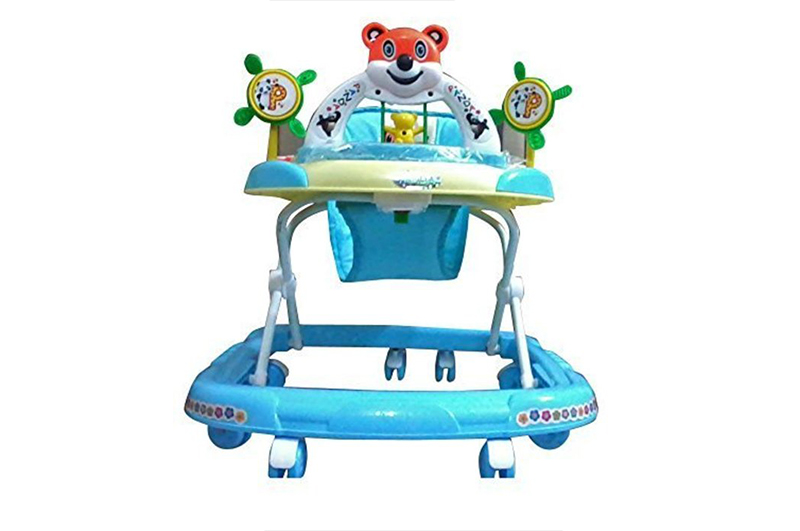
Baby walkers are wheeled devices with suspended seats that allow pre-walking babies to move around using their feet while the walker supports their weight. The seat typically sits in the center of a plastic tray mounted on wheels, with the baby’s feet touching the ground. Many walkers available in Dubai stores include elaborate activity trays with toys, lights, sounds, and interactive features designed to entertain babies for extended periods.
Parents in Dubai and worldwide are drawn to walkers for several reasons. They believe walkers help babies learn to walk earlier by providing practice and mobility. They use walkers to provide exercise and entertainment for active babies in apartments and villas where space for crawling may be limited. They appreciate that walkers keep babies contained in what appears to be a “safe” device while parents cook, clean, or care for other children. They hope walkers give babies a sense of independence and mobility before they can walk independently, which seems developmentally beneficial.
Unfortunately, research and clinical experience demonstrate that these perceived benefits are either completely false or far outweighed by significant risks that make baby walkers one of the most dangerous baby products still available on the market. Dr. Medhat Abu-Shaaban at myPediaClinic educates Dubai families about these risks during well-child visits, helping parents understand why walkers should be avoided entirely.
Why Baby Walkers Are Dangerous for Dubai Children
The primary reason pediatricians like Dr. Abu-Shaaban universally recommend against baby walkers is safety. Walkers cause thousands of injuries annually worldwide, many of them severe and completely preventable. In Dubai’s homes—whether villas with stairs, apartments with balconies, or any residence with tile floors common in the UAE—walkers create multiple serious hazards.
Falls and Serious Injuries
Baby walkers allow babies to move much faster than they otherwise could—up to three feet per second, which is remarkably fast for a pre-walking infant. This speed, combined with babies’ complete inability to control direction effectively or stop when approaching danger, creates continuously dangerous situations throughout your Dubai home.
Common walker accidents include tumbling down stairs (the most common and often most serious walker injury, which can occur even with safety gates if not properly secured), tipping over on uneven surfaces, thresholds between rooms, or transitions from tile to carpet common in Dubai homes, reaching dangerous heights to access hot stoves, electrical outlets, cleaning products, or medications normally out of reach of floor-level babies, moving into rooms or areas parents haven’t baby-proofed because they assumed pre-walking babies couldn’t access them, and crashing into furniture or walls causing bruising, cuts, or more serious injuries.
Even in Dubai homes parents consider thoroughly baby-proofed, walkers create access to dangers that wouldn’t otherwise threaten pre-walking babies. A baby in a walker can suddenly reach countertop height, accessing hot tea glasses common in Emirati households, sharp kitchen utensils, medications, or cleaning products. They can move through doorways into rooms parents aren’t actively monitoring. The combination of increased mobility, height, and speed with babies’ complete lack of safety awareness creates constant accident risks that parents simply cannot supervise adequately despite their best intentions.
Severity of Walker-Related Injuries
Walker-related injuries aren’t limited to minor bumps and bruises that heal quickly. Serious injuries commonly seen at pediatric clinics like myPediaClinic in Dubai include head injuries and concussions from falls (particularly down stairs, which can cause severe brain injuries), broken bones and fractures requiring casts and sometimes surgery, burns from reaching stoves or hot liquids like tea or coffee left on counters, poisoning from accessing medications or household chemicals stored in cabinets now within reach, drowning risks from rolling into pools (particularly relevant in Dubai where many villas and compound homes have pools), and dental injuries including broken or knocked-out teeth.
Some walker accidents result in permanent disability, brain damage, or even death, making them genuinely life-threatening devices despite their innocent, toy-like appearance. The cute designs, bright colors, and fun features disguise real danger that has caused tragedy in families worldwide. Dr. Abu-Shaaban has treated numerous walker-related injuries throughout his career in Dubai—every single one of them completely preventable accidents that never would have occurred without these dangerous devices in homes.
Baby Walkers Actually Delay Walking Development
Contrary to the widespread belief that motivates many Dubai parents to purchase walkers, these devices don’t help babies learn to walk earlier—research clearly demonstrates they actually delay walking development, the exact opposite of what parents hope to achieve.
How Walkers Interfere with Normal Development
Normal walking development requires babies to progressively build specific muscle groups through natural movement, develop balance and coordination through trial and error, learn to fall safely and get back up independently, and strengthen legs, ankles, and core muscles through crawling, pulling up on furniture, and cruising along couches and tables. Baby walkers interfere with this carefully orchestrated natural progression in several significant ways.
Walkers support babies’ weight artificially through the suspended seat, preventing the essential muscle strengthening that occurs when babies bear their own weight while pulling up on furniture and cruising around rooms. They teach babies incorrect movement patterns—babies in walkers push with their toes while leaning backward into the seat rather than learning the proper heel-to-toe weight transfer pattern of normal walking. Walkers eliminate crucial opportunities for floor play essential for developing the core strength, balance, and coordination required for independent walking. They bypass critical developmental stages like crawling, which builds upper body strength and coordinates movement patterns important not just for walking but for many later motor skills children need throughout life.
Time spent in walkers is time not spent on the floor practicing the movements that actually build walking skills. Every hour in a walker represents a lost hour of developmental floor time that would benefit your baby far more than the artificial mobility walkers provide.
Research Evidence on Developmental Delays
Multiple peer-reviewed research studies published in respected pediatric journals demonstrate conclusively that babies who use walkers walk later than those who don’t use these devices. Studies have documented delayed achievement of sitting, crawling, and walking milestones among walker-using babies, reduced muscle tone and strength in lower extremities that must be developed for proper walking, and potential impacts on motor skill development beyond just walking that may affect coordination in later childhood.
The extent of developmental delay correlates directly with walker use duration—babies who spend more time in walkers experience greater delays in reaching walking milestones. While these delays aren’t permanent (children eventually walk regardless of walker use), the delay period represents lost time for normal developmental activities that build important skills beyond just walking, including balance, coordination, spatial awareness, and problem-solving abilities developed through independent exploration.
At myPediaClinic in Dubai Healthcare City, Dr. Medhat Abu-Shaaban monitors developmental milestones carefully during well-child visits and discusses with parents how equipment choices, including the decision to avoid walkers, support optimal development for Dubai children.
Toe-Walking Concerns Specific to Baby Walkers
As Dr. Abu-Shaaban frequently notes during consultations at myPediaClinic, one specific developmental concern with baby walkers is that they encourage toe-walking habits that can persist even after babies transition to independent walking.
Why Walkers Cause Toe-Walking Patterns
In baby walkers, the design naturally positions babies on their toes rather than with feet flat on the ground. The suspended seat holds babies at a height where their toes touch the floor but their heels don’t, forcing them to push off with toes to generate the movement that propels the walker forward. This position and movement pattern is completely unlike normal walking, where babies learn to transfer weight from heel to toe through the foot with each step.
Babies spending significant time in walkers practice this incorrect toe-pushing pattern thousands of times, reinforcing neural pathways and muscle memory for a movement pattern that doesn’t translate to proper walking. This repetitive practice of incorrect movement can establish toe-walking habits that some children continue even after they begin walking independently—a habit that requires conscious effort and sometimes therapeutic intervention to correct.
Long-Term Effects of Toe-Walking
While some children naturally go through brief toe-walking phases that resolve on their own, persistent toe-walking caused by walker use can lead to several problems. Shortened Achilles tendons from prolonged toe-walking position can affect flexibility and normal heel-to-toe gait. Balance and coordination difficulties may develop as the child hasn’t learned proper weight transfer through the foot. Foot, ankle, and leg pain can occur from the unnatural stress toe-walking places on muscles and joints. Social concerns may arise as older children become self-conscious about walking differently from peers.
Children who develop persistent toe-walking habits may require physical therapy to retrain proper walking patterns and stretch shortened tendons—therapeutic interventions that would be completely unnecessary if walkers had simply been avoided from the beginning. Dr. Abu-Shaaban at myPediaClinic helps Dubai families understand that preventing these issues is far easier than treating them after they develop.
What International Medical Organizations Say About Baby Walkers
Dr. Medhat Abu-Shaaban’s strong recommendation against baby walkers aligns with the position of every major pediatric and safety organization worldwide, all of which have reviewed extensive research and injury data.
American Academy of Pediatrics Position
The American Academy of Pediatrics has called for a ban on the manufacture and sale of baby walkers, stating that no baby walker is safe and that they cause more injuries than any other nursery product. They recommend that parents never use baby walkers under any circumstances, period.
Canadian Regulations
Canada has taken the strongest regulatory stance, completely banning the sale, importation, and advertisement of baby walkers. It is actually illegal to sell baby walkers in Canada, even second-hand. This comprehensive ban reflects the Canadian government’s conclusion that baby walkers pose unacceptable risks that cannot be adequately mitigated through safety standards or warnings alone.
Worldwide Medical Consensus
Pediatric organizations in countries around the world including the UK, Australia, and throughout Europe recommend against baby walker use. This remarkable international consensus among medical professionals who have reviewed the research and treated walker-related injuries provides powerful evidence that walkers pose serious, well-documented risks that far outweigh any perceived benefits.
When virtually every pediatric expert and organization worldwide agrees on a safety recommendation, Dubai parents can feel confident that this guidance is based on solid evidence and genuine concern for child wellbeing, not opinion or cultural preference.
Safe Alternatives to Baby Walkers for Dubai Families
Understanding that walkers should be avoided leaves Dubai parents wondering what alternatives exist for keeping babies entertained and supporting their development. Fortunately, many safe, developmentally appropriate options exist that provide the benefits parents seek without the serious risks walkers pose.
Stationary Activity Centers
Stationary activity centers look similar to walkers but don’t have wheels, keeping babies in one place while they play with attached toys, bounce, and spin. These centers provide entertainment and allow babies to practice standing while bearing their own weight (which builds leg muscles properly), without the mobility that makes walkers dangerous. Babies can practice weight-shifting and leg strengthening while remaining safely in one location that parents can monitor easily.
While stationary centers are significantly safer than wheeled walkers, they should still be used in moderation. Extended time in any equipment that positions babies upright before they can get there independently can interfere with floor time crucial for development. Limit stationary center use to 15-20 minutes a few times daily, ensuring babies spend most of their awake time on the floor where real developmental work happens.
Push Toys and Walking Wagons
For babies who are pulling up and cruising independently, sturdy push toys and walking wagons provide support for practicing walking while requiring babies to support their own weight and maintain their own balance. Unlike walkers that support babies artificially, push toys require babies to use their developing strength and coordination, actually supporting proper walking development rather than interfering with it.
Choose push toys that are stable and heavy enough that they won’t tip forward when babies pull up on them or lean their weight forward while pushing. Many are available in Dubai stores or online. However, push toys are appropriate only for babies who are already pulling up independently—they’re not meant for younger babies who aren’t yet at that developmental stage.
Floor Play and Tummy Time
The single best alternative to walkers is simply giving babies plenty of supervised floor time for free play and movement. Floor play allows babies to practice rolling, pivoting, crawling, and eventually pulling up on furniture—all the natural movements that build the strength, coordination, and balance needed for walking. Tummy time for younger babies builds neck, back, and arm strength essential for later milestones.
Create safe floor spaces in your Dubai home where babies can play and move freely. Use play mats or soft rugs on tile floors common in UAE homes. Rotate toys to maintain interest. Get down on the floor with your baby, making this interactive time that builds relationships while supporting development. This simple approach costs nothing, requires no special equipment, and provides exactly what babies need for optimal development.
Supported Standing and Cruising
When babies show readiness by pulling up on furniture independently (usually around 8-10 months), encourage cruising along couches, coffee tables, and other stable furniture. This natural progression teaches proper balance, weight-bearing, and movement patterns. Parents can offer fingers for babies to hold while practicing walking, providing just enough support while still requiring babies to use their own muscles and balance.
This supported exploration allows babies to practice walking movements safely while building real skills, unlike walkers that provide artificial support teaching incorrect patterns. It keeps babies close to parents who can supervise carefully and assist when babies lose balance or need help.
Common Questions Dubai Parents Ask About Walkers
Dr. Medhat Abu-Shaaban addresses numerous questions about walkers during appointments at myPediaClinic in Dubai Healthcare City. Understanding parents’ concerns helps clarify why the recommendation against walkers is so strong despite their continued availability in stores.
Can’t I just watch my baby carefully in the walker?
Parents often believe that careful supervision eliminates walker risks, but this assumption is false. Research shows that most walker injuries occur even when parents are watching. Walkers allow babies to move so quickly—up to three feet per second—that parents cannot react fast enough to prevent many accidents. A baby can roll toward stairs, reach a hot stove, or access dangerous items in literally seconds, faster than a parent across the room can intervene. Even the most attentive Dubai parents cannot prevent walker accidents through supervision alone, because the device itself creates hazards that cannot be fully controlled.
What if I only use it on one floor with no stairs?
While eliminating stair access reduces the risk of the most serious walker injuries (falls down stairs), many other serious hazards remain. Babies in walkers on single-floor homes or apartments still reach dangerous heights accessing stoves, countertops, and cabinets. They still move faster than parents can supervise. They still experience the developmental delays walkers cause. They still learn incorrect movement patterns like toe-walking. Using walkers on single-floor homes reduces some risks but doesn’t eliminate them or address the developmental concerns that make walkers inappropriate regardless of home layout.
I used a walker with my older child and had no problems—why avoid it now?
Many Dubai parents used walkers with older children without serious injuries, leading them to believe walkers are safe. However, the absence of injury doesn’t mean an activity is safe—it means you were fortunate. Statistical data shows that thousands of babies are injured in walkers annually. Just because one child escaped injury doesn’t guarantee safety for another. Additionally, even if a child avoided physical injury, they still experienced the developmental delays research documents, though parents may not have recognized the connection between walker use and later walking. The recommendation to avoid walkers is based on population-level research and injury data, not individual anecdotes. Just as you wouldn’t let a child ride in a car without a car seat just because some children have survived without restraints, you shouldn’t use walkers just because some babies have escaped serious injury.
Frequently Asked Questions About Baby Walkers in Dubai
When can I start giving my child a baby walker?
The simple, direct answer from Dr. Medhat Abu-Shaaban at myPediaClinic in Dubai is: never. Baby walkers should not be used at any age due to serious safety hazards and proven developmental delays they cause. Despite their widespread availability in Dubai stores and their popularity as baby shower gifts, medical evidence is clear and unequivocal—baby walkers are dangerous products that provide no genuine benefits while creating numerous risks for babies. Every major pediatric organization worldwide, including the American Academy of Pediatrics and the Canadian Pediatric Society (whose country has banned walkers entirely), recommends against baby walker use. Dr. Abu-Shaaban, recognized as Pediatrician of the Year and one of Dubai’s most respected child health experts, aligns with this universal medical consensus based on decades of research and clinical experience. Rather than asking when to introduce a walker, parents should ask about safe alternatives like stationary activity centers, supervised floor play, and age-appropriate push toys that support development without creating dangerous situations in Dubai homes.
Are baby walkers banned in Dubai or the UAE?
Baby walkers are not currently banned in Dubai or the UAE, though they are illegal in Canada and strongly discouraged by pediatric organizations worldwide. The lack of a regulatory ban doesn’t mean walkers are safe—it simply means the UAE hasn’t yet implemented the restrictions that some countries have adopted. Many products remain legal despite being dangerous or inappropriate for children, and parental education becomes even more important when regulations lag behind medical evidence. At myPediaClinic in Dubai Healthcare City, Dr. Medhat Abu-Shaaban educates families about walker risks regardless of their legal status, empowering parents to make evidence-based decisions for their children. Just because a product is available for purchase in Dubai stores doesn’t mean it’s safe or recommended by pediatric experts. Parents should rely on medical guidance from qualified pediatricians like Dr. Abu-Shaaban rather than on product availability or marketing claims when making decisions about child safety and development.
What are the dangers of baby walkers?
Baby walkers create multiple serious dangers for infants. The most common and severe risk is falling down stairs, which can cause serious head injuries, broken bones, and even death—these falls occur in seconds even with parental supervision because walkers allow babies to move up to three feet per second. Walkers give babies access to dangerous heights, allowing them to reach stoves, hot liquids, medications, cleaning products, and sharp objects normally safely out of reach of pre-walking babies. The increased mobility means babies can quickly enter rooms or areas parents haven’t baby-proofed or aren’t actively monitoring. Tipping over on uneven surfaces, thresholds, or area rugs common in Dubai homes can cause injuries. Beyond physical dangers, walkers interfere with normal motor development, actually delaying walking rather than promoting it as parents often believe. They teach incorrect movement patterns like toe-walking that can persist after babies transition to independent walking. Research demonstrates that time in walkers replaces crucial floor play time needed for developing strength, coordination, and balance essential for proper walking. At myPediaClinic in Dubai, Dr. Medhat Abu-Shaaban has treated numerous walker-related injuries throughout his career—every single one completely preventable by simply not using these dangerous devices.
Do baby walkers help babies walk earlier?
No, this is a common misconception that research has thoroughly disproven. Baby walkers actually delay walking development rather than promoting it. Multiple scientific studies published in peer-reviewed pediatric journals demonstrate that babies who use walkers walk later than those who don’t use these devices. Walkers interfere with normal motor development in several ways: they support babies’ weight artificially rather than allowing them to build the leg and core muscles needed for independent walking; they teach incorrect movement patterns (toe-pushing while leaning backward) unlike the heel-to-toe pattern of proper walking; they eliminate crucial floor time where babies practice the movements that actually build walking skills like crawling, pulling up, and cruising along furniture; and they bypass important developmental stages that build not just walking ability but overall coordination and spatial awareness. The time babies spend in walkers is time not spent practicing the movements that genuinely support walking development. At myPediaClinic in Dubai Healthcare City, Dr. Medhat Abu-Shaaban explains to parents that supporting natural development through floor play, tummy time, and age-appropriate activities provides far better outcomes than using equipment like walkers that interfere with the carefully orchestrated sequence of motor skill development.
What should I use instead of a baby walker?
Numerous safe alternatives exist that provide entertainment and support development without the serious risks walkers pose. Stationary activity centers (similar to walkers but without wheels) allow babies to play with toys and practice standing while remaining safely in one place—use these for limited time periods (15-20 minutes at a time) to avoid interfering with floor play. Supervised floor time is the single best activity for babies, allowing them to practice rolling, crawling, and eventually pulling up naturally while building real skills—create safe play spaces on mats or soft rugs over Dubai’s common tile floors. For babies already pulling up independently, sturdy push toys provide support for practicing walking while requiring babies to support their own weight and maintain balance, unlike walkers that provide artificial support. Baby-safe spaces like play yards create contained areas where babies can play safely while parents handle brief tasks nearby. Interactive parent play where you get down on the floor with your baby, offer fingers to hold while practicing walking, or create obstacles courses for crawling provides the engagement and entertainment walkers promise while building relationships and supporting proper development. At myPediaClinic in Dubai, Dr. Yasmin Kottait and Dr. Medhat Abu-Shaaban provide personalized guidance about age-appropriate activities and equipment that support each child’s developmental stage without creating unnecessary risks.
Can toe-walking from walkers be corrected?
Yes, toe-walking habits developed from walker use can typically be corrected, though this requires time, effort, and sometimes therapeutic intervention that would be completely unnecessary if walkers had simply been avoided. For mild toe-walking, parents can encourage proper heel-to-toe walking through demonstration, gentle reminders, and activities like walking barefoot on different textures that help children feel their feet connecting fully with the ground. Physical therapy may be recommended for more persistent toe-walking, with therapists teaching exercises to stretch the Achilles tendon (which may have shortened from prolonged toe-walking) and retrain proper gait patterns. In severe cases, braces, casts, or very rarely surgery might be needed to lengthen contracted tendons and correct the walking pattern. The outcome depends on how long the toe-walking persisted and how ingrained the pattern became. Most children respond well to intervention, especially when addressed early. However, preventing toe-walking by avoiding walkers is far preferable to treating it after it develops. At myPediaClinic in Dubai Healthcare City, Dr. Medhat Abu-Shaaban monitors children’s motor development during well-child visits, identifying concerns like toe-walking early and providing appropriate referrals for intervention when needed while educating families about prevention strategies for future children.
What age do babies typically start walking without walkers?
Most babies take their first independent steps between 9 and 15 months, with the average around 12 months, though significant normal variation exists. Some babies walk as early as 8-9 months, while others don’t walk until 16-17 months—both extremes can be completely normal. Walking age is influenced by multiple factors including individual temperament (some cautious babies take longer to attempt walking), physical build (smaller, lighter babies sometimes walk earlier than larger, heavier babies who need more strength to support their weight), opportunities for practice (babies with lots of floor time for movement practice may walk earlier), and family genetics (late walking often runs in families). Cultural practices also play a role—babies who spend more time on the floor versus in equipment typically walk earlier. The key is that babies walk when they’re developmentally ready, after building the necessary strength, balance, and coordination through the natural sequence of motor milestones. During well-child visits at myPediaClinic in Dubai, Dr. Medhat Abu-Shaaban assesses each child’s motor development individually, providing reassurance about normal variation while identifying any concerns that might warrant further evaluation. Parents should focus on providing opportunities for natural movement rather than trying to rush development with equipment like walkers that actually interfere with the process.
Are stationary activity centers safe for babies in Dubai?
Stationary activity centers (which look like walkers but don’t have wheels) are significantly safer than wheeled walkers because they eliminate the mobility that creates most walker-related injuries. Babies can’t roll down stairs, crash into furniture, or zip into different rooms in stationary centers. However, they should still be used judiciously rather than as parking spots for extended periods. Limit use to 15-20 minutes several times daily maximum, ensuring babies spend most of their awake time on the floor where real developmental work happens. Choose centers with stable, wide bases that won’t tip over easily on the tile floors common in Dubai homes. Ensure the height is adjustable or appropriate for your baby’s size so their feet rest flat rather than just on toes. Always supervise babies in activity centers even though they’re stationary—babies can still reach items nearby or rock the center in ways that might create risks. Remember that any time in equipment is time not spent on crucial floor play that builds motor skills, so use stationary centers sparingly for brief periods when you need to keep your baby contained and entertained while handling essential tasks nearby. At myPediaClinic in Dubai Healthcare City, Dr. Medhat Abu-Shaaban and Dr. Yasmin Kottait help parents understand appropriate use of various baby equipment, balancing practicality with optimal developmental support.
What should I do if my baby is already using a walker?
If your baby is currently using a walker, stop immediately. Remove the walker from your Dubai home or render it unusable so the temptation to use it “just this once” doesn’t lead to continued use. If the walker was a gift, explain to the gift-giver that your pediatrician has advised against walker use for safety and developmental reasons—most people who care about your baby will understand and support decisions based on medical guidance. Transition to safe alternatives like stationary activity centers for limited periods, supervised floor play for most of awake time, and push toys if your baby is already pulling up independently. Don’t worry that removing the walker will somehow harm your baby or prevent them from walking—remember that walkers actually delay walking development, so removing it supports proper development rather than hindering it. If your baby was in the walker frequently, ensure plenty of floor play time to build the motor skills that walker use prevented. During your next well-child visit at myPediaClinic in Dubai, discuss your baby’s motor development with Dr. Medhat Abu-Shaaban, who can assess whether your baby is progressing appropriately through motor milestones and provide guidance if any concerns exist. The important thing is stopping walker use now to prevent future injuries or developmental delays, regardless of how long the walker has been used previously.
My baby loves the walker and cries without it—what should I do?
Babies often enjoy walkers because they provide novel mobility and entertainment, but enjoyment doesn’t equal safety or appropriateness. Many things babies enjoy are dangerous or inappropriate (climbing on furniture, playing with electrical cords, eating candy for every meal). Parents must sometimes make decisions babies don’t like but that protect their safety and development. When transitioning away from walkers, expect an adjustment period where your baby may resist the change. Introduce engaging alternatives like stationary activity centers, new floor toys, or interactive play with parents that capture attention differently. Increase floor time gradually if your baby is accustomed to spending significant time in the walker, allowing adjustment to this new (and developmentally superior) activity. Get down on the floor with your baby, making floor play interactive and engaging rather than leaving them alone to entertain themselves—your presence and interaction are more valuable than any equipment. Maintain consistency—if you remove the walker, don’t reintroduce it during moments of frustration or crying as this teaches babies that protest brings back what they want. Within days to weeks, babies typically adjust to new routines and forget about the walker entirely. At myPediaClinic in Dubai, Dr. Medhat Abu-Shaaban supports families through various transitions and behavioral adjustments, providing strategies that honor both child development and parental sanity during sometimes-challenging periods.
Can I use a walker if I baby-proof my Dubai home very carefully?
Even in thoroughly baby-proofed homes, walkers create risks that cannot be fully eliminated through environmental modifications. Walkers give babies access to dangerous heights and locations that wouldn’t be accessible to pre-walking babies on the floor, requiring a completely different level of baby-proofing than floor-level infant protection. Babies move so quickly in walkers (up to three feet per second) that parents cannot react in time to prevent many accidents even when watching carefully. The cognitive development required to recognize dangers doesn’t exist in the 6-12 month age range when babies typically use walkers—they have no concept that stoves are hot, stairs are dangerous, or that tipping over could cause injury. Beyond physical dangers that baby-proofing addresses, walkers cause developmental delays and incorrect movement pattern learning regardless of how safe the environment is. The safer alternative is eliminating the walker entirely rather than attempting to create an environment safe enough for an inherently dangerous device. At myPediaClinic in Dubai Healthcare City, Dr. Medhat Abu-Shaaban emphasizes that the only truly safe approach to walkers is not using them at all, regardless of home setup or safety modifications. The goal is protecting children through wise product choices, not trying to compensate for dangerous products through environmental adjustments.
What does Dr. Medhat Abu-Shaaban recommend instead of walkers?
Dr. Medhat Abu-Shaaban, Pediatrician of the Year and medical director at myPediaClinic in Dubai Healthcare City, strongly recommends that parents never use baby walkers under any circumstances. His evidence-based alternative recommendations focus on supporting natural motor development safely. Provide plenty of supervised floor time for babies to practice rolling, crawling, and eventually pulling up on furniture—this natural progression builds exactly the skills babies need for walking without artificial support that interferes with development. Use stationary activity centers sparingly (15-20 minutes at a time) when you need to contain your baby safely while handling necessary tasks nearby. Offer sturdy push toys only after babies are pulling up independently, allowing them to practice walking while supporting their own weight and maintaining their own balance. Create safe play spaces in your Dubai home with soft mats over tile floors where babies can explore movement freely under your supervision. Engage in interactive floor play where you provide obstacles for crawling, offer fingers for supported walking practice, or simply enjoy time together while your baby builds motor skills. During well-child visits at myPediaClinic, Dr. Abu-Shaaban assesses each child’s developmental progress, provides anticipatory guidance about upcoming milestones, and addresses specific parent concerns about motor development, ensuring Dubai families have the expert support they need for raising healthy, thriving children.
How can I entertain my baby without a walker while I cook or clean?
Dubai parents juggling household responsibilities while caring for babies need practical solutions for keeping babies safe and entertained. Several alternatives work well: stationary activity centers provide short-term entertainment (15-20 minutes) while keeping babies safely in one contained space visible from the kitchen. Play yards or pack-and-plays create safe, contained areas where babies can play with toys while parents work nearby—rotate toys regularly to maintain interest. Baby-wearing using carriers or wraps keeps babies close while leaving parents’ hands free for tasks—many babies enjoy this closeness and parents appreciate having their baby safely contained while remaining mobile. High chairs at mealtimes serve double duty for both eating and playing with safe toys or foods for finger exploration while parents prepare or clean up from meals. Floor play in the same room where you’re working allows babies freedom to move while remaining supervised—bring babies into the kitchen on a play mat with toys so you can talk to them and check on them while handling tasks. Accept that some household tasks may need to wait, be done less frequently, or happen during naptime or after bedtime—babies’ developmental needs and safety take priority over perfectly clean homes. At myPediaClinic in Dubai, Dr. Yasmin Kottait and Dr. Medhat Abu-Shaaban understand the realities of parenting in Dubai’s busy environment and provide practical guidance that balances child development, safety, and family functioning.
Are there any safe types of baby walkers?
No baby walker design is safe, according to the American Academy of Pediatrics and the consensus of pediatric experts worldwide including Dr. Medhat Abu-Shaaban at myPediaClinic in Dubai. Some walkers claim to have safety features like grips that supposedly stop at stair edges or wider bases meant to prevent fitting through doorways, but research shows these features don’t adequately address walker dangers. Grips at stair edges often fail, allowing babies to still tumble down stairs, the most serious walker injury. Wider bases don’t prevent babies from reaching dangerous heights, moving faster than parents can supervise, or experiencing the developmental delays all walkers cause. The fundamental problem is the wheeled mobility combined with artificial weight support—no design modification eliminates these core issues that make walkers dangerous. Even “walker alternatives” marketed as safer often pose similar risks if they have wheels allowing mobility. The only safe approach is avoiding all wheeled baby walkers entirely, regardless of claimed safety features or modern design improvements. If you’re looking at a product and wondering if it’s a “safe walker,” the answer is no—true safety comes from choosing stationary alternatives or supporting natural development through floor play rather than seeking safe versions of inherently dangerous products. At myPediaClinic in Dubai Healthcare City, Dr. Abu-Shaaban provides clear guidance: no walker is safe, and no circumstances make walker use appropriate for babies.
What if I only use the walker for short periods each day?
Even limited walker use creates both safety risks and developmental concerns that make walkers inappropriate regardless of duration. From a safety perspective, serious injuries can occur in literally seconds—the amount of time babies spend in walkers doesn’t correlate with injury risk in a way that makes short periods safe. A baby can roll toward stairs, reach a hot stove, or access dangerous items in the first minute of being placed in a walker. From a developmental perspective, even limited time in walkers contributes to delayed walking, teaches incorrect movement patterns, and replaces floor time that would benefit babies. The dose-response relationship (more walker time equals greater delays) doesn’t mean that small amounts are harmless—it means the harm is proportional to exposure, but harm exists at all exposure levels. Additionally, the “only short periods” intention often gradually extends as walkers become convenient tools for keeping babies occupied—what starts as 10 minutes occasionally becomes 30 minutes multiple times daily. The safest and most developmentally appropriate approach is not using walkers at all rather than trying to find a safe duration of use for an unsafe product. At myPediaClinic in Dubai, Dr. Medhat Abu-Shaaban emphasizes that the question isn’t how much walker use is acceptable, but rather why use a dangerous, developmentally harmful product when safe alternatives exist that actually support proper motor skill development.
Should I accept a walker as a gift or hand-me-down?
Politely decline walkers offered as gifts or hand-me-downs, explaining that your pediatrician at myPediaClinic has recommended against walker use for safety and developmental reasons. Most well-meaning friends and family members will understand and respect medical guidance, especially when you explain the serious injury risks and developmental delays research has documented. Suggest alternative gifts if the giver wants to provide baby equipment—stationary activity centers, push toys for when your baby is older, or items from your baby registry that you actually need and will use. For hand-me-downs, thank the generous offer while explaining you’re following your pediatrician’s advice to avoid walkers—most parents offering items genuinely want to help and will appreciate your evidence-based approach to child safety. If pressed or if well-meaning relatives insist that “we used walkers and babies turned out fine,” you might explain that medical knowledge evolves as research accumulates, and current recommendations reflect decades of injury data and developmental studies unavailable when they were raising children. Remember that being polite but firm about safety decisions is part of parenting—you’re not required to use products you know are dangerous just to avoid disappointing gift-givers or those offering hand-me-downs. At myPediaClinic in Dubai, Dr. Medhat Abu-Shaaban supports families in making evidence-based decisions even when they conflict with cultural practices or family traditions, empowering Dubai parents to prioritize their children’s safety and development above social pressures.
How do I choose safe baby equipment in Dubai?
Selecting safe, developmentally appropriate baby equipment requires research and guidance from qualified pediatric experts like those at myPediaClinic in Dubai Healthcare City. Before purchasing equipment, consult your pediatrician about whether the product is safe and appropriate for your baby’s age and developmental stage—Dr. Medhat Abu-Shaaban and Dr. Yasmin Kottait provide guidance about equipment choices during well-child visits. Research products through reputable sources including pediatric organizations’ websites, consumer safety organizations, and evidence-based parenting resources rather than relying solely on marketing claims or store availability. Choose items that support natural development rather than bypassing or rushing developmental stages—floor play mats are better than walkers; age-appropriate push toys are better than wheeled devices for pre-walking babies. Prioritize safety features including stability (wide bases that won’t tip), appropriate sizing (height adjustments or size ranges matching your baby), and quality construction from reputable manufacturers. Recognize that expensive or popular doesn’t necessarily equal safe or beneficial—some widely-available products like baby walkers are dangerous despite their popularity. Consider how much time babies will spend in various equipment, minimizing time in any device that keeps babies in fixed positions and maximizing floor time for free movement. At myPediaClinic in Dubai, our team helps families navigate the overwhelming array of baby products available in Dubai’s market, identifying what’s truly helpful versus what’s marketed cleverly but potentially harmful or unnecessary.
When should I schedule my baby’s next developmental checkup in Dubai?
Regular well-child visits allow Dr. Medhat Abu-Shaaban and the team at myPediaClinic in Dubai Healthcare City to monitor your baby’s development carefully, ensuring timely identification of any concerns and providing anticipatory guidance about upcoming milestones. Babies typically need checkups at 2, 4, 6, 9, 12, 15, and 18 months during the first year and a half, with visits continuing regularly through childhood. During these appointments, Dr. Abu-Shaaban assesses physical growth, developmental milestones including motor skills, social-emotional development, and overall health while addressing parent questions and concerns. These visits provide ideal opportunities to discuss equipment choices like whether to use walkers, what alternatives support development, and how to encourage motor skill progression safely. If you have specific concerns about your baby’s development between scheduled visits—such as delays in rolling, sitting, crawling, or pulling up—contact myPediaClinic to schedule an additional appointment for assessment rather than waiting for the next routine visit. Our convenient evening hours make it easier for busy Dubai families to maintain consistent pediatric care without disrupting work schedules. To schedule your baby’s next developmental checkup or discuss concerns about motor milestone progression, contact myPediaClinic at +971-4-430-5926. Dr. Medhat Abu-Shaaban, Dr. Yasmin Kottait, and our entire pediatric team at our Dubai Healthcare City location are dedicated to supporting your child’s healthy development through expert guidance, comprehensive care, and evidence-based recommendations that prioritize safety and optimal outcomes for Dubai families.
Supporting Your Baby’s Natural Development in Dubai
The question “when can I start giving my child a baby walker” reflects parents’ natural desire to support their baby’s development and provide engaging experiences. However, the answer based on overwhelming medical evidence and the expert consensus of pediatricians like Dr. Medhat Abu-Shaaban at myPediaClinic is clear: never use baby walkers. These devices create serious, well-documented safety risks while actually delaying the walking development they claim to promote.
Supporting your baby’s motor skill development doesn’t require special equipment or expensive products. The best support comes through simple, time-tested approaches: providing plenty of supervised floor time for babies to practice natural movements at their own pace, offering encouragement and engagement through interactive play, creating safe spaces in your Dubai home where babies can explore freely, and trusting the developmental process that has successfully brought babies to walking for millennia without walkers.
When you see walkers in Dubai stores, promoted in advertisements, or offered as well-meaning gifts, remember that availability and popularity don’t equal safety or appropriateness. Rely instead on evidence-based guidance from qualified pediatric experts who have reviewed the research, treated walker-related injuries, and observed how babies develop best.
Expert Pediatric Care at myPediaClinic Dubai Healthcare City
At myPediaClinic in Dubai Healthcare City, Dr. Medhat Abu-Shaaban and our entire pediatric team are committed to providing families with accurate, evidence-based information about child development, safety, and health. As one of Dubai’s most respected pediatric practices, we combine medical expertise with understanding of Dubai families’ unique circumstances, providing guidance that’s both scientifically sound and practically applicable to life in the UAE.
Our comprehensive well-child care includes careful monitoring of developmental milestones, assessment of motor skill progression, anticipatory guidance about upcoming developmental stages, and clear recommendations about supporting development safely. We address parent questions honestly, explain the reasoning behind recommendations, and empower families to make informed decisions for their children.
Whether you’re expecting your first baby, have questions about your current baby’s development, or want guidance about equipment choices and parenting practices that support optimal outcomes, myPediaClinic offers the expert support Dubai families deserve. Our convenient evening hours, experienced team including Dr. Medhat Abu-Shaaban and Dr. Yasmin Kottait, and commitment to evidence-based, family-centered care make us the trusted choice for pediatric healthcare in Dubai.
To schedule a well-child visit, discuss developmental concerns, or get guidance about supporting your baby’s motor skill development safely, contact myPediaClinic today at +971-4-430-5926. Visit us at Al Razi Building, Block B, First Floor, Unit 1011, Dubai Healthcare City, where we’re dedicated to keeping Dubai’s children healthy, safe, and developing optimally through expert care based on medical evidence rather than marketing claims. Let us partner with your family in raising healthy, thriving children who reach their developmental milestones naturally, safely, and in their own perfect time.