

How to Brush Your Child’s Teeth: Complete Pediatric Dental Guide in Dubai
Establishing proper tooth brushing habits in childhood lays the foundation for a lifetime of healthy teeth and gums. Yet many parents in Dubai struggle with this daily routine—whether it’s a toddler who fights brushing, uncertainty about proper technique, or questions about when children can brush independently. At myPediaClinic in Dubai, Dr. Yasmin Kottait, our expert pediatric dentist, works closely with Dr. Medhat Abu-Shaaban and our pediatric team to ensure families have the knowledge and tools to make brushing effective, consistent, and even enjoyable.
Tooth brushing is deceptively simple in concept but surprisingly nuanced in execution. It’s not just about moving a toothbrush around the mouth—proper brushing requires appropriate technique, adequate duration, the right tools, and consistency twice daily. For young children who lack the dexterity, attention span, and understanding to brush effectively themselves, parents play a crucial role in protecting their children’s teeth through supervised brushing and follow-up cleaning.
Dubai’s diverse population brings together families from dozens of countries, each with their own cultural practices and beliefs about dental care. Some cultures emphasize dental hygiene from infancy, while others may not traditionally prioritize oral health. Access to sugary foods and drinks is abundant in Dubai, increasing the importance of counteracting these dietary factors with excellent oral hygiene. Additionally, the transient nature of many Dubai families—frequently traveling between the UAE and home countries—can disrupt routines, making it challenging to maintain consistent brushing habits.
This comprehensive guide draws on current dental research, international pediatric dental guidelines, and Dr. Kottait’s extensive experience treating children in Dubai’s multicultural environment. From your baby’s first tooth through the teenage years, you’ll learn exactly how to brush your child’s teeth effectively, how to make brushing a positive experience, and how to troubleshoot common challenges Dubai families face.
When to Start Brushing: Beginning Oral Care Early
Oral care should begin even before the first tooth appears. From birth, you can wipe your baby’s gums with a soft, damp cloth after feedings to remove bacteria and milk residue. This early care establishes oral cleaning as a normal part of daily routine and prepares your baby for toothbrushing once teeth arrive.
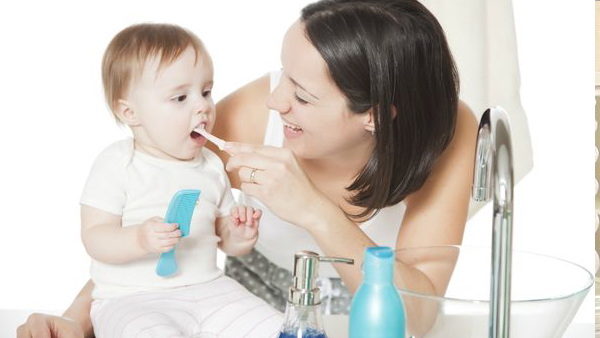
Once the first tooth erupts—typically around 6 months but sometimes earlier or later—it’s time to begin actual toothbrushing. Use a soft-bristled infant toothbrush and a tiny smear of fluoride toothpaste (about the size of a grain of rice). Yes, fluoride toothpaste is appropriate even for babies, though the amount used should be minimal at this age.
Dr. Yasmin Kottait at myPediaClinic emphasizes that starting toothbrushing with the very first tooth is crucial. Some parents assume a single tooth doesn’t need brushing or that baby teeth don’t matter since they’ll fall out anyway. Both assumptions are incorrect. Baby teeth serve important functions—allowing proper eating, supporting speech development, maintaining space for permanent teeth, and contributing to facial development. Cavities in baby teeth can cause pain, infection, difficulty eating, and can even affect the developing permanent teeth beneath.
Schedule your child’s first dental visit by their first birthday or within six months of the first tooth eruption, whichever comes first. Early dental visits allow Dr. Kottait to assess development, demonstrate proper brushing technique, apply fluoride if appropriate, and identify any concerns before they become problems. Many Dubai families are surprised to learn how early dental care should begin, but early intervention prevents issues and establishes the foundation for lifelong dental health.
Proper Brushing Technique: Step by Step
Effective tooth brushing isn’t just about scrubbing vigorously—it requires proper technique to remove plaque without damaging teeth and gums.
Step 1: Use the right amount of toothpaste. For children under 3 years, use a rice-grain-sized smear of fluoride toothpaste. For children 3 years and older, use a pea-sized amount. Don’t use more than recommended—excess toothpaste increases the risk of fluorosis (white spots on teeth) if children swallow too much fluoride during the years when permanent teeth are developing.
Step 2: Position the toothbrush correctly. Hold the toothbrush at a 45-degree angle to the gums where the teeth meet the gum line. This angle allows bristles to clean under the gum margin where plaque accumulates.
Step 3: Use gentle circular motions. Move the brush in small circular or back-and-forth motions, covering a few teeth at a time. Don’t use aggressive scrubbing motions—be gentle but thorough. The goal is to remove soft plaque, which doesn’t require hard pressure. Brushing too hard can damage gums and wear enamel.
Step 4: Brush all surfaces systematically. Brush outer surfaces (facing the cheeks), inner surfaces (facing the tongue), and chewing surfaces of all teeth. For inner surfaces of front teeth, tilt the brush vertically and use up-and-down strokes. Many people miss the inner surfaces because they’re harder to reach, but they’re just as important as outer surfaces.
Step 5: Don’t forget the back teeth. Molars (back teeth) are particularly important to clean thoroughly because their chewing surfaces have grooves and pits where food and plaque easily accumulate. These teeth are most prone to cavities, so spend extra time ensuring they’re well-cleaned.
Step 6: Brush the tongue. Gently brush the tongue from back to front to remove bacteria that contribute to bad breath and can affect oral health. Some children find tongue-brushing uncomfortable initially, but it becomes easier with practice.
Step 7: Brush for the full two minutes. Two minutes is the recommended brushing time—30 seconds per quadrant of the mouth (upper right, upper left, lower right, lower left). Most people, especially children, brush for far less time than this. Use a timer, play a 2-minute song, or use an electric toothbrush with a built-in timer to ensure adequate brushing time.
Step 8: Spit but don’t rinse excessively. After brushing, have your child spit out excess toothpaste but don’t rinse vigorously with water. Leaving a thin film of toothpaste on the teeth allows fluoride to continue working after brushing. This might feel unusual if you’re accustomed to rinsing, but it enhances the protective effects of fluoride.
At myPediaClinic in Dubai, Dr. Kottait uses child-sized dental models to demonstrate proper technique to children, making learning fun and concrete rather than abstract. She can also observe your child’s brushing during appointments and provide specific feedback.
Age-Appropriate Brushing Approaches
The level of parental involvement and the approach to tooth brushing should evolve as children grow and develop new abilities.
Infants (6 months to 1 year): Parents do 100 percent of the brushing. Gently brush the few teeth present, making it a calm, gentle experience. Sing songs or talk to your baby to make it pleasant. Position your baby comfortably—many parents find laying baby on a changing table or bed with the parent standing over them provides good visibility and access. Brush after morning feeding and before bed.
Toddlers (1 to 3 years): Parents still do the vast majority of brushing, but you can let your toddler “help” by holding the toothbrush or attempting to brush briefly before you do the real cleaning. This builds interest and skills while ensuring teeth actually get clean. Expect resistance during this age—toddlers are asserting independence and may fight brushing. Stay calm but firm—brushing is non-negotiable, like car seats. Make it fun with songs, games, or letting them choose their toothbrush. Brush twice daily, particularly before bed when nighttime cavities risk is highest.
Preschoolers (3 to 5 years): Children this age can begin to brush more independently, but parental supervision and follow-up brushing remain essential. Let your child brush first to practice skills, then say “Now it’s mommy’s/daddy’s turn” and thoroughly re-brush to ensure all surfaces are clean. Praise effort and improvement rather than perfection. Teach proper technique through modeling—brush your teeth alongside your child so they can imitate. Continue twice-daily brushing with increasing involvement from the child.
School-age children (6 to 12 years): Children develop the dexterity for effective brushing around age 7 or 8, though some need guidance longer. Continue supervising brushing at least once daily (typically at bedtime) to ensure thoroughness. Spot-check your child’s brushing by asking them to show you their teeth after brushing—this accountability encourages better effort. Emphasize that permanent teeth coming in during these years are the teeth they’ll have for life, creating motivation for good care. Address the back molars particularly, as six-year molars and twelve-year molars erupt during this period and are highly cavity-prone.
Teenagers (13+ years): Most teenagers can brush independently, but don’t assume they’re doing it well. Periodic check-ins ensure they’re brushing twice daily and not rushing through it. If your teenager has braces, they need extra diligence—demonstrate proper orthodontic brushing techniques and consider an electric toothbrush. Teenagers may be motivated by cosmetic concerns (white teeth, fresh breath, avoiding cavities that need filling) more than health concerns, so frame the importance of brushing in ways that resonate with their priorities.
Dr. Medhat Abu-Shaaban at myPediaClinic notes that developmental age sometimes differs from chronological age. A child with developmental delays may need parental brushing assistance longer than typical timelines suggest, while a particularly responsible child might manage independently earlier. Assess your individual child’s abilities rather than rigidly following age guidelines.
Overcoming Common Brushing Challenges
Many Dubai families struggle with specific brushing challenges. Understanding why these occur and having strategies to address them makes brushing more successful.
Challenge: Child refuses to brush or fights brushing. This is extremely common, particularly in toddlers. Strategies include: letting your child choose their toothbrush and toothpaste flavor, brushing alongside your child so it’s a family activity, making it a game (counting teeth, singing songs, using a timer with fun sounds), using distraction (videos, songs, stories), offering limited choices (“Do you want to brush with the red brush or the blue brush?”), and staying calm and matter-of-fact—don’t make it an emotional battle. If nothing works, sometimes it takes two parents—one to gently but firmly hold the child still while the other brushes quickly but thoroughly. This isn’t ideal but is better than not brushing. Dr. Kottait at myPediaClinic can talk to your child about tooth health, and sometimes hearing it from the dentist makes it “click” when parental requests haven’t.
Challenge: Child won’t brush for long enough. Two minutes feels eternal to young children. Use timers, apps, or electric toothbrushes with built-in 2-minute timers. Play a specific song that’s 2 minutes long during brushing. Break it down into segments: “We’re going to count to 10 on these teeth, then 10 on these teeth…” Use a sand timer or visual timer that children can watch. Brush your own teeth for the full 2 minutes alongside your child to model appropriate duration.
Challenge: Child complains that brushing hurts. If brushing causes legitimate pain, there’s usually a reason. Check that you’re using a soft-bristled brush and not applying too much pressure. Ensure the toothbrush isn’t old with frayed bristles. Check for visible problems like cavities, broken teeth, or very red, swollen gums. Schedule a dental appointment with Dr. Kottait to rule out dental problems requiring treatment. Sometimes children say brushing hurts to avoid it when it doesn’t actually hurt—you’ll need to determine whether pain is genuine or a resistance tactic.
Challenge: Child gags when you brush back teeth. Gagging is common, especially in younger children. Approach back teeth gradually, moving deeper over several days as your child becomes accustomed to the sensation. Use a smaller toothbrush that doesn’t fill the mouth as much. Try different times of day, as gagging is sometimes worse at certain times. Have your child breathe through their nose during brushing. Let your child hold a favorite toy for comfort. If gagging is severe and persistent, consult with Dr. Kottait, as sometimes there are anatomical reasons or sensory issues that need addressing.
Challenge: Child swallows toothpaste instead of spitting. Young children don’t master spitting until around age 3. Continue using only a rice-grain amount of toothpaste for children who can’t spit reliably, minimizing fluoride ingestion. Demonstrate spitting and let your child practice with water outside of brushing time. Some parents use a “spit cup” that children can spit into right at the brushing location rather than going to the sink. Be patient—spitting is a skill that develops with time.
Challenge: Maintaining brushing routine while traveling. International families in Dubai often travel between the UAE and home countries. Pack toothbrushes and toothpaste in easily accessible locations. Brush teeth at the same points in your routine even when traveling (after breakfast, before bed). If you miss a brushing session due to travel circumstances, resume normal routine as soon as possible without guilt—consistency matters more than perfection.
Special Considerations for Dubai Families
Living in Dubai presents unique factors affecting children’s dental health and brushing routines.
Diet and sugar exposure: Dubai offers abundant access to sweets, sugary drinks, and treats. Birthday parties, school events, and social gatherings often feature sweet foods. While occasional treats are fine, frequent sugar exposure throughout the day significantly increases cavity risk. The more frequently teeth are exposed to sugar, the more acid-producing bacteria flourish. Thorough brushing twice daily becomes even more important when sugar intake is high. Consider limiting sugary treats to mealtimes rather than constant snacking, offering water instead of juice or sweetened drinks, and teaching children about “everyday foods” versus “sometimes foods.”
Water fluoride levels: Dubai’s tap water isn’t consistently fluoridated like in some countries. This means children in Dubai may not receive the cavity-protection benefits of fluoridated water that children in some other regions receive. This makes fluoride toothpaste and professional fluoride treatments at the dentist even more important. Discuss your child’s fluoride exposure with Dr. Kottait—she may recommend fluoride supplements if your child is at high cavity risk and has low fluoride exposure.
Climate and routine: Dubai’s heat can disrupt daily routines, particularly during summer when families stay up later and may be less consistent with bedtime routines. Exhausted parents might be tempted to skip brushing after late nights out. However, consistency is crucial for cavity prevention. Build brushing into your routine so firmly that it happens regardless of circumstances. Make it as automatic as putting on a seatbelt.
Access to dental care: Dubai has excellent dental care facilities, including myPediaClinic’s pediatric dental services. Take advantage of this access with regular checkups every six months. Early intervention prevents minor issues from becoming major problems. Many insurance plans in Dubai cover preventive dental care, making regular visits accessible for most families.
Multicultural influences: Children in Dubai are exposed to diverse practices through friends from many different backgrounds. Some families prioritize dental care highly, while others may have different perspectives. Whatever your cultural background, emphasize to your children that healthy teeth are important and worth the daily effort of brushing. At myPediaClinic, we respect cultural diversity while providing evidence-based dental health guidance that applies across all backgrounds.
Tools and Products: Choosing What’s Right
Having appropriate tools makes brushing easier and more effective.
Toothbrushes: Use soft-bristled brushes specifically designed for children’s ages. The brush head should be small enough to comfortably fit in your child’s mouth and reach all teeth. Replace toothbrushes every 3 to 4 months, sooner if bristles are frayed, and after illness. Many children are motivated by character toothbrushes—if this increases brushing willingness, it’s worth the extra cost. Electric toothbrushes can be highly effective for children 3 years and older. Built-in timers help ensure adequate brushing time, oscillating heads clean effectively with less technique-dependence, and children often find them fun. However, manual brushes work perfectly well when used correctly.
Toothpaste: Use fluoride toothpaste from the first tooth onward. For children under 3, use a rice-grain-sized smear; for 3 and older, use a pea-sized amount. Let your child choose a flavor they enjoy—there are many child-friendly flavors like strawberry, watermelon, or mild mint. Ensure it’s a reputable brand with fluoride, and avoid whitening or tartar-control formulas designed for adults.
Floss: Once your child has two teeth that touch each other, begin flossing daily. Young children can’t floss themselves effectively, so parents need to do this. Use floss picks or flossers designed for children—these are easier to maneuver in small mouths than traditional string floss. Flossing removes plaque between teeth where toothbrushes can’t reach, preventing cavities between teeth.
Timers and apps: Two-minute timers shaped like fun characters, smartphone apps with brushing games, or music playlists with 2-minute songs help children brush for adequate duration.
Mouthwash: Most children don’t need mouthwash, as proper brushing and flossing are sufficient. However, some older children prone to cavities may benefit from fluoride mouthwash as recommended by their dentist. Never use mouthwash for children under 6, as they’re likely to swallow it.
Dr. Yasmin Kottait can recommend specific products appropriate for your child’s age and needs during dental appointments at myPediaClinic in Dubai.
The Role of Diet in Dental Health
While this guide focuses on brushing, it’s important to understand that diet significantly affects dental health, and no amount of brushing can completely overcome a cavity-promoting diet.
Limit sugary foods and drinks, particularly between meals. Frequent exposure to sugar feeds bacteria that produce acid, attacking tooth enamel. Offer water as the primary beverage throughout the day. Milk and small amounts of 100 percent fruit juice are acceptable at meals, but water should be the default drink. Never put babies to bed with bottles of milk, formula, or juice—this causes severe cavities called “bottle rot.” Offer tooth-friendly snacks like cheese, vegetables, whole grains, and nuts rather than cookies, candy, and chips. Teach children to eat sweets in one sitting rather than grazing over hours—a piece of cake eaten in 10 minutes causes one acid attack on teeth, while the same cake nibbled over 2 hours causes many repeated acid attacks.
After sugary treats, if immediate brushing isn’t possible, have children drink water or chew sugar-free gum to help cleanse the mouth. However, this doesn’t replace actual brushing—it’s a stopgap until proper cleaning can occur.
Dr. Medhat Abu-Shaaban and Dr. Kottait work together at myPediaClinic to address both overall nutrition and oral health, recognizing that diet affects multiple aspects of child health.
Frequently Asked Questions About Brushing Children’s Teeth
At what age can my child brush their own teeth without supervision?
Most children develop the dexterity and diligence for independent effective tooth brushing around age 7 to 8, though some children need supervision longer. Even after children can physically brush their teeth, they often lack the attention to detail and consistency for thorough cleaning. At myPediaClinic in Dubai, Dr. Yasmin Kottait recommends that parents supervise brushing and do follow-up cleaning at least once daily (typically at bedtime) until children are 8 years old or demonstrate consistent thoroughness. Even after age 8, periodic spot-checks ensure your child is maintaining good habits. A good test is to check your child’s teeth after they’ve brushed—if you can see plaque or food debris, they need more guidance. Transition gradually from doing all the brushing to supervising while your child brushes to occasional check-ins, adjusting based on your individual child’s responsibility level and effectiveness. Remember that the goal isn’t independence at a certain age—it’s clean, healthy teeth. If your 10-year-old needs reminders and supervision, that’s what they need.
Is it okay to use fluoride toothpaste for babies and toddlers?
Yes, fluoride toothpaste should be used from the very first tooth. Research clearly shows that fluoride is the most effective tool for preventing cavities, and the benefits of cavity prevention far outweigh the minimal risks when used appropriately. For children under 3 years, use just a tiny rice-grain-sized smear of fluoride toothpaste. For children 3 years and older, use a pea-sized amount. These small amounts provide cavity protection while minimizing fluoride ingestion, which is important because young children often swallow toothpaste rather than spitting it out. The concern with fluoride is dental fluorosis—white spots or streaking on permanent teeth that can occur if children ingest too much fluoride during the years when permanent teeth are developing (roughly birth to age 8). Using the appropriate amount of toothpaste prevents fluorosis while protecting against cavities. At myPediaClinic in Dubai, Dr. Kottait emphatically recommends fluoride toothpaste from the first tooth, properly dosed. Non-fluoride “training toothpaste” doesn’t provide cavity protection and should be avoided.
How can I brush my toddler’s teeth when they refuse to open their mouth?
This is one of the most frustrating challenges parents face. Try several approaches: singing songs about opening wide (like “Open Shut Them”), making it a game (“Let me see if there’s a tiger hiding in your mouth!”), using a puppet or stuffed animal that “looks in” your child’s mouth first, letting your child brush your teeth or a doll’s teeth first, or using gentle distraction with videos or songs. If your toddler still refuses, sometimes you need to gently but firmly brush anyway. Have your child lie down, use one hand to gently open their mouth from the sides (pressing on their cheeks rather than forcing their jaw), and quickly but thoroughly brush with your other hand. This isn’t pleasant for anyone, but tooth decay is far worse. Stay matter-of-fact and calm, avoid making it an angry confrontation, and immediately after brushing, move on to a positive activity. Many children who fight brushing at age 2 cooperate willingly by age 3 or 4 as they mature. Dr. Medhat Abu-Shaaban at myPediaClinic reassures parents that having to hold a toddler for brushing doesn’t cause lasting trauma—protecting their teeth is essential, even when they resist. If you’re struggling significantly, schedule an appointment at myPediaClinic for coaching and possibly having the dentist talk to your child about the importance of tooth brushing.
Should I brush my child’s teeth before or after breakfast?
This is debated among dental professionals. The ideal is to brush after breakfast so you’re removing food particles and sugar before they sit on teeth all morning. However, the reality is that mornings are rushed and brushing after breakfast often gets skipped. If you’re more consistent about brushing before breakfast, that’s better than not brushing at all. The nighttime brushing before bed is actually more important than the morning brushing because saliva flow decreases during sleep, making teeth more vulnerable to cavity-forming bacteria. So if you must choose due to time constraints, never skip bedtime brushing, but be flexible about the timing of morning brushing based on what works for your family’s routine. At myPediaClinic, we emphasize that consistency and thoroughness matter more than the perfect timing—a family that brushes before breakfast every single day is better off than a family that attempts to brush after breakfast but frequently skips it due to time pressure. Choose what works for your family and stick with it.
My child has a cavity despite brushing—what did I do wrong?
First, don’t assume you did something wrong. Cavities result from a combination of factors: oral bacteria, diet, fluoride exposure, saliva composition (which varies genetically), depth of grooves in teeth (some people have very deep grooves that trap food), tooth positioning (crowded teeth are harder to clean), and brushing effectiveness. Some children are simply more cavity-prone than others due to genetic factors beyond parental control. That said, review your routine to identify possible improvements. Are you brushing twice daily without skipping? Are you brushing for the full 2 minutes? Are you reaching all tooth surfaces, particularly back molars? Is your child drinking sugary beverages throughout the day? Does your child have frequent sweet snacks between meals? Are you flossing between teeth that touch? Has your child seen the dentist for regular checkups and fluoride treatments? Dr. Yasmin Kottait at myPediaClinic in Dubai can assess your child’s cavity risk factors and recommend specific interventions—more frequent fluoride treatments, dental sealants on molars, dietary modifications, or more intensive home care. Some children need extra preventive measures beyond standard recommendations. Don’t feel guilty—work with your pediatric dentist to develop a personalized prevention plan. The silver lining is that identifying cavity-proneness early allows for aggressive prevention to protect permanent teeth when they erupt.
Are electric toothbrushes better than manual ones for children?
Both electric and manual toothbrushes can be effective when used properly. Electric toothbrushes offer several advantages: they’re often more effective at plaque removal because the oscillating or vibrating head does much of the work, built-in timers ensure adequate brushing duration, they can be more fun and motivating for children, and they require less technique-dependence than manual brushing. However, manual toothbrushes are perfectly effective when used with proper technique for the full 2 minutes, they’re less expensive, they’re easier for travel, and they don’t require charging or battery replacement. At myPediaClinic in Dubai, Dr. Kottait’s perspective is that the best toothbrush is the one your child will actually use effectively. If your child brushes thoroughly and consistently with a manual brush, there’s no urgent need to switch. However, if your child resists brushing, doesn’t brush long enough, or doesn’t clean effectively, an electric brush might help. Many families use electric brushes at home and keep manual brushes for travel. For children with braces, limited dexterity, or high cavity risk, electric brushes are often recommended. The most important factors are soft bristles, appropriate size, twice-daily use, adequate duration, and thorough coverage of all tooth surfaces—these principles apply regardless of whether the brush is manual or electric.
How do I clean my baby’s teeth if they don’t have many teeth yet?
Even a single tooth needs brushing. Use a soft-bristled infant toothbrush (often these have very small heads and short bristles) with a rice-grain-sized smear of fluoride toothpaste. Gently brush the tooth or teeth present, being careful to reach all surfaces. Also gently brush the gums, as this removes bacteria and feels good to many babies. Position your baby comfortably—many parents find that laying baby on a changing table or bed works well, or you can hold baby in your lap with their head cradled in your elbow. Make it a calm, gentle experience rather than a struggle. Sing songs or talk soothingly to your baby. As more teeth erupt, brush them all, but don’t worry about precise technique at this very early stage—the goal is to establish the habit, keep the few teeth present clean, and make oral care a normal part of the daily routine. By the time your baby has many teeth (around 1 year old), you’ll have months of practice behind you, making it easier to brush thoroughly as the number of teeth increases. Dr. Kottait at myPediaClinic can demonstrate infant tooth brushing during your baby’s first dental visit around their first birthday.
What should I do if my child’s gums bleed when brushing?
Occasional light bleeding might occur if you’ve accidentally applied too much pressure or caught the gum tissue with the bristle edge, but regular bleeding indicates a problem. The most common cause is gingivitis—inflammation of the gums due to plaque accumulation along the gum line. Paradoxically, the solution is better brushing, not avoiding brushing. Ensure you’re using a soft-bristled brush, brush along the gum line at a 45-degree angle, use gentle circular motions without harsh pressure, and brush twice daily without skipping. With improved oral hygiene, gingivitis usually resolves in 1 to 2 weeks and bleeding stops. However, schedule a dental appointment with Dr. Yasmin Kottait at myPediaClinic if bleeding persists beyond 2 weeks of improved brushing, bleeding is heavy or occurs spontaneously (not just during brushing), gums are very red, swollen, or painful, or your child has other symptoms like fever or feeling unwell. In rare cases, bleeding gums can indicate other medical conditions, though gingivitis from inadequate brushing is by far the most common cause in children. Dr. Kottait can assess whether the bleeding is simple gingivitis or requires further investigation. She can also provide a professional cleaning if tartar (hardened plaque) has accumulated, and demonstrate proper brushing technique to prevent recurrence.
Should I use fluoride mouthwash for my child?
For most children, fluoride mouthwash isn’t necessary if they’re brushing twice daily with fluoride toothpaste and seeing the dentist regularly for checkups and fluoride treatments. However, some children at high risk for cavities may benefit from daily fluoride mouthwash as an additional preventive measure. Candidates include children with a history of multiple cavities, children with braces (which make cleaning more difficult and increase cavity risk), children with medical conditions or medications that reduce saliva flow, and children who are inconsistent with brushing despite parental efforts. Fluoride mouthwash should only be used by children who can reliably spit without swallowing—generally age 6 and older. Never use mouthwash for children under 6, as they’re very likely to swallow it. Follow the directions on the mouthwash bottle regarding amount and frequency, don’t let your child rinse with water after using fluoride mouthwash (similar to not rinsing after brushing—this allows fluoride to remain on teeth for longer benefit), and don’t use mouthwash as a substitute for proper brushing and flossing. Dr. Kottait at myPediaClinic in Dubai will recommend whether fluoride mouthwash is appropriate for your individual child based on their cavity risk assessment and oral health status. If recommended, she’ll provide specific instructions for use.
My child has a white spot on their tooth—what is this?
White spots on teeth can indicate several things. Early tooth decay often appears as chalky white spots (rather than dark brown cavities that people typically envision), usually along the gum line or between teeth. These are demineralized areas where acid has begun to dissolve the enamel. Caught early, these can sometimes be remineralized with fluoride treatment and improved oral hygiene, preventing progression to actual cavities. Fluorosis appears as white spots, streaks, or patches on teeth and occurs if children ingest excessive fluoride during the years when permanent teeth are developing. It’s cosmetic and doesn’t cause health problems, though it’s best prevented by using appropriate amounts of toothpaste. Enamel hypoplasia (imperfect enamel formation) can cause white spots and results from illness, medications, or other factors affecting tooth development while teeth were forming in the gums. Trauma to baby teeth can cause white spots on the permanent teeth developing below. Any white spots on your child’s teeth should be evaluated by Dr. Yasmin Kottait at myPediaClinic. She can determine the cause, recommend treatment if needed, and advise whether changes in home care or fluoride exposure are warranted. Early decay spots can sometimes be reversed, so don’t delay having them assessed.
How can I make brushing fun instead of a battle?
Making tooth brushing enjoyable increases compliance and reduces family stress. Try these approaches: play a specific song that lasts 2 minutes during brushing—children can request which song they want, making them feel involved. Use a brushing chart with stickers—children earn a sticker each time they brush without fighting, and after a certain number of stickers, they earn a small reward. Brush your teeth alongside your child, making it a family activity. Use silly voices or make up stories about “sugar bugs” that need to be brushed away. Let your child choose their toothbrush from several options, giving them ownership. Use apps with brushing games or videos designed to play for 2 minutes while children brush. Take turns—let your child brush your teeth (gently), then you brush theirs. For young children, count teeth during brushing (“Let’s count all your teeth! One, two, three…”). Have a special mirror in the bathroom at your child’s height where they can watch themselves brush. Give specific praise: “You did such a great job brushing your back teeth!” rather than generic “good job.” Make it clear that brushing isn’t optional, but within that boundary, give choices: “Do you want to brush before or after your bath?” “Should we sing the ABC song or the dinosaur song?” At myPediaClinic in Dubai, Dr. Yasmin Kottait can talk to your child about the importance of healthy teeth in language appropriate for their age, and sometimes hearing it from the dentist provides motivation that parental requests haven’t generated. The key is consistency, positivity, and avoiding power struggles while maintaining the non-negotiable requirement that teeth must be brushed.
When should my child start flossing?
Begin flossing once your child has two teeth that touch each other—this usually happens between ages 2 and 6, depending on how closely spaced their teeth are. If there are gaps between teeth, flossing isn’t necessary, as the toothbrush bristles can reach between the teeth. However, once teeth touch, a toothbrush can no longer clean the sides of teeth that touch the adjacent tooth. These areas are highly prone to cavities if not flossed. Young children can’t floss their own teeth effectively—parents need to do this. Use floss picks or flossers designed for children (these are plastic holders with short pieces of floss), as they’re much easier to maneuver in small mouths than traditional string floss. Gently slide the floss between teeth, curve it around each tooth in a C-shape, and slide it up and down the side of each tooth to remove plaque. Be gentle to avoid hurting the gums. Floss once daily, typically at night before brushing. Many parents find that flossing while the child is distracted (watching a show, listening to a story) makes it easier. As children get older (usually around age 10 or so, though some need guidance longer), they can begin flossing their own teeth, but parental supervision ensures they’re doing it correctly. Dr. Kottait at myPediaClinic can demonstrate proper flossing technique during dental visits and can assess whether your child is ready to begin flossing independently or still needs parental assistance.
My child hates mint toothpaste—are there alternatives?
Yes, children’s toothpaste comes in many flavors beyond mint. Common flavors available in Dubai include strawberry, watermelon, bubble gum, berry, grape, and mild fruit flavors. Let your child choose a flavor they enjoy—if they like the taste, they’re more likely to cooperate with brushing and less likely to immediately rinse away all the toothpaste. The most important thing is that the toothpaste contains fluoride and is used in appropriate amounts (rice-grain size under age 3, pea-size for ages 3 and up). The flavor is secondary. Some children actually prefer unflavored toothpaste to any of the flavored options. Visit a pharmacy or supermarket in Dubai with a large toothpaste selection and let your child smell or choose options. Having ownership of the choice increases their investment in using it. Some families buy a few different flavors and let their child choose which one they want for each brushing—this variety can make brushing more interesting. Avoid toothpastes marketed for whitening, tartar control, or other adult-specific benefits, as these may be too abrasive for children’s teeth. Stick with products specifically designed for children’s ages. If your child seems to dislike all toothpastes, try unflavored, or discuss with Dr. Yasmin Kottait at myPediaClinic whether there might be sensory sensitivities affecting your child’s tolerance of toothpaste flavors and textures.
How often should we replace my child’s toothbrush?
Replace your child’s toothbrush every 3 to 4 months under normal circumstances. However, replace sooner if bristles become frayed, splayed, or bent (this sometimes happens sooner than 3 months, particularly if your child chews on the brush), bristles become discolored beyond any color-changing indicator bristles, your child has been ill (especially with throat infections or mouth conditions like thrush), or the brush falls on the floor or becomes contaminated. For electric toothbrushes, replace the brush head every 3 to 4 months following the same guidelines. Worn toothbrushes are less effective at cleaning and can potentially damage gums. Set a regular replacement schedule so you don’t have to remember to check—many families replace toothbrushes at the start of each season (January, April, July, October) or tie replacement to other regular events like the start of each school term. Some parents buy a pack of toothbrushes and store them so there’s always a fresh one available when replacement time comes. In Dubai’s climate, check toothbrushes occasionally for any signs of mold or mildew if humidity has affected storage, though this is rare with proper drying between uses. If your child has multiple toothbrushes (one for home, one for travel, one at grandparents’ house), ensure all are replaced regularly. Teaching children about proper toothbrush care and replacement builds good habits they’ll carry into adulthood.
Should I worry about my child swallowing toothpaste?
Young children often swallow toothpaste rather than spitting it out, especially before they master spitting around age 3. This is why dosing is so important. Using only a rice-grain-sized smear for children under 3 and a pea-sized amount for children 3 and older minimizes fluoride ingestion to safe levels even if swallowed. The concern with swallowing fluoride toothpaste is dental fluorosis—white spots or streaking on permanent teeth that can occur if children ingest excessive fluoride during the years (birth to age 8 roughly) when permanent teeth are developing beneath the gums. Fluorosis is cosmetic and doesn’t affect tooth health, but it’s best prevented. Using appropriate amounts of toothpaste, supervising brushing to discourage deliberate swallowing of toothpaste, teaching spitting as soon as your child is developmentally ready, and not allowing children to suck toothpaste off the brush all minimize fluorosis risk. If your child seems to deliberately swallow large amounts of toothpaste because they like the taste, consider switching to a less appealing flavor. At myPediaClinic in Dubai, Dr. Medhat Abu-Shaaban and Dr. Yasmin Kottait assess children’s fluoride exposure from all sources (toothpaste, water, professional treatments) to ensure they’re getting enough fluoride for cavity protection without excessive amounts that could cause fluorosis. If you have concerns about your child’s toothpaste swallowing, discuss it during your next appointment. The benefits of fluoride toothpaste for cavity prevention far outweigh fluorosis risk when used properly, so don’t avoid fluoride toothpaste due to swallowing concerns—just ensure you’re using the correct amount.
My child has braces—how should brushing change?
Braces create many additional surfaces where food and plaque can accumulate, making thorough oral hygiene even more important but also more challenging. Children with braces should brush after every meal if possible, not just twice daily, using a soft-bristled toothbrush or an electric toothbrush (many orthodontists recommend electric for braces), brushing for at least 2 to 3 minutes to ensure adequate time to clean around all the brackets and wires. Angle the brush to clean above brackets, below brackets, and on the front surface of each bracket. Use interdental brushes (tiny “Christmas tree” shaped brushes) to clean between teeth and around wires where the regular toothbrush can’t reach. Floss daily using orthodontic flossers or a floss threader that allows you to get floss behind the wires—this is time-consuming but essential. Consider a water flosser, which can help clean around braces, though it doesn’t replace actual flossing. Avoid hard, sticky, or chewy foods that can damage braces and are difficult to clean from brackets. Carry a travel toothbrush and toothpaste for brushing at school after lunch. See the dentist and orthodontist regularly to monitor for cavities and ensure braces remain in good condition. Dr. Yasmin Kottait at myPediaClinic works with children who have braces, providing professional cleanings and fluoride treatments to help protect teeth during orthodontic treatment. She can demonstrate proper brushing and flossing techniques for braces and can assess whether your child’s oral hygiene is adequate or needs improvement. White spots around brackets after braces are removed are permanent areas of decalcification caused by inadequate cleaning during orthodontic treatment—preventing these spots requires diligent daily care throughout the years with braces.
Building Lifelong Healthy Habits
The daily effort you invest in your child’s tooth brushing creates habits and attitudes that will serve them throughout their lives. Children who grow up with consistent brushing routines carry these practices into adulthood, protecting their teeth for decades to come. Beyond the mechanics of brushing, you’re teaching your child that health maintenance requires daily effort, that prevention is easier than treatment, and that their body is worth caring for.
At myPediaClinic in Dubai, our integrated approach to pediatric care recognizes that oral health connects to overall health. Dr. Medhat Abu-Shaaban and Dr. Yasmin Kottait work collaboratively, addressing how nutrition affects both dental and general health, how medical conditions influence oral health, and how preventive care in all areas protects children’s wellbeing.
We’re here to support your family with regular dental checkups, professional cleanings, fluoride treatments, cavity prevention counseling, treatment when problems arise, and encouragement and education for both parents and children. Our child-friendly environment makes dental visits positive experiences rather than anxiety-provoking appointments.
If you’re struggling with any aspect of your child’s tooth brushing routine, have questions about technique or products, or notice any concerns with your child’s teeth or gums, contact myPediaClinic in Dubai to schedule an appointment with Dr. Kottait. Together, we’ll ensure your child develops the skills and habits for a lifetime of healthy smiles.