
How to Help Your Child Love the Pediatric Dentist: Expert Tips for Parents in Dubai
Does your child cry at the mention of the dentist? Are you dreading your child’s next dental appointment because of the anxiety and tears? You are not alone. Fear of the dentist is one of the most common childhood fears, affecting children and adults alike. At myPediaClinic in Dubai Healthcare City, our pediatric dentist Dr. Yasmin Kottait has transformed countless anxious children into enthusiastic dental patients.
At myPediaClinic, we believe that dental visits should be positive experiences that children actually look forward to. Dr. Yasmin Kottait combines specialized training in pediatric behavior management with advanced technology designed to make dental care comfortable and even fun. Working alongside Dr. Medhat Abu-Shaaban, our award-winning pediatrician in Dubai, we provide integrated care that addresses your child’s complete health needs. This comprehensive guide shares expert strategies to help your child overcome dental anxiety and develop a positive relationship with oral healthcare.
Understanding Dental Anxiety in Children
Before we can help children overcome dental fear, we need to understand why it occurs. Dental anxiety is extremely common and has identifiable causes that can be addressed with the right approach.
Why Children Fear the Dentist
Several factors contribute to dental anxiety in children:
- Fear of the unknown: Unfamiliar equipment, sounds, and sensations
- Fear of pain: Anticipation of discomfort, even if not experienced
- Loss of control: Lying back with mouth open feels vulnerable
- Previous negative experiences: Past painful or scary dental visits
- Parental anxiety: Children pick up on parents’ own dental fears
- Sensory sensitivities: Bright lights, loud sounds, and strange tastes
- Developmental stage: Toddlers naturally resist unfamiliar situations
- Stories from others: Negative accounts from siblings or friends
Signs of Dental Anxiety
Recognize these signs in your child:
- Verbal expressions: Saying they do not want to go, asking to leave
- Physical symptoms: Crying, clinging, tensing up
- Behavioral changes: Trouble sleeping before appointments
- Avoidance tactics: Making excuses, pretending to be sick
- Physical signs: Sweating, rapid breathing, increased heart rate
- Resistance in the chair: Refusing to open mouth, squirming
The Problem with Dental Fear
Unaddressed dental anxiety can have lasting consequences:
- Avoided dental care: Skipped appointments lead to dental problems
- Poor oral health: Untreated issues become serious problems
- More traumatic experiences: Emergency treatment for neglected problems
- Lifelong dental phobia: Childhood fears often persist into adulthood
- Overall health impact: Poor oral health affects systemic health
Preparing Your Child for Dental Visits
Preparation at home is key to successful dental visits. How you talk about and approach dental appointments significantly influences your child’s attitude.
Age-Appropriate Conversations
Tailor your approach to your child’s age:
For toddlers (ages one to three):
- Keep explanations simple and brief
- Use positive, simple language
- Read picture books about visiting the dentist
- Play pretend dentist games at home
- Count teeth together during daily brushing
For preschoolers (ages three to five):
- Explain what will happen in simple terms
- Answer questions honestly but positively
- Watch child-friendly dental videos together
- Role-play the dental visit at home
- Let them bring a comfort item
For school-age children (ages six to twelve):
- Provide more detailed explanations as appropriate
- Discuss the importance of healthy teeth
- Address specific concerns directly
- Teach coping strategies like deep breathing
- Give them some control over aspects of the visit
Language to Use and Avoid
Words matter when discussing dental visits:
Positive words to use:
- “Check” or “count” your teeth
- “Clean” and “polish” your teeth
- “Tooth fairy’s helper”
- “Sleepy juice” instead of injection
- “Sugar bugs” for cavities
- “Camera” for x-ray machine
Words to avoid:
- Shot, needle, or injection
- Hurt, pain, or ouch
- Drill or pull
- “It won’t hurt” (implies it might)
- “Be brave” (implies something scary is coming)
- Cavity (sounds scary to children)
Managing Your Own Anxiety
Children are remarkably perceptive of parental emotions:
- Examine your feelings: Recognize your own dental fears
- Stay calm: Practice calm demeanor around dental topics
- Be positive: Share only positive dental experiences
- Avoid threats: Never use dental visits as punishment
- Trust the professionals: Rely on the pediatric dental team
What Makes Our Approach Different at myPediaClinic
At myPediaClinic in Dubai, we have developed a comprehensive approach to creating positive dental experiences. Dr. Yasmin Kottait combines specialized training with genuine care for children.
Building Relationships First
Dr. Yasmin Kottait believes that to get children to listen to her, they have to love her. This philosophy shapes every interaction:
- Warm welcome: Greeting children at their level with a smile
- Getting to know them: Asking about interests, school, and hobbies
- Games and stories: Using play to build rapport
- Conversation: Chatting about topics children enjoy
- No rushing: Taking time to establish comfort
- Consistency: Same friendly face at each visit
Child-Friendly Environment
Our dental space is designed for children:
- Colorful decor: Bright, welcoming atmosphere
- Age-appropriate entertainment: Activities in waiting area
- Child-sized equipment: Everything scaled for small patients
- Comfortable chairs: Designed for children’s comfort
- Fun ceiling decorations: Something to look at while lying back
- Reward station: Prizes after successful visits
Trained Staff
Our entire team is trained in working with children:
- Pediatric specialization: Staff experienced with children of all ages
- Psychological techniques: Training in behavior management
- Emotional intelligence: Recognizing and responding to anxiety
- Patience: Understanding that each child moves at their own pace
- Age-appropriate communication: Adjusting approach for each child
Advanced Technology for Comfortable Care
Technology plays a crucial role in making dental visits comfortable. At myPediaClinic in Dubai, we invest in the latest innovations to minimize discomfort and anxiety.
Painless Numbing: Single Tooth Anesthesia
Traditional dental injections are a major source of anxiety. Our Single Tooth Anesthesia (STA) technology changes this:
- Targeted numbing: Only the treated tooth is numbed
- No numb lips: Children do not experience the strange sensation of numb face
- Computer-controlled: Precise, consistent delivery
- Minimal discomfort: Much less painful than traditional injection
- Faster recovery: Numbness wears off quickly after treatment
- Normal eating: Children can eat soon after appointment
- Reduced anxiety: Eliminates the most feared aspect of dental care
Virtual Reality Entertainment
Distraction is a powerful tool for managing dental anxiety:
- VR goggles: Immersive entertainment during procedures
- Movies and games: Age-appropriate content selection
- Attention diversion: Focus shifts away from dental work
- Reduced awareness: Children are less aware of what is happening
- Time perception: Procedures seem to pass more quickly
- Positive associations: Dental visits become something to look forward to
Modern Dental Equipment
Our equipment is selected for child comfort:
- Quiet handpieces: Less scary noise from dental instruments
- Small instruments: Sized appropriately for children’s mouths
- Digital x-rays: Faster, more comfortable imaging
- Low-radiation cameras: Reduce x-ray exposure significantly
- Gentle suction: Comfortable saliva removal
Behavior Management Techniques
Pediatric dentists receive specialized training in managing children’s behavior. These evidence-based techniques help children feel safe and comfortable.
Tell-Show-Do
This classic technique reduces fear of the unknown:
- Tell: Explain what will happen in child-friendly terms
- Show: Demonstrate on a model or the child’s finger first
- Do: Perform the procedure after the child understands
- No surprises: Children know exactly what to expect
- Trust building: Establishes honesty and reliability
Positive Reinforcement
Rewards and praise encourage cooperation:
- Verbal praise: Specific compliments for cooperative behavior
- Stickers and small prizes: Tangible rewards after visits
- Certificates: Recognition of brave behavior
- Progress charts: Visual tracking of successful visits
- Parental praise: Encouraging parents to continue positive reinforcement
Distraction Techniques
Shifting attention away from anxiety:
- Counting games: Counting teeth or ceiling tiles
- Storytelling: Engaging narratives during treatment
- Singing: Humming favorite songs
- Deep breathing: Calming breathing exercises
- Virtual reality: Immersive entertainment
- Hand squeezing: Giving a stress ball or parent’s hand to hold
Voice Control
How we speak affects children’s responses:
- Calm tone: Soothing, reassuring voice
- Slow pace: Not rushing instructions
- Simple language: Age-appropriate words
- Firm when needed: Clear expectations when necessary
- Consistent messaging: The whole team uses the same approach
Dr. Yasmin Kottait: Your Child’s Pediatric Dentist in Dubai
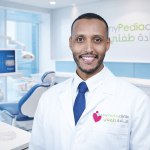
Dr. Yasmin Kottait is myPediaClinic’s dedicated pediatric dentist, specializing in creating positive dental experiences for children of all ages. Her philosophy is simple but powerful: children must love their dentist before they will listen to them. This approach has transformed countless anxious children into confident dental patients.
With specialized training in pediatric behavior management and advanced technology, Dr. Yasmin combines clinical expertise with a genuine love for working with children. She understands that every child is unique and requires an individualized approach. Whether your child is visiting the dentist for the first time or recovering from a previous negative experience, Dr. Yasmin’s patient, compassionate approach helps children feel safe and comfortable.
Dr. Yasmin stays current with the latest advances in pediatric dentistry, ensuring your child receives evidence-based care using the most comfortable techniques available. Her partnership with Dr. Medhat Abu-Shaaban and the myPediaClinic pediatric team allows for integrated care that considers your child’s overall health and development.
Options for Very Anxious Children
Some children need additional support to have successful dental experiences. At myPediaClinic in Dubai, we offer options for highly anxious patients.
Nitrous Oxide (Laughing Gas)
A safe, mild form of sedation:
- Inhaled through mask: Breathed in along with oxygen
- Relaxation effect: Reduces anxiety without putting child to sleep
- Quick onset: Works within minutes
- Quick recovery: Effects wear off in minutes after stopping
- No injection needed: Administered through breathing
- Safe history: Used in pediatric dentistry for decades
- Child remains awake: Can communicate throughout
Desensitization Visits
For very anxious children, we may recommend:
- Non-treatment visits: Coming just to meet the team and explore
- Gradual exposure: Slowly introducing dental experiences
- Building familiarity: Making the environment feel safe
- Chair rides: Fun interactions with the dental chair
- Counting teeth only: Simple, non-threatening examinations
- Progress at child’s pace: No pressure to proceed before ready
Coordination with Pediatrician
Our integrated approach at myPediaClinic allows:
- Medical history review: Understanding conditions that affect dental care
- Coordinated care: Dental and medical teams communicate
- Special needs accommodation: Tailored approaches for children with developmental or medical conditions
- Anxiety management: Coordinated strategies for highly anxious children
The Role of Parents During Dental Visits
Parents play an important role in dental visits, but the best approach varies by child and situation.
When Parents Should Stay
Parental presence can be helpful when:
- First visits: Especially for very young children
- Highly anxious children: Who need parental reassurance
- Special needs: Children who require familiar support
- Parent request: When parents prefer to be present
When Parents Might Step Back
Sometimes children do better without parents:
- Older children: May act more mature without parents watching
- Children who look to parents: For permission to be upset
- When parents are anxious: Children sense and mirror parental anxiety
- Building independence: Learning to trust other adults
If You Stay in the Room
- Stay calm: Your demeanor affects your child
- Let the dentist lead: Allow professionals to manage the situation
- Minimize talking: Too many voices can be confusing
- Positive body language: Relaxed posture and smile
- Save questions for after: Discuss concerns after the appointment
Building Positive Dental Habits at Home
Positive dental experiences extend beyond the clinic. Home habits reinforce positive attitudes toward oral health.
Making Brushing Fun
- Fun toothbrushes: Character brushes, light-up handles
- Flavored toothpaste: Child-approved flavors they enjoy
- Music and timers: Two-minute songs or sand timers
- Brushing together: Family brushing time
- Apps and games: Digital tools that make brushing interactive
- Praise and rewards: Recognition for good brushing
Healthy Dental Conversations
- Positive framing: Talk about keeping teeth strong and healthy
- Explain why: Age-appropriate reasons for oral care
- Avoid scare tactics: Do not threaten with dentist visits
- Share positive experiences: Talk about your good dental visits
- Answer questions honestly: But with positive spin
Between Visits
- Play dentist: Check stuffed animals’ or dolls’ teeth
- Read dental books: Age-appropriate stories about dental visits
- Watch videos: Child-friendly content about dental care
- Maintain routines: Consistent brushing and flossing
- Count down positively: Look forward to next dental visit
What to Expect at myPediaClinic Dental Visits
Knowing what to expect helps families prepare for successful dental visits at our Dubai Healthcare City clinic.
First Dental Visit
- Welcome and tour: Introduction to the space and team
- Getting to know your child: Conversation and rapport building
- Gentle examination: Checking teeth, gums, and development
- Demonstration: Showing equipment in a fun, non-threatening way
- Parent education: Guidance on home care
- Questions answered: Time for parents’ concerns
- Reward: Prize for being a great patient
Regular Check-ups
- Friendly greeting: Recognizing returning patients
- Health updates: Changes since last visit
- Thorough cleaning: Gentle but complete cleaning
- Examination: Checking for any concerns
- Fluoride treatment: Strengthening enamel
- X-rays if needed: Low-radiation digital images
- Report to parents: Findings and recommendations
Treatment Visits
If treatment is needed:
- Explanation: What will happen in child-friendly terms
- Numbing options: Single Tooth Anesthesia for comfort
- Entertainment: Virtual reality during procedures
- Gentle technique: Careful, patient approach
- Breaks if needed: Pausing if child needs a moment
- Celebration: Recognition of bravery after treatment
Long-Term Benefits of Positive Dental Experiences
Investing time and effort in creating positive dental experiences for your child yields benefits that extend far beyond childhood. Understanding these long-term advantages can motivate parents to prioritize positive dental visits.
Lifelong Oral Health Habits
Children who have positive dental experiences develop healthy habits that last a lifetime:
- Regular dental attendance: Adults who had positive childhood dental experiences are far more likely to maintain regular dental check-ups throughout their lives
- Early problem detection: Regular attendance means issues are caught early when treatment is simpler and less expensive
- Better oral hygiene: Positive associations with dental care translate to better daily brushing and flossing habits
- Lower dental costs: Prevention is always less expensive than treatment for advanced problems
- Healthier teeth and gums: Consistent care means fewer cavities, gum disease, and tooth loss over time
Overall Health Benefits
Oral health is connected to whole-body health in ways many parents do not realize:
- Heart health: Research links gum disease to increased cardiovascular risk
- Diabetes management: Oral infections can affect blood sugar control
- Respiratory health: Oral bacteria can be aspirated into the lungs
- Pregnancy outcomes: Maternal oral health affects pregnancy health
- Nutritional status: Healthy teeth enable proper chewing and nutrition
Psychological Benefits
Beyond physical health, positive dental experiences support psychological wellbeing:
- Confidence in healthcare settings: Children learn that medical environments are safe and helpful
- Self-esteem: Healthy, attractive teeth support social confidence
- Coping skills: Learning to manage mild anxiety builds resilience
- Trust in professionals: Positive experiences build trust in healthcare providers
- No dental phobia: Avoiding adult dental anxiety that affects millions
Common Mistakes Parents Make
Even well-meaning parents sometimes inadvertently increase their child’s dental anxiety. Recognizing these common mistakes helps you avoid them.
Waiting Too Long for the First Visit
Many parents wait until their child has a problem before visiting the dentist. By then, the first experience may involve treatment rather than a gentle introduction. Starting dental visits early, before any problems arise, allows children to become comfortable with the environment and staff while only experiencing simple, non-invasive check-ups.
Projecting Their Own Fears
Parents who have dental anxiety often unknowingly transfer those fears to their children. Comments like “I hated the dentist as a kid” or visible nervousness about dental appointments teaches children that dental visits are something to fear. If you have dental anxiety, consider having another adult take your child to appointments, or work on managing your own reactions around dental topics.
Using Dental Visits as Threats
Statements like “If you do not brush your teeth, the dentist will have to drill them” create negative associations with dental care. Instead, frame dental visits as positive maintenance that keeps teeth healthy and strong. The dentist should be viewed as a helper, not a punishment.
Overpreparing and Creating Anxiety
While preparation is important, too much detailed discussion can backfire. Extensive explanations of what might happen can create anxiety about things the child never would have worried about. Keep explanations simple, positive, and appropriate to your child’s age and personality.
Not Maintaining Regular Visits
Skipping check-ups because “nothing seems wrong” means children lose familiarity with the dental environment. When they eventually do need to visit, perhaps for a problem, the unfamiliarity adds to anxiety. Regular six-month visits keep the experience routine and normal.
Pediatric Dentistry in Dubai: Why myPediaClinic Stands Out
Dubai offers many dental options for children, but myPediaClinic provides a uniquely comprehensive approach that sets us apart from general dental practices.
Specialized Pediatric Training
Pediatric dentistry is a distinct specialty requiring additional years of training beyond general dentistry. Dr. Yasmin Kottait’s specialized education focused specifically on children’s dental development, behavior management, and the unique needs of growing smiles. This specialized knowledge means your child receives care tailored to their developmental stage, not just scaled-down adult dentistry.
Integrated Medical and Dental Care
myPediaClinic’s unique structure allows seamless communication between your child’s dentist and pediatrician. This integration is particularly valuable for children with medical conditions, developmental concerns, or complex health needs. Dr. Yasmin Kottait and Dr. Medhat Abu-Shaaban collaborate to ensure your child’s care is coordinated and comprehensive.
Dubai Healthcare City Location
Our convenient location in Dubai Healthcare City provides easy access for families across Dubai. The area offers ample parking, is accessible via multiple transportation options, and is part of Dubai’s premier medical hub. This location reflects our commitment to providing world-class pediatric care in a professional environment.
Frequently Asked Questions
What if my child refuses to open their mouth at the dentist?
Resistance is common, especially in young or anxious children. At myPediaClinic in Dubai, we never force children. Dr. Yasmin Kottait uses gentle, patient techniques to help children feel comfortable. We may start with non-threatening activities like counting teeth on a toy first. Sometimes multiple short visits build comfort before any examination. The goal is building trust so that children eventually willingly participate. Our approach transforms resistant children into cooperative patients over time.
At what age should my child first visit the pediatric dentist?
Children should have their first dental visit by their first birthday or within six months of their first tooth appearing. Early visits accomplish several goals: establishing a dental home, identifying potential problems early, providing parents with guidance on oral care, and making dental visits normal from the start. Children who begin dental visits young are much less likely to develop dental anxiety than those whose first experience is for a problem.
Can my child watch me get dental work done first?
This can help some children but backfire with others. If you are calm and have a positive experience, watching may demystify the dental visit. However, if your child sees you wince or hears adult discussions that sound scary, it may increase anxiety. Consider your child’s personality and your own comfort level. At myPediaClinic, we can discuss whether this approach might help your specific child.
My child had a bad dental experience before. Can they recover from dental anxiety?
Yes, absolutely. Many children overcome dental fear with the right approach. At myPediaClinic in Dubai, we specialize in helping children recover from negative dental experiences. We take things slowly, rebuild trust through positive interactions, and use technology like painless numbing and virtual reality to ensure new experiences are pleasant. Children are resilient, and with patience and the right care, they can develop positive attitudes toward dental visits.
Should I bribe my child to behave at the dentist?
We recommend positive reinforcement rather than bribery. There is a subtle but important difference. Bribery implies negotiations and may suggest something scary is coming. Instead, matter-of-factly mention that after the appointment, you will do something fun together (which you can do anyway). At myPediaClinic, we provide small prizes after visits, making the reward part of the natural experience rather than a negotiated incentive for enduring something unpleasant.
How can I help my child if they have had a traumatic dental experience elsewhere?
Recovering from dental trauma requires patience and the right environment. At myPediaClinic in Dubai, we specialize in helping children overcome previous negative experiences. We start with non-threatening visits focused on building trust, proceed at your child’s pace, and use technology like virtual reality entertainment and painless Single Tooth Anesthesia to ensure new experiences are completely different from what caused the trauma. Most children can overcome dental fear with consistent positive experiences over time.
How often should my child see the pediatric dentist?
Most children should visit the dentist every six months for routine check-ups and cleanings. This frequency allows early detection of any developing problems and keeps children familiar with the dental environment. Some children with higher cavity risk or orthodontic concerns may need more frequent visits. Dr. Yasmin Kottait will recommend a schedule appropriate for your child’s individual needs.
What is Single Tooth Anesthesia and how is it different from regular numbing?
Single Tooth Anesthesia (STA) is a computer-controlled injection system that delivers anesthetic in a more comfortable, precise way than traditional injections. Unlike traditional numbing that makes lips, tongue, and face feel numb for hours, STA numbs only the specific tooth being treated. Children do not experience the strange sensation of a numb face, can eat normally soon after treatment, and the anxiety-provoking traditional injection is replaced with a much more comfortable experience.
Does virtual reality really help with dental anxiety?
Yes, research shows that virtual reality significantly reduces dental anxiety in children. The immersive experience diverts attention away from dental procedures, making children less aware of sounds, sensations, and the passage of time. Many children at myPediaClinic report that procedures seem to go by quickly when they are watching movies or playing games through VR goggles. This technology transforms potentially stressful visits into enjoyable experiences.
What should I do if my child needs dental treatment but is too anxious?
We have multiple options for anxious children at myPediaClinic. Depending on your child’s level of anxiety and the treatment needed, we might recommend desensitization visits to build comfort first, nitrous oxide sedation to reduce anxiety during treatment, our Single Tooth Anesthesia for painless numbing, or virtual reality distraction during procedures. Dr. Yasmin Kottait will work with your family to develop an approach that meets your child’s specific needs.
Is it normal for toddlers to resist dental visits?
Yes, very normal. Toddlers naturally resist unfamiliar situations and may not understand what is happening. This is why starting dental visits early is important – it normalizes the experience before children reach the peak resistance stage. At myPediaClinic, we are experienced in working with toddlers and use age-appropriate techniques including play, brief examinations, and lots of patience to help young children become comfortable with dental care.
Can siblings come to dental appointments together?
This depends on the children and the situation. Sometimes older siblings who are comfortable with dental visits can model positive behavior for younger siblings. However, having both children present can also be distracting or anxiety-inducing. We can discuss what approach might work best for your family. Some parents find that separate appointments allow each child to receive individualized attention.
What dental problems are most common in children in Dubai?
Children in Dubai experience similar dental issues to children worldwide, including tooth decay, gum disease, and dental injuries. However, Dubai’s environment presents unique factors including dry air from air conditioning affecting oral mucosa, high sugar consumption from readily available sweets and juices, and diverse international backgrounds meaning varying fluoride exposure. Regular dental visits at myPediaClinic help prevent and detect these problems early.
How do I know if my child needs braces?
Signs that orthodontic evaluation may be needed include crowded or crooked teeth, difficulty chewing, mouth breathing, thumb sucking beyond age five, early or late loss of baby teeth, jaws that make sounds or shift, and teeth that do not meet properly when biting. Dr. Yasmin Kottait monitors dental development at each visit and will recommend orthodontic consultation when appropriate, typically around age seven for initial evaluation.
What happens if my child gets a cavity?
If Dr. Yasmin Kottait detects a cavity, she will explain the treatment needed in child-friendly terms. Small cavities can be treated with fillings, which involves removing the decayed portion and filling the space with tooth-colored material. At myPediaClinic, we use Single Tooth Anesthesia for painless numbing and can provide virtual reality entertainment during the procedure. Most children handle cavity treatment well when it is approached with appropriate behavior management techniques.
Are dental x-rays safe for children?
Yes, dental x-rays are very safe. At myPediaClinic, we use digital x-rays that emit up to 90 percent less radiation than traditional film x-rays. We also use lead aprons and thyroid collars for additional protection. X-rays are only taken when medically necessary to detect problems that cannot be seen during visual examination. The benefits of early problem detection far outweigh the minimal radiation exposure from modern digital dental x-rays.
What should I do if my child knocks out a permanent tooth?
This is a dental emergency requiring immediate attention. If a permanent tooth is completely knocked out, try to find the tooth and handle it by the crown (top part), not the root. Rinse it gently with water if dirty, but do not scrub it. Try to place the tooth back in the socket if possible, or keep it in milk or saliva. Contact myPediaClinic immediately or go to the nearest emergency dental facility. Time is critical – the sooner the tooth is reimplanted, the better the chances of saving it.
How can I prevent cavities in my child?
Cavity prevention involves multiple strategies: brushing twice daily with fluoride toothpaste, flossing daily once teeth touch, limiting sugary foods and drinks, avoiding prolonged bottle feeding or sippy cup use, drinking plenty of water, eating a balanced diet rich in calcium and nutrients, and visiting the dentist regularly for check-ups and fluoride treatments. Dr. Yasmin Kottait provides personalized guidance based on your child’s specific cavity risk factors.
When should my child start flossing?
Flossing should begin when two teeth touch each other, typically around ages two to three. Young children need help with flossing until they develop the dexterity to do it effectively themselves, usually around age ten. Floss picks designed for children can make the process easier. Regular flossing removes plaque and food particles from between teeth where toothbrush bristles cannot reach, helping prevent cavities and gum disease.
Does myPediaClinic handle dental emergencies?
Yes, myPediaClinic provides care for pediatric dental emergencies including knocked-out teeth, severe toothaches, broken teeth, injuries to the mouth, and swelling or infection. If your child has a dental emergency, contact our clinic immediately. We will provide guidance over the phone and arrange for your child to be seen as quickly as possible. Having an established relationship with Dr. Yasmin Kottait means your child receives emergency care from a familiar, trusted provider.
Schedule Your Child’s Positive Dental Experience
At myPediaClinic in Dubai Healthcare City, we are committed to helping every child develop a positive relationship with dental care. Dr. Yasmin Kottait and our pediatric dental team combine expertise, compassion, and technology to create experiences children actually enjoy.
What sets us apart:
- Pediatric dentist specialized in treating children
- Painless numbing with Single Tooth Anesthesia
- Virtual reality entertainment during procedures
- Behavior management expertise
- Child-friendly environment
- Options for highly anxious children
- Integrated care with pediatric medicine
Contact myPediaClinic:
- Location: Dubai Healthcare City, Dubai, UAE
- Book online: Schedule a Dental Appointment
- Phone: +971-4-430-5926
Transform your child’s dental experiences from stressful to enjoyable. Contact the Best Pediatric Clinic in Dubai today.