

Tonsil Infection in Children: Diagnosis, Treatment, and When Surgery Is Needed
Tonsil infections, medically known as tonsillitis, are among the most common reasons Dubai parents bring their children to the pediatrician. At myPediaClinic Dubai, our experienced team led by Dr. Medhat Abu-Shaaban and Dr. Yasmin Kottait diagnoses and treats numerous cases of tonsillitis every year, helping families understand this condition and make informed decisions about treatment, including when tonsillectomy (surgical removal of tonsils) might be necessary.
Understanding tonsillitis, its causes, symptoms, and treatment options empowers parents to recognize when their child needs medical attention and helps them navigate treatment decisions confidently. Whether dealing with a first episode of tonsillitis or managing recurrent infections, having accurate information from trusted pediatric experts makes all the difference.
What Are Tonsils and What Do They Do?
Before understanding tonsillitis, it’s helpful to know what tonsils are and their role in the body. Tonsils are two masses of lymphoid tissue located on either side of the back of the throat. They’re part of the immune system’s first line of defense against bacteria and viruses that enter through the mouth and nose.
Tonsils contain specialized cells that produce antibodies and help identify and fight infections. In young children, tonsils are relatively large and play an active role in developing immunity. As children grow and their immune systems mature, tonsils typically become less important, which is why they can be removed if necessary without significantly impacting overall immune function.
The adenoids, another type of lymphoid tissue located higher in the throat behind the nose, work alongside tonsils as part of the immune defense system. Sometimes adenoid problems occur together with tonsil issues, a consideration when evaluating recurrent throat infections.
Dr. Medhat Abu-Shaaban explains that while tonsils serve a protective function, they can become more problematic than helpful when they develop frequent infections or become enlarged enough to cause breathing or swallowing difficulties. In these situations, the benefits of keeping tonsils may be outweighed by the problems they cause.
Types and Causes of Tonsillitis
Tonsillitis can be caused by various pathogens and can present as acute (sudden onset) or chronic (persistent or recurrent) infection. Understanding the cause is important because it guides treatment decisions.
Viral tonsillitis is the most common type, accounting for about 70% of tonsillitis cases in children. Numerous viruses can cause tonsillitis, including adenovirus, influenza virus, Epstein-Barr virus (which causes infectious mononucleosis), enteroviruses, and rhinovirus. Viral tonsillitis doesn’t respond to antibiotics and typically resolves on its own with supportive care.
Bacterial tonsillitis accounts for about 15-30% of cases, with Group A Streptococcus (the bacteria causing “strep throat”) being the most common bacterial cause in school-age children. Other bacteria can also cause tonsillitis, though less frequently. Bacterial tonsillitis requires antibiotic treatment to prevent complications and speed recovery.
Chronic tonsillitis involves persistent inflammation and infection of the tonsils lasting weeks to months. This can result from incompletely treated acute infections, biofilm formation on tonsil tissue that harbors bacteria, or continuous low-grade infection.
Recurrent tonsillitis is defined as multiple discrete episodes of acute tonsillitis over time. The definition varies, but typically refers to seven or more infections in one year, five or more per year for two consecutive years, or three or more per year for three consecutive years.
At myPediaClinic Dubai, our pediatricians carefully evaluate each case of tonsillitis to determine the likely cause, which guides appropriate treatment. This often involves examining the throat, assessing symptoms, and sometimes performing rapid strep tests or throat cultures.
Recognizing Symptoms of Tonsillitis in Children
Tonsillitis symptoms can range from mild to severe, and recognizing them helps parents know when to seek medical attention. Common symptoms include sore throat, which is typically the primary complaint and can range from mild discomfort to severe pain that makes swallowing difficult.
Visibly red and swollen tonsils are characteristic, often with white or yellow patches or streaks of pus on their surface. These patches, called exudate, are particularly common with bacterial infections but can also occur with some viral causes like infectious mononucleosis.
Fever is common, particularly with bacterial tonsillitis, where temperatures often exceed 38.5°C (101°F) and can reach 39-40°C (102-104°F). Viral tonsillitis may cause lower-grade fevers or no fever at all.
Difficulty and pain when swallowing (odynophagia) can cause children to refuse food and drinks, raising concerns about dehydration. Young children who can’t articulate throat pain may simply refuse to eat or drink without explaining why.
Swollen, tender lymph nodes in the neck (particularly under the jaw and along the sides of the neck) occur as the immune system responds to infection. These nodes may be easily visible or felt as lumps under the skin.
Additional symptoms can include bad breath (halitosis), muffled voice or “hot potato” voice (speaking as if holding something hot in the mouth), ear pain (referred pain from the throat), headache, stomachache (particularly in younger children), and general malaise or fatigue.
Dr. Yasmin Kottait emphasizes that symptom patterns can provide clues about the cause. For example, viral tonsillitis often includes cold symptoms like runny nose, cough, and conjunctivitis (pink eye), while bacterial strep throat typically presents with sudden-onset severe sore throat and high fever without cold symptoms.
How Tonsillitis Is Diagnosed at myPediaClinic Dubai
Accurate diagnosis is crucial for appropriate treatment. At myPediaClinic, our pediatricians use a combination of clinical assessment and diagnostic testing to identify tonsillitis and determine its cause.
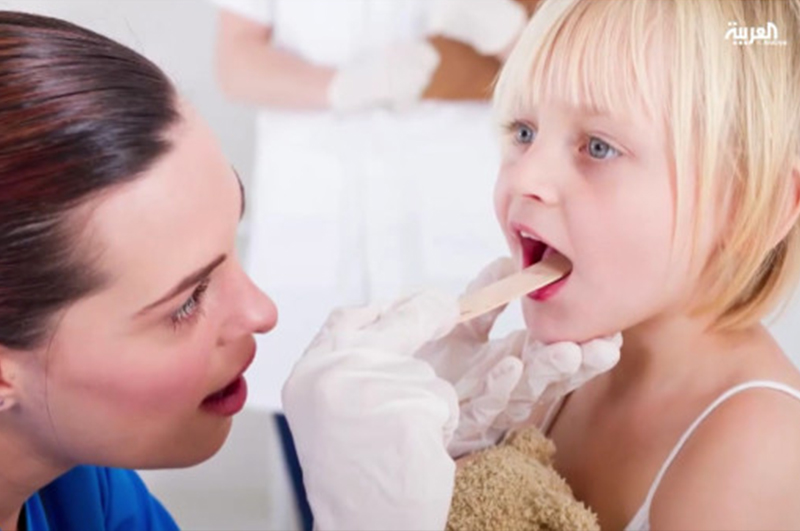
Physical examination involves inspecting the throat with good lighting to visualize the tonsils. The doctor assesses tonsil size, color, presence of exudate or pus, and signs of inflammation. Examination also includes checking for swollen lymph nodes in the neck, assessing for signs of dehydration, checking ears (since ear infections can occur alongside tonsillitis), and evaluating the child’s overall appearance and level of illness.
Rapid strep test is a quick diagnostic test performed by swabbing the throat to detect Group A Streptococcus bacteria. Results are available within minutes, allowing for immediate treatment decisions. While rapid strep tests are highly specific (positive results are reliable), they can occasionally produce false negatives.
Throat culture involves swabbing the throat and sending the specimen to a laboratory where bacteria are grown and identified. This is the gold standard for diagnosing strep throat and other bacterial infections. Results typically take 24-48 hours. Throat cultures are sometimes performed when rapid strep tests are negative but bacterial infection is still suspected based on symptoms.
Complete blood count (CBC) may be ordered for severe or recurrent cases to assess infection severity and type. Certain patterns in blood cell counts can suggest viral versus bacterial infection and identify conditions like infectious mononucleosis.
Monospot test or EBV antibodies may be checked if infectious mononucleosis is suspected, particularly in adolescents with severe tonsillitis, extreme fatigue, and enlarged lymph nodes.
Dr. Medhat Abu-Shaaban explains that not every child with sore throat requires extensive testing. For mild cases that appear viral, supportive care without testing may be appropriate. However, for moderate to severe symptoms, symptoms suggesting strep throat, or recurrent infections, diagnostic testing helps ensure accurate diagnosis and appropriate treatment.
Treatment Options for Tonsillitis
Treatment for tonsillitis depends on whether the infection is viral or bacterial, symptom severity, and the child’s overall health. At myPediaClinic Dubai, we develop individualized treatment plans based on each child’s specific situation.
Treatment for viral tonsillitis focuses on symptom relief and supportive care, as antibiotics don’t work against viruses. Rest is important, with children staying home from school until fever resolves and they feel well enough to participate in activities. Adequate hydration through water, clear soups, popsicles, or electrolyte solutions is crucial, particularly if swallowing is painful and children resist drinking.
Pain and fever management with acetaminophen or ibuprofen in appropriate doses based on the child’s weight provides comfort and reduces fever. Never give aspirin to children due to the risk of Reye’s syndrome. Soft, easy-to-swallow foods like yogurt, pudding, mashed potatoes, and smoothies may be better tolerated than solid foods. Warm liquids like tea with honey (for children over 1 year) or warm broth can soothe throat pain.
Gargling with warm salt water (for older children who can gargle without swallowing) can provide temporary relief. Throat lozenges or sprays may help older children, though these should be used cautiously in young children due to choking risk.
Treatment for bacterial tonsillitis includes the supportive measures described above plus antibiotic therapy. Penicillin or amoxicillin is typically the first-line antibiotic for strep throat, given for 10 days. For children allergic to penicillin, alternative antibiotics like azithromycin or cephalosporins may be prescribed.
It’s crucial to complete the full course of antibiotics even if the child feels better after a few days. Stopping antibiotics early can lead to infection recurrence and increases the risk of complications. Most children show significant improvement within 24-48 hours of starting antibiotics, with fever resolving and throat pain decreasing.
Treatment for recurrent or chronic tonsillitis may involve repeated courses of antibiotics for individual episodes, prophylactic (preventive) antibiotics in some cases, though this is controversial and not routinely recommended, and evaluation for tonsillectomy if infections meet specific criteria.
Dr. Yasmin Kottait emphasizes the importance of follow-up care, particularly for bacterial tonsillitis. Children who don’t improve as expected may need reevaluation and possibly different antibiotics. Persistent or worsening symptoms despite appropriate treatment warrant prompt medical attention.
Complications of Untreated or Recurrent Tonsillitis
While most cases of tonsillitis resolve without complications, untreated bacterial infections or recurrent tonsillitis can lead to serious problems. Understanding potential complications reinforces the importance of appropriate treatment and follow-up.
Peritonsillar abscess is a collection of pus that forms near the tonsil, causing severe throat pain, difficulty opening the mouth (trismus), drooling, and muffled voice. This requires urgent medical treatment, often including drainage of the abscess and intravenous antibiotics. Peritonsillar abscess is more common in adolescents and adults but can occur in children.
Rheumatic fever is a serious complication of untreated strep throat that can develop 2-3 weeks after the initial infection. It causes inflammation of the heart, joints, skin, and nervous system and can lead to permanent heart damage. Rheumatic fever is preventable through appropriate antibiotic treatment of strep throat, which is why diagnosing and treating bacterial tonsillitis is so important.
Post-streptococcal glomerulonephritis is kidney inflammation that can occur after strep infection. While antibiotics don’t prevent this complication, early recognition and supportive care help manage it effectively.
Sleep disturbances and obstructive sleep apnea can result from chronically enlarged tonsils. This can lead to poor sleep quality, daytime fatigue, behavioral problems, and in severe cases, failure to thrive and developmental delays.
Chronic school absences from recurrent tonsillitis can impact children’s education and social development. Missing significant amounts of school due to frequent infections is a quality-of-life consideration when evaluating whether tonsillectomy is appropriate.
When Is Tonsillectomy (Tonsil Surgery) Recommended?
Tonsillectomy is one of the most common surgical procedures performed in children, but it’s not appropriate for every child with tonsillitis. At myPediaClinic Dubai, Dr. Medhat Abu-Shaaban carefully evaluates each child to determine whether surgery is warranted based on established medical guidelines.
Indications for tonsillectomy include:
Recurrent tonsillitis meeting specific frequency criteria: seven or more documented infections in one year, five or more per year for two consecutive years, or three or more per year for three consecutive years. Documentation should include physician-diagnosed infections, not just parental reporting.
Obstructive sleep apnea caused by enlarged tonsils is one of the strongest indications for tonsillectomy. Signs include loud snoring, observed pauses in breathing during sleep, restless sleep, bedwetting, daytime fatigue, and behavioral or learning problems related to poor sleep quality. Sleep studies may be performed to confirm obstructive sleep apnea before recommending surgery.
Difficulty swallowing or breathing due to extremely enlarged tonsils, even without documented infections, may warrant surgery. Tonsils are graded on a scale of 1-4 based on size, with 3+ or 4+ (kissing tonsils that touch or nearly touch in the midline) potentially causing significant obstruction.
Peritonsillar abscess, particularly recurrent abscesses, often leads to tonsillectomy recommendation to prevent future occurrences.
Suspicion of malignancy is rare but requires biopsy and often removal of abnormal tonsil tissue. Asymmetric tonsils (one much larger than the other) or unusual appearance may raise concerns requiring evaluation.
Chronic tonsillitis with persistent symptoms despite medical management, particularly if affecting quality of life, may benefit from surgical removal.
Dr. Medhat Abu-Shaaban emphasizes that tonsillectomy decisions should be individualized, considering medical criteria, impact on the child’s quality of life, family preferences and concerns, the child’s overall health and surgical risk factors, and potential benefits versus risks of surgery.
The Tonsillectomy Procedure: What to Expect
If tonsillectomy is recommended, understanding the procedure and recovery process helps families prepare. At myPediaClinic, we coordinate with excellent ENT (ear, nose, and throat) surgeons in Dubai to ensure optimal surgical care for children requiring tonsillectomy.
Pre-operative preparation includes a thorough health assessment to ensure the child is healthy enough for surgery, review of medications and supplements (some may need to be stopped before surgery), pre-operative instructions about fasting (typically no food or drink after midnight before morning surgery), and discussion of anesthesia, surgical procedure, and post-operative care.
The surgery is performed under general anesthesia, typically taking 30-45 minutes. Several surgical techniques exist, including traditional dissection, electrocautery, coblation, and laser surgery. The surgeon chooses the approach based on the child’s specific situation. Adenoids are often removed simultaneously if they’re also enlarged or problematic.
Immediate post-operative care occurs in the recovery room where children wake from anesthesia under close monitoring. Pain management begins immediately, and children are observed for any bleeding before discharge. Most tonsillectomies are outpatient procedures, with children going home the same day, though some cases may require overnight observation.
Recovery at home typically takes 10-14 days. The first few days are usually the most uncomfortable, with throat pain gradually improving over the first week before sometimes worsening again around days 5-7 as scabs form and fall off. Pain management with prescribed medications and regular acetaminophen or ibuprofen is crucial. Adequate hydration is essential, with children encouraged to drink fluids frequently despite discomfort.
Diet starts with cold, soft foods like popsicles, ice cream, and smoothies, gradually progressing to soft foods like pasta, mashed potatoes, and scrambled eggs, and eventually returning to normal diet as tolerated, usually within 2 weeks. Rough, scratchy, or acidic foods should be avoided initially.
Activity restrictions include rest for the first few days, avoiding strenuous activity or sports for 2 weeks, staying home from school for at least 1 week, and avoiding exposure to sick individuals during recovery.
Risks and Complications of Tonsillectomy
Like any surgery, tonsillectomy carries risks, though serious complications are uncommon when the procedure is performed by experienced surgeons on appropriately selected patients.
Bleeding is the most significant risk, occurring in about 2-4% of patients. It can happen during surgery, in the first 24 hours after surgery (primary bleeding), or 5-10 days after surgery when scabs fall off (secondary bleeding). Minor bleeding may resolve on its own, but significant bleeding requires medical evaluation and possibly emergency intervention.
Pain and difficulty swallowing are expected after tonsillectomy but are usually manageable with appropriate pain medication and typically improve over 10-14 days.
Dehydration can occur if children don’t drink enough due to pain. This is preventable through aggressive pain management and encouragement of frequent fluid intake.
Infection at the surgical site is uncommon but can occur. Signs include increasing pain, fever, or foul odor from the throat.
Anesthesia risks are very low in healthy children but exist with any surgical procedure requiring general anesthesia.
Voice changes are usually temporary but rarely can be permanent, typically involving minor changes in voice quality rather than significant voice loss.
Velopharyngeal insufficiency is a rare complication where the soft palate doesn’t close properly during speech, causing nasal-sounding speech.
Dr. Yasmin Kottait ensures families understand these risks before consenting to surgery, while emphasizing that serious complications are rare and the procedure is generally very safe when performed by qualified surgeons.
Frequently Asked Questions About Tonsillitis and Tonsillectomy
How can I tell if my child’s sore throat is viral or bacterial?
Distinguishing between viral and bacterial tonsillitis can be challenging based on symptoms alone. Bacterial strep throat often presents with sudden onset severe sore throat, high fever (often above 38.5°C or 101°F), white patches on tonsils, swollen tender neck lymph nodes, and absence of cough or runny nose. Viral tonsillitis more commonly includes gradual onset, lower-grade fever, cold symptoms like cough and runny nose, and conjunctivitis. However, these patterns aren’t absolute, which is why testing is often necessary. At myPediaClinic Dubai, Dr. Medhat Abu-Shaaban can perform rapid strep tests to accurately diagnose bacterial tonsillitis and prescribe appropriate treatment.
Can tonsillitis spread to other family members?
Yes, both viral and bacterial tonsillitis can be contagious. The infections spread through respiratory droplets when infected individuals cough or sneeze, and through direct contact like sharing utensils or drinks. To minimize transmission, keep sick children home from school until they’ve been on antibiotics for at least 24 hours (for bacterial infections) or until fever-free for 24 hours (for viral infections), practice good hand hygiene with frequent handwashing, avoid sharing eating utensils, cups, or personal items, and cover coughs and sneezes with elbows rather than hands. Despite precautions, family members sometimes contract infections from each other, particularly young siblings.
How long should my child stay home from school with tonsillitis?
For bacterial tonsillitis, children should stay home until they’ve been on antibiotics for at least 24 hours and are fever-free without fever-reducing medication. Most children feel well enough to return to school after 24-48 hours of antibiotic treatment. For viral tonsillitis, children should stay home until fever has been gone for at least 24 hours without medication and they feel well enough to participate in school activities. This typically means 2-5 days depending on symptom severity. Returning too early can lead to relapse and spread infection to classmates.
Will my child’s immunity be affected after tonsillectomy?
No, research shows that tonsillectomy doesn’t significantly impact overall immune function. While tonsils are part of the immune system, they’re just one component of a complex network of lymphoid tissue throughout the body. Other immune tissues compensate for tonsil removal. Studies following children for years after tonsillectomy show no increased susceptibility to infections compared to children who keep their tonsils. At myPediaClinic, Dr. Yasmin Kottait reassures parents that tonsillectomy is safe from an immunity perspective and won’t leave children more vulnerable to infections.
What age is best for tonsillectomy?
Tonsillectomy can be performed at any age when medically indicated, though it’s most commonly done in children aged 3-15 years. For sleep apnea, surgery may be recommended even in very young children (under 3 years) because of the serious impacts of sleep disruption on development. For recurrent tonsillitis, waiting until at least age 3-4 is often preferred if possible, as some children outgrow frequent infections. However, if a child meets criteria for surgery at a younger age, delaying may not be beneficial. The decision is individualized based on specific medical indications, symptom severity, and impact on quality of life.
Can tonsils grow back after surgery?
While complete regrowth is rare, minimal tonsil tissue can occasionally regenerate after tonsillectomy, particularly if small amounts of tonsil tissue were left during surgery. This happens in less than 5% of cases and rarely causes problems requiring repeat surgery. Even when regrowth occurs, the tissue typically doesn’t enlarge to pre-surgery size or cause the same problems. If symptoms recur after tonsillectomy, evaluation by an ENT specialist can determine whether regrowth is occurring and whether any intervention is needed.
What are the warning signs of complications after tonsillectomy?
Contact your doctor or seek emergency care if you notice bleeding from the mouth or nose (even small amounts warrant medical evaluation), difficulty breathing or noisy breathing, refusal to drink fluids for more than a few hours, signs of dehydration (decreased urination, dry mouth, extreme fatigue), fever above 38.5°C (101°F) persisting beyond the first day after surgery, severe pain not controlled by prescribed medications, or vomiting that prevents keeping down fluids or medications. While most children recover smoothly, being alert to these warning signs ensures prompt treatment of any complications that do occur.
Does my child really need antibiotics for every tonsillitis episode?
No, antibiotics are only necessary for bacterial tonsillitis, not viral tonsillitis which represents the majority of cases. Overusing antibiotics contributes to antibiotic resistance and can cause side effects without providing benefit for viral infections. At myPediaClinic Dubai, our pediatricians carefully assess each case and often perform rapid strep tests to determine whether antibiotics are truly needed. We prescribe antibiotics only when there’s confirmed or highly suspected bacterial infection, following evidence-based guidelines to ensure appropriate antibiotic use.
Can children drink cold beverages after tonsillectomy?
Yes, cold beverages and foods are actually encouraged after tonsillectomy. Cold provides numbing relief for throat pain and the slight vasoconstriction can help reduce bleeding risk. Popsicles, ice cream, smoothies, and cold water are all excellent choices in the early recovery period. Some children prefer room temperature liquids, which is also fine. The key is encouraging adequate fluid intake regardless of temperature preference. Avoid hot beverages and foods in the first few days as heat can increase bleeding risk.
How much school will my child miss for tonsillectomy?
Most children miss 7-10 days of school for tonsillectomy and recovery. The surgery itself accounts for 1-2 days, and recovery time before feeling well enough for school typically takes another 5-8 days. Some children feel ready to return after one week, while others need closer to two weeks. Children can usually do quiet activities, homework, and screen time after the first few days of recovery. Planning surgery during school breaks can minimize academic disruption, though waiting for holidays shouldn’t delay necessary surgery if symptoms are severe.
Are there alternatives to tonsillectomy for recurrent tonsillitis?
For children who have frequent tonsillitis but don’t quite meet criteria for surgery, or for families wanting to avoid surgery if possible, alternatives include watchful waiting to see if children outgrow frequent infections (which some do as their immune systems mature), aggressive treatment of each infection with appropriate antibiotics, attention to factors that might increase infection risk (like secondhand smoke exposure, allergen control), and ensuring overall health through good nutrition, adequate sleep, and stress management. However, if children clearly meet criteria for tonsillectomy and are significantly impacted by recurrent infections, surgery often provides definitive relief that medical management cannot achieve.
Can tonsillitis cause bad breath in children?
Yes, tonsillitis commonly causes halitosis (bad breath) due to bacterial overgrowth on the tonsils, pus and debris accumulating in tonsil crypts, and mouth breathing when nasal passages are congested. The bad breath typically resolves as the infection clears. Children with chronic tonsillitis may have persistent bad breath that improves after tonsillectomy. Good oral hygiene including gentle teeth brushing and tongue cleaning can help, though it won’t completely eliminate the odor while active infection is present.
What is the success rate of tonsillectomy for recurrent infections?
Tonsillectomy is highly effective for appropriately selected patients, with success rates of 80-90% or higher. Most children who meet criteria for surgery due to recurrent tonsillitis experience dramatic reduction in throat infections after surgery. Some may still get occasional sore throats or upper respiratory infections, but the frequency and severity are typically much reduced. For children with obstructive sleep apnea due to enlarged tonsils, success rates are even higher, with most experiencing resolution of sleep-disordered breathing. At myPediaClinic, Dr. Medhat Abu-Shaaban discusses expected outcomes to ensure families have realistic expectations.
Can Dubai’s climate contribute to recurrent tonsillitis?
Dubai’s climate can influence respiratory infections in several ways. The extensive use of air conditioning creates dry indoor air that can irritate throats and potentially increase susceptibility to infections. Moving between extreme outdoor heat and cold air-conditioned indoor spaces stresses the body. Dust and allergens in the environment can cause throat irritation that may predispose to infections. However, climate alone doesn’t cause recurrent tonsillitis. The condition results from infection with bacteria or viruses. Maintaining good indoor air quality, staying hydrated, and managing allergies can help minimize environmental contributions to throat problems.
How do I prepare my child emotionally for tonsillectomy?
Preparing children for surgery involves explaining the procedure in age-appropriate terms, focusing on how they’ll feel better after surgery, being honest about discomfort but reassuring them that pain medication will help, reading children’s books about tonsillectomy or watching age-appropriate videos, touring the hospital or surgical center if possible so the environment is familiar, allowing children to express fears and concerns and validating their feelings, and emphasizing that you’ll be there when they wake up. Avoid using frightening language or comparing surgery to other scary experiences. At myPediaClinic, our team can provide resources and guidance to help families prepare children for surgery.
Can adults get tonsillitis, or is it only a childhood condition?
Adults can definitely get tonsillitis, though it’s less common than in children. When adults develop tonsillitis, it’s often more severe and recovery tends to be longer. Tonsillectomy in adults is also possible but involves a more difficult recovery compared to children. Parents who have tonsillitis can transmit it to their children and vice versa. If multiple family members develop throat infections, all should be evaluated and treated appropriately to prevent ping-pong transmission within the household.
What happens during the follow-up visit after tonsillitis?
Follow-up visits after tonsillitis typically occur 2-3 weeks after acute infection to ensure complete recovery and assess whether preventive measures are needed. During follow-up, the pediatrician examines the throat to ensure infection has resolved, checks that lymph nodes have returned to normal size, reviews how the child responded to treatment, discusses any complications or concerns that arose, and for recurrent tonsillitis, reviews infection frequency and considers whether tonsillectomy evaluation is warranted. These visits are important for tracking patterns and making informed decisions about ongoing care.
Are there any dietary changes that can prevent tonsillitis?
No specific diet prevents tonsillitis, which is caused by infections with viruses or bacteria. However, overall good nutrition supports immune function, which may help the body fight off infections more effectively. Ensure children eat a balanced diet with adequate fruits and vegetables, maintain good hydration, get sufficient vitamin D (particularly relevant in Dubai where sun avoidance is common), and avoid excessive sugar which may suppress immune function. Probiotic-rich foods like yogurt may support overall health, though evidence specifically for tonsillitis prevention is limited. These healthy habits support general wellbeing even if they don’t specifically prevent throat infections.
Can homeopathic or natural remedies treat tonsillitis?
While various natural remedies are promoted for tonsillitis, including herbal supplements, honey, garlic, and essential oils, scientific evidence for their effectiveness is limited. Some natural approaches like honey for cough (in children over 1 year), warm liquids for comfort, and rest for recovery can support healing alongside medical treatment. However, these shouldn’t replace appropriate medical care, particularly for bacterial tonsillitis requiring antibiotics. At myPediaClinic Dubai, we practice evidence-based medicine while respecting families’ interest in complementary approaches. Dr. Yasmin Kottait can discuss which natural remedies might be safe additions to medical treatment and which should be avoided.
What should I do if my child’s tonsillitis keeps coming back after starting antibiotics?
Recurrent symptoms shortly after completing antibiotics might indicate treatment failure (the bacteria wasn’t fully eradicated), reinfection with a new strain, viral infection occurring after the bacterial one resolved, or chronic carrier state where bacteria persist despite treatment. Contact myPediaClinic for reevaluation. Your pediatrician may perform repeat testing, prescribe a different antibiotic, recommend longer treatment course, or consider whether chronic tonsillitis or carrier state is present. Frequent early recurrences might also trigger discussion about whether tonsillectomy should be considered.
Comprehensive Tonsillitis Care at myPediaClinic Dubai
At myPediaClinic, we provide complete care for children with tonsillitis, from initial diagnosis through treatment and long-term management. Our experienced pediatricians, Dr. Medhat Abu-Shaaban and Dr. Yasmin Kottait, understand how disruptive recurrent throat infections can be for children and families.
Our comprehensive approach includes accurate diagnosis using clinical assessment and appropriate testing, evidence-based treatment for both viral and bacterial infections, careful monitoring of children with recurrent infections, thoughtful evaluation for tonsillectomy when appropriate, coordination with excellent ENT surgeons in Dubai for children needing surgery, and ongoing support and education for families.
We serve Dubai’s diverse, international community with sensitivity to cultural perspectives and commitment to clear communication in multiple languages. Our modern facilities, convenient location, and flexible appointment availability make accessing quality pediatric care easier for busy families.
Schedule an Evaluation at myPediaClinic Dubai
If your child has throat pain, difficulty swallowing, fever, or other symptoms suggesting tonsillitis, don’t wait to seek medical attention. Early diagnosis and appropriate treatment can prevent complications and help your child feel better faster.
For children with recurrent throat infections, schedule a comprehensive evaluation with Dr. Medhat Abu-Shaaban or Dr. Yasmin Kottait to discuss whether ongoing medical management or surgical evaluation is most appropriate. We’ll take time to review your child’s complete history, examine them thoroughly, and develop a personalized care plan that addresses your family’s needs and concerns.
Contact myPediaClinic today to schedule an appointment for tonsillitis evaluation and treatment. Your child deserves expert, compassionate care from Dubai’s trusted pediatric team. Whether managing a single episode of tonsillitis or addressing recurrent infections, we’re here to provide the excellent medical care and supportive guidance your family needs. Call now to book your consultation and take the first step toward your child’s throat health and overall wellbeing.