
Understanding Molluscum Contagiosum in Children: A Complete Guide for Dubai Parents
If you’ve noticed small, raised, pearl-like bumps on your child’s skin, you may be dealing with molluscum contagiosum, a common viral skin infection affecting children worldwide, including many young patients in Dubai. At myPediaClinic Dubai, our experienced pediatricians, Dr. Medhat Abu-Shaaban and Dr. Yasmin Kottait, frequently diagnose and help families manage this benign but sometimes persistent skin condition.
Molluscum contagiosum, often simply called “molluscums” or “water warts,” is one of the most common skin infections in childhood. While the bumps may look concerning to parents, particularly when they multiply or spread to different areas of the body, this condition is generally harmless and eventually resolves on its own. Understanding what molluscum is, how it spreads, and what treatment options are available helps parents make informed decisions about managing this condition in their children.
What Is Molluscum Contagiosum?
Molluscum contagiosum is a viral infection of the skin caused by the molluscum contagiosum virus (MCV), which belongs to the poxvirus family. This virus specifically affects the outer layer of skin, causing characteristic bumps that are typically painless and don’t cause systemic illness like fever or general unwellness.
The condition gets its name from the appearance of the bumps: “molluscum” refers to their soft, flesh-like texture, while “contagiosum” indicates that the condition is contagious and can spread from person to person or from one part of the body to another.
Molluscum primarily affects children between 1 and 10 years of age, with peak incidence between 2 and 5 years old. The condition is less common in adults, though it can occur, particularly in individuals with weakened immune systems. The infection is completely unrelated to water exposure or “warts” (which are caused by different viruses), despite the common nickname “water warts.”
Dr. Medhat Abu-Shaaban explains that while molluscum is contagious, it’s generally considered a minor condition that doesn’t require aggressive treatment in most cases. The decision about whether and how to treat depends on various factors including the number and location of bumps, whether they’re causing symptoms, cosmetic concerns, and the child’s overall health status.
Recognizing Molluscum: What Do the Bumps Look Like?
Molluscum bumps have distinctive characteristics that help pediatricians identify them, though they can sometimes be confused with other skin conditions. Understanding these features helps parents recognize molluscum and know when to seek medical evaluation.
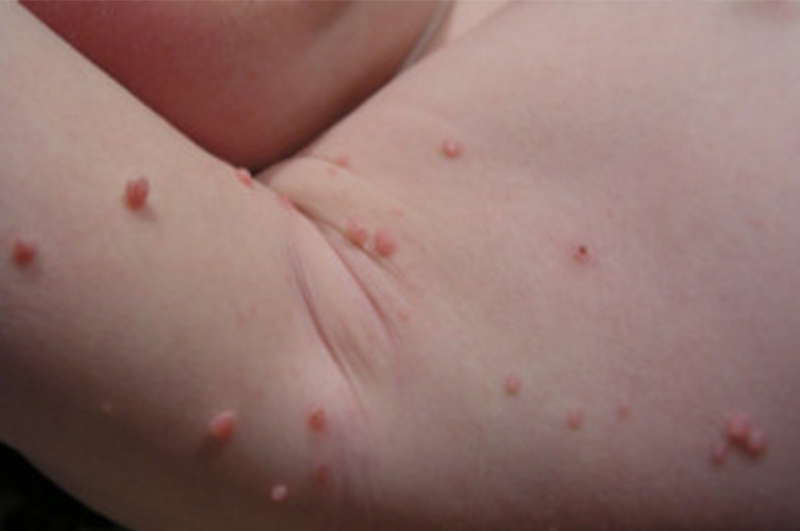
The classic molluscum lesion is a small, raised, round bump that’s usually 2-5 millimeters in diameter (about the size of a pencil eraser), though they can occasionally grow larger. The bumps are typically flesh-colored, white, or pink, with a smooth, pearly appearance. Most characteristically, many molluscum bumps have a small dimple or indentation in the center, called umbilication, which is a key identifying feature.
The bumps are usually firm but can be squeezed, and they contain a white, cheesy substance made of viral particles and dead skin cells. Parents should avoid squeezing molluscum bumps, as this can spread the infection and cause scarring.
Molluscum lesions can appear anywhere on the body except the palms of hands and soles of feet. In children, they most commonly appear on the trunk, arms, legs, and face. They may occur singly, but more often appear in clusters or groups. Children can have anywhere from a few bumps to dozens or even hundreds in severe cases.
The bumps are typically painless and don’t itch, though some children experience mild itching, especially as lesions begin to resolve. Occasionally, the area around molluscum bumps becomes red, inflamed, or eczema-like, a sign that the immune system is beginning to fight the infection.
How Does Molluscum Spread in Dubai’s Environment?
Understanding transmission helps parents take steps to prevent molluscum from spreading to other children or to different parts of their own child’s body. The molluscum virus spreads through several routes, all of which are relevant in Dubai’s environment where children attend schools, nurseries, swimming pools, and various activity centers.
Direct skin-to-skin contact is the most common transmission route. When children play together, particularly in close contact activities or sports, the virus can spread from an infected child to others. This is why molluscum often spreads in childcare settings, schools, and playgroups.
Indirect contact through contaminated objects is another transmission route. The virus can survive on surfaces like towels, toys, clothing, and sports equipment. When children share these items, they can contract the virus. This is particularly relevant in Dubai’s swimming pools and sports clubs, where towels and equipment are commonly shared.
Self-inoculation occurs when children touch or scratch their molluscum bumps and then touch other parts of their body, spreading the virus to new areas. This is why molluscum often spreads along areas of skin that children scratch or where there’s friction from clothing.
Swimming pool transmission is debated among medical professionals. While the molluscum virus cannot spread through properly chlorinated water, swimming pools facilitate transmission through sharing of towels, pool toys, and flotation devices, as well as close skin contact during pool activities. Pool environments may also soften skin, making it more susceptible to viral entry.
At myPediaClinic Dubai, Dr. Yasmin Kottait emphasizes that while molluscum is contagious, it’s not as easily transmitted as many people think. Brief, casual contact typically doesn’t spread the infection. The virus requires more sustained contact or introduction to skin through small breaks or areas of eczema or irritation.
Risk Factors for Molluscum Contagiosum
While any child can develop molluscum, certain factors increase susceptibility to infection or make infections more extensive and persistent.
Age is a significant factor, with children aged 1-10 years being most susceptible. Young children have developing immune systems that haven’t yet encountered the molluscum virus, making them vulnerable to first-time infection.
Warm, humid climates like Dubai’s summer weather create favorable conditions for the virus and increase skin-to-skin contact during swimming and water activities. The extensive use of swimming pools and water parks in Dubai provides environments where transmission can occur more easily.
Eczema or atopic dermatitis increases molluscum risk. Children with eczema have compromised skin barriers, making it easier for the virus to enter the skin. Molluscum is particularly common in children with active eczema and may be more extensive in these children.
Participation in activities involving close skin contact or shared equipment increases exposure risk. Sports like wrestling, swimming, gymnastics, and group play activities all increase transmission opportunities.
Immunosuppression makes children more susceptible to molluscum and more likely to develop extensive, persistent infections. While most children with molluscum have normal immune systems, those with conditions affecting immunity or taking immunosuppressive medications may have more difficulty clearing the infection.
Family members with molluscum increase other household members’ risk through shared towels, bedding, or close contact. Once one family member has molluscum, preventing spread to siblings can be challenging.
Treatment Options for Molluscum Contagiosum
The decision about whether to treat molluscum and which treatment approach to use depends on several factors. At myPediaClinic Dubai, our pediatricians discuss these options with families to develop individualized treatment plans.
Watchful waiting is often the recommended approach for uncomplicated molluscum. The infection eventually resolves on its own as the child’s immune system clears the virus. This typically takes 6-18 months, though it can take up to several years in some cases. The advantages of watchful waiting include no pain or discomfort from treatment procedures, no risk of scarring from treatment, and allowing the immune system to develop natural immunity to the virus.
However, watchful waiting may not be appropriate when bumps are in visible areas causing significant cosmetic concerns, lesions are spreading rapidly or becoming numerous, bumps are in areas causing problems (near eyes, genitals, or areas prone to scratching), the child has underlying conditions like eczema that are worsened by molluscum, or there’s risk of transmission to other family members or classmates.
Physical removal methods can eliminate molluscum bumps more quickly than waiting for natural resolution. Curettage involves scraping off the bumps with a special instrument. This is quick and effective but can be painful and may cause scarring. It’s typically reserved for older children who can tolerate the discomfort or when local anesthesia is used.
Cryotherapy uses liquid nitrogen to freeze the bumps, causing them to fall off after a few days. This method requires multiple treatment sessions and can be uncomfortable. Laser treatment is occasionally used for extensive or resistant cases, though it’s expensive and requires specialized equipment.
Topical medications applied to molluscum bumps can help speed resolution. Various prescription creams and solutions work by irritating the lesions, triggering immune response, or directly damaging the virus. Common options include tretinoin cream, imiquimod cream, cantharidin solution (though this has limited availability), and salicylic acid preparations.
Dr. Medhat Abu-Shaaban notes that topical treatments typically take weeks to months to work and may cause skin irritation. They’re often most appropriate for children who have too many lesions for practical physical removal but want more active treatment than watchful waiting.
Combination approaches sometimes work best, such as removing larger or problematic lesions while using topical treatments on smaller ones, or starting with watchful waiting and moving to active treatment if the condition persists or worsens.
Home Care and Prevention Strategies
Whether choosing active treatment or watchful waiting, several home care strategies help manage molluscum and prevent spread. Parents in Dubai can implement these practical measures to support their child and minimize transmission.
Keep the skin well-moisturized, especially in air-conditioned environments where skin can become dry. Healthy, well-hydrated skin provides a better barrier against viral spread. For children with eczema, aggressive eczema management is crucial, as controlling eczema may help prevent molluscum spread and facilitate faster resolution.
Avoid scratching or picking at molluscum bumps. Keep children’s fingernails trimmed short, and consider covering bumps with waterproof bandages if the child tends to scratch them. Distraction and explanation (for older children) can help reduce picking behavior.
Don’t share personal items including towels, washcloths, clothing, or toys that contact skin. In Dubai’s communal swimming environments, ensure your child uses their own towel and doesn’t share flotation devices or pool toys with other children.
Cover molluscum bumps with waterproof bandages during swimming or sports activities to reduce transmission risk. While this doesn’t provide complete protection, it creates a barrier that may help prevent spread.
Practice good hand hygiene, with regular handwashing with soap and water, particularly after touching molluscum bumps or applying treatments. This helps prevent self-inoculation to other body areas.
Avoid shaving over areas with molluscum, as this can spread the virus along the shaved area. For older children who are beginning to shave, this is an important precaution.
Consider keeping affected children away from swimming pools and shared bathing facilities until lesions resolve, though policies vary and some experts consider this unnecessary if bumps are covered. Check with your child’s school or activity center about their policies regarding molluscum.
Molluscum and Dubai Schools: What Parents Need to Know
One common question Dubai parents have is whether children with molluscum can attend school and participate in activities. Policies vary between schools and activity centers, causing confusion for families.
Most medical authorities, including the American Academy of Pediatrics, do not recommend excluding children with molluscum from school, swimming, or other activities. The condition is considered relatively minor, and exclusion doesn’t significantly reduce transmission since children are contagious before lesions are visible and the virus can persist on surfaces.
However, individual schools in Dubai may have different policies. Some international schools follow strict infectious disease protocols and may require medical clearance or treatment before allowing children with visible molluscum to attend. Others take a more relaxed approach, allowing attendance while recommending basic precautions like covering lesions.
At myPediaClinic, we provide parents with documentation explaining molluscum and treatment status when needed for schools. Dr. Yasmin Kottait can communicate with school nurses to explain the condition and negotiate reasonable accommodations that balance infection control with children’s need for normal activities and education.
For swimming activities, covering lesions with waterproof bandages and ensuring children use their own towels represents a reasonable compromise that may satisfy school requirements while allowing participation.
When Molluscum Becomes Complicated
While molluscum is usually a straightforward condition, certain situations require medical attention and possibly more aggressive management.
Secondary bacterial infection can occur if children scratch molluscum bumps, introducing bacteria into the lesions. Signs include increased redness, warmth, swelling, pus discharge, and tenderness. Infected molluscum requires antibiotic treatment and should be evaluated promptly at myPediaClinic.
Molluscum dermatitis refers to eczema-like inflammation around molluscum lesions. This appears as red, dry, itchy skin surrounding the bumps. While this can be uncomfortable, it’s actually a positive sign indicating the immune system is recognizing and fighting the infection. Treatment involves moisturizing and possibly mild anti-inflammatory creams.
Extensive molluscum with dozens to hundreds of lesions may indicate underlying immune problems, particularly if lesions are large, don’t respond to treatment, or keep recurring. Dr. Medhat Abu-Shaaban may recommend immune system evaluation for children with unusually extensive or persistent molluscum.
Lesions near the eyes require careful management, as they can potentially affect vision or cause eye irritation. Ophthalmology consultation may be needed for periocular molluscum.
Genital molluscum in young children is usually acquired through innocent means like scratching and self-inoculation from lesions elsewhere on the body. However, it sometimes raises concerns about sexual abuse. Pediatricians assess these cases carefully, considering the child’s age, lesion distribution, and other factors.
Frequently Asked Questions About Molluscum Contagiosum
How long is my child contagious with molluscum?
Children with molluscum are potentially contagious as long as bumps are present, which can be months to years. However, the actual transmission risk is lower than many parents fear, particularly with basic precautions like avoiding sharing towels and covering lesions during contact activities. At myPediaClinic Dubai, Dr. Medhat Abu-Shaaban explains that while children are technically contagious during the infection, reasonable precautions allow normal activities and interactions without excessive isolation.
Can my child go swimming with molluscum?
Policies vary between swimming facilities. While medical experts generally don’t recommend excluding children with molluscum from swimming, many pools in Dubai have policies requiring lesions to be covered or resolved before swimming. Covering bumps with waterproof bandages, using personal towels, and avoiding sharing pool toys represents a reasonable approach. Check with your specific swimming facility about their requirements, and myPediaClinic can provide documentation if needed.
Will treating molluscum prevent it from spreading or coming back?
Treatment can remove existing lesions and potentially reduce spread to other body areas or other people. However, treatment doesn’t provide immunity against reinfection. Children can develop new molluscum if exposed to the virus again. Some children appear to develop natural immunity after the infection resolves and don’t get molluscum again, while others may have recurrent infections. At myPediaClinic, we help families decide whether active treatment or watchful waiting makes more sense based on their specific situation.
Is molluscum a sign of poor hygiene or a weakened immune system?
No, molluscum is not related to hygiene and doesn’t indicate poor cleanliness. The infection is simply a common viral infection of childhood that affects children regardless of hygiene practices. While children with compromised immune systems may have more extensive infections, the vast majority of children with molluscum have completely normal immune function. Dr. Yasmin Kottait emphasizes that parents should not feel embarrassed about molluscum; it’s a common, benign condition that many children develop.
Can molluscum be spread through clothing or bedding?
While direct skin-to-skin contact is the most common transmission route, the virus can survive on surfaces and potentially spread through shared clothing, towels, and bedding. To minimize this risk, avoid sharing these items, wash clothing and bedding regularly in hot water, and ensure each family member has their own towels. However, casual contact with clothing or brief contact with shared surfaces is unlikely to transmit the virus. Reasonable hygiene practices are sufficient without requiring extreme measures.
What happens if I squeeze or pop a molluscum bump?
Squeezing or popping molluscum bumps can spread the virus to adjacent skin areas, create new lesions through self-inoculation, cause scarring and skin damage, introduce bacterial infection into the lesion, and be painful for the child. Parents should avoid squeezing molluscum bumps at home. If physical removal is desired, this should be done by a healthcare professional at myPediaClinic using proper techniques and, when appropriate, local anesthesia or numbing cream.
How can I tell if my child has molluscum or warts?
Molluscum and warts are both viral skin infections but are caused by different viruses and have different appearances. Molluscum bumps are smooth, dome-shaped, often have a central dimple, are usually flesh-colored or pearly, and occur in groups. Warts are rough and bumpy on the surface, don’t have central dimples, are often grayish, and may occur singly or in groups. At myPediaClinic Dubai, Dr. Medhat Abu-Shaaban can examine your child and provide accurate diagnosis, which is important since treatment approaches differ for these conditions.
Can adults get molluscum from their children?
Yes, though it’s less common than child-to-child transmission. Adults can contract molluscum through close contact with infected children or contaminated items. Adult immune systems often clear the virus more quickly than children’s, so even when adults contract molluscum, infections may be brief and mild. Parents caring for children with molluscum should practice good hand hygiene and avoid sharing towels to minimize transmission risk.
Does having molluscum mean my child will get it again in the future?
Not necessarily. Many children develop immunity after molluscum infection and don’t get it again. However, immunity isn’t guaranteed, and reinfection is possible, particularly if exposed to different strains of the molluscum virus. Some children seem more susceptible to recurrent molluscum, possibly due to individual immune response variations or ongoing exposure in school or activity settings. If your child has recurrent molluscum, discuss this with Dr. Yasmin Kottait at myPediaClinic to evaluate whether underlying factors are contributing.
Are there any home remedies that work for molluscum?
Various home remedies are discussed online, including tea tree oil, apple cider vinegar, and other natural treatments. However, scientific evidence for these remedies is limited. Some may cause skin irritation without effectively treating molluscum. While generally harmless if used gently, home remedies can delay more effective treatments and potentially cause skin damage. At myPediaClinic, we recommend evidence-based treatments that have been studied and proven safe and effective. If you’re considering home remedies, discuss them with our pediatricians to ensure they won’t harm your child’s skin or interfere with other treatments.
How do I prevent my other children from getting molluscum?
Preventing transmission between siblings can be challenging since they share living space and often play together. Minimize risk by avoiding sharing towels, washcloths, and clothing between children, bathing siblings separately rather than together, covering the affected child’s molluscum bumps when possible, teaching children not to touch each other’s bumps, and maintaining good hand hygiene for all family members. Despite precautions, sibling transmission sometimes occurs. If multiple children develop molluscum, managing all affected children simultaneously helps prevent ping-pong reinfection.
Should I keep my child with molluscum away from babies or pregnant women?
Molluscum doesn’t pose special risks to babies or pregnant women compared to other people. While babies can contract molluscum, it’s not more dangerous for them than for older children. Pregnant women can contract molluscum but it doesn’t affect pregnancy or the fetus. Reasonable precautions like not sharing towels and avoiding direct contact with lesions are sufficient. There’s no need for extensive isolation or to keep children with molluscum away from babies or pregnant family members.
Can molluscum spread to my child’s entire body?
While molluscum can spread to multiple body areas, particularly through scratching and self-inoculation, it rarely covers the entire body. Most children have localized groups of lesions, though some develop more widespread involvement. If your child’s molluscum seems to be spreading rapidly or becoming very extensive, contact myPediaClinic for evaluation. This may indicate the need for more active treatment or, in rare cases, evaluation of immune function, particularly if lesions are very large or don’t respond to treatment.
What should I tell my child’s school or daycare about molluscum?
Inform the school or daycare that your child has molluscum, explain that it’s a common, benign viral skin condition, mention that medical authorities generally don’t recommend exclusion from school or activities, and describe any precautions being taken (such as covering lesions). Ask about their specific policy regarding molluscum so you can address any requirements. If needed, myPediaClinic can provide documentation explaining the condition and confirming that your child can safely attend school. Dr. Medhat Abu-Shaaban can communicate directly with school health staff if questions arise.
How long does treatment for molluscum take to work?
Treatment duration varies depending on the method used. Physical removal (curettage, cryotherapy) immediately eliminates treated lesions, though new ones may appear. Topical medications typically require weeks to months of consistent application before lesions resolve. Some treatments need multiple sessions for complete clearance. The immune system’s response also affects timeline; some children clear lesions quickly while others take longer. At myPediaClinic Dubai, we provide realistic expectations about treatment timelines and follow up to monitor progress and adjust treatment plans if needed.
Can molluscum scars be treated if they develop?
Most molluscum resolves without scarring, particularly when lesions heal naturally without picking or aggressive treatment. If scarring occurs, options include waiting for natural fading over time (many scars improve significantly over months to years), topical treatments like silicone sheets or certain creams, laser therapy for prominent scars, and dermatology consultation for persistent cosmetic concerns. Preventing scarring is ideal by avoiding picking at lesions, using gentle treatment methods when intervention is needed, and keeping skin well-moisturized. Dr. Yasmin Kottait can assess any scars and recommend appropriate management.
Is there a vaccine for molluscum contagiosum?
Currently, no vaccine exists for molluscum contagiosum. Prevention relies on minimizing exposure through avoiding sharing personal items, practicing good hand hygiene, covering lesions during contact activities, and teaching children not to pick at bumps. Research into molluscum prevention and treatment continues, but for now, these behavioral precautions represent the best prevention strategy. At myPediaClinic, we keep families informed about any new developments in molluscum prevention and treatment.
Can my child with eczema get molluscum more easily?
Yes, children with eczema are at higher risk for molluscum for several reasons. Eczematous skin has a compromised barrier, making viral entry easier. Scratching eczema creates small breaks in skin that facilitate infection. Molluscum seems to spread more readily on eczematous skin. For children with both conditions, aggressive eczema management is crucial. This includes consistent moisturization, appropriate anti-inflammatory treatments, and avoiding triggers. At myPediaClinic Dubai, Dr. Medhat Abu-Shaaban can develop comprehensive management plans addressing both eczema and molluscum.
What’s the difference between molluscum getting better and getting worse?
Signs molluscum is resolving include lesions becoming red and inflamed (showing immune response), bumps getting smaller or flatter, development of eczema-like rash around lesions (molluscum dermatitis, a positive sign), and no new lesions appearing. Signs of worsening include rapid increase in number of lesions, lesions spreading to new body areas, bumps becoming very large, signs of infection (pus, increased redness, tenderness), or lesions persisting for over two years. If you’re unsure whether your child’s molluscum is improving or worsening, schedule an evaluation at myPediaClinic for expert assessment.
Should I avoid taking my child to Dubai’s water parks if they have molluscum?
This depends on the water park’s policies and the extent of your child’s molluscum. Some facilities may not allow children with visible lesions. Covering bumps with waterproof bandages may satisfy some venues’ requirements. Consider that water parks involve close contact with many children, shared flotation devices, and communal facilities, all of which increase transmission potential. Discuss with myPediaClinic whether water park visits are advisable based on your child’s specific situation. If your child has just a few lesions that can be covered, the risk may be acceptable. Extensive molluscum might warrant postponing water park visits until lesions improve.
Living with Molluscum: Practical Advice for Dubai Families
Managing a child with molluscum requires patience, as the condition often persists for many months. Dubai families can take several practical steps to cope with molluscum while minimizing its impact on daily life.
Educate yourself about the condition so you can make informed decisions and recognize when medical attention is needed. Understanding that molluscum is benign and self-limited helps reduce anxiety. Explain the condition to your child in age-appropriate terms, helping them understand why they shouldn’t pick at bumps and why certain precautions are necessary.
Communicate with schools, activity programs, and other parents about your child’s condition, providing factual information to combat misconceptions. Some parents fear molluscum more than necessary, leading to social exclusion. Providing educational materials from myPediaClinic can help.
Maintain normal activities as much as possible while taking reasonable precautions. Children with molluscum can and should attend school, play with friends, and participate in most activities. Excessive restriction can harm children’s social development and emotional wellbeing more than the molluscum itself.
Monitor for complications like secondary infection or rapidly spreading lesions, and seek medical attention when needed. Regular follow-up at myPediaClinic allows our pediatricians to track progress and modify treatment plans if necessary.
Support your child emotionally, as visible skin conditions can affect self-esteem, particularly in older children. Reassure them that the condition will eventually resolve and doesn’t reflect on them personally.
Expert Molluscum Care at myPediaClinic Dubai
At myPediaClinic, our experienced pediatricians understand the challenges molluscum presents for Dubai families. Dr. Medhat Abu-Shaaban and Dr. Yasmin Kottait provide comprehensive, family-centered care for this common condition.
Our approach includes accurate diagnosis through careful examination, discussion of treatment options tailored to your family’s preferences and circumstances, evidence-based treatment when intervention is chosen, ongoing monitoring and support throughout the infection course, and communication with schools and activities when documentation is needed.
We understand that managing a chronic skin condition in children requires not just medical expertise but also practical guidance and emotional support. Our team takes time to answer questions, address concerns, and help families navigate the sometimes-frustrating journey of dealing with molluscum.
Schedule a Consultation at myPediaClinic Dubai
If your child has developed bumps that might be molluscum, schedule an evaluation at myPediaClinic for expert diagnosis and personalized treatment recommendations. Whether you choose watchful waiting or active treatment, our pediatricians will support your family every step of the way.
Contact myPediaClinic today to book an appointment with Dr. Medhat Abu-Shaaban or Dr. Yasmin Kottait. Our convenient Dubai location, flexible scheduling, and comprehensive approach to pediatric skin conditions ensure your child receives the excellent care they deserve.
Don’t let molluscum contagiosum cause unnecessary worry or disruption to your family’s life. Let the experienced team at myPediaClinic Dubai provide the expert guidance, effective treatment, and supportive care that help your child through this common childhood condition. Schedule your consultation today and take the first step toward clear, healthy skin for your child.