

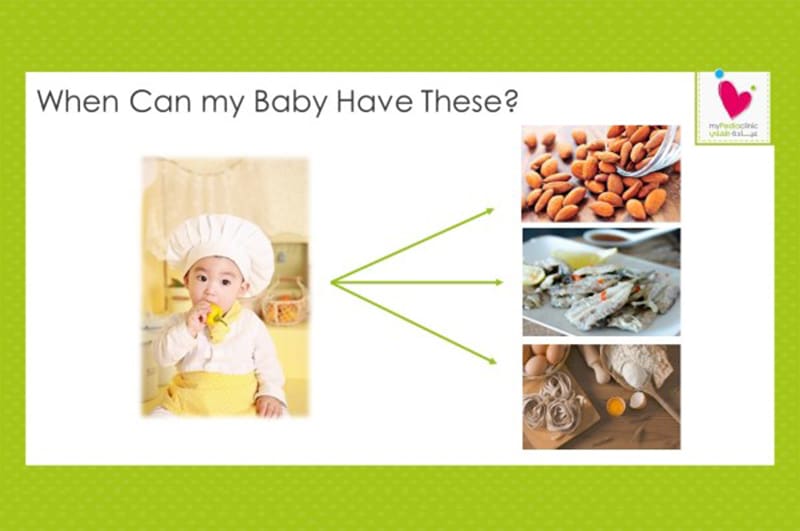
When Can You Give Your Baby Allergenic Foods? Complete Guide for Dubai Parents
One of the most common questions pediatricians and nutritionists hear from parents in Dubai is: “When can I safely introduce fish, eggs, peanuts, and other potentially allergenic foods to my baby?” This seemingly simple question has undergone a dramatic transformation in recent years as scientific research has revolutionized our understanding of food allergy prevention and early nutrition.
At myPediaClinic in Dubai Healthcare City (voted the best pediatric clinic in Dubai), we provide evidence-based guidance to help parents navigate the introduction of allergenic foods safely and effectively. This comprehensive guide, developed with expertise from Dr. Medhat Abu-Shaaban and our nutritional team, will answer all your questions about introducing allergenic foods to your baby.
The Revolutionary Change in Allergy Prevention Guidelines
For decades, parents were advised to delay introducing potentially allergenic foods—sometimes waiting until age 2, 3, or even older before offering fish, eggs, peanuts, or tree nuts. The thinking was that delaying exposure would give the immune system time to mature and reduce allergy risk. However, groundbreaking research has completely reversed these recommendations.
Multiple landmark studies, including the Learning Early About Peanut Allergy (LEAP) study published in 2015, demonstrated that early introduction of allergenic foods actually reduces the risk of developing food allergies. Delaying introduction not only fails to prevent allergies—it may actually increase risk and deprive babies of important nutrients during critical developmental windows.
Why the Guidelines Changed
Research showed that when infants are introduced to allergenic foods during a critical window of immune development (roughly 4-6 months of age), their immune systems are more likely to recognize these foods as safe. This process, called oral tolerance, helps prevent the body from developing allergic responses to foods. Delaying introduction misses this window, potentially increasing allergy risk.
Countries that traditionally introduced allergenic foods early (such as Israel with sesame) showed significantly lower rates of allergies to those foods compared to countries that delayed introduction. This real-world evidence, combined with controlled studies, led major medical organizations worldwide to revise their guidelines.
Current Guidelines: When to Introduce Allergenic Foods
Current recommendations from major pediatric and allergy organizations, including the American Academy of Pediatrics (AAP), European Academy of Allergy and Clinical Immunology (EAACI), and other international bodies, now advise early introduction of allergenic foods.
General Timeline for Allergenic Food Introduction
Around 4-6 Months: Once your baby has started eating a few basic first foods (such as single-grain cereals and pureed vegetables) and shows developmental readiness, you can begin introducing allergenic foods. This typically occurs around 6 months for most babies, though some may be ready slightly earlier.
Key Point: Allergenic foods should be introduced when your baby starts solid foods—not delayed until later ages as previously recommended.
Foods You Can Introduce at 6 Months
Given that your baby doesn’t have a diagnosed food allergy or significant family history of severe allergies, you can gradually introduce the following allergenic foods when starting solids around 6 months:
- Eggs: Well-cooked (scrambled, hard-boiled, or baked into foods)
- Peanuts: As smooth peanut butter mixed into purees or diluted with water (never whole peanuts due to choking risk)
- Tree nuts: As smooth nut butters or finely ground and mixed into foods
- Fish: Well-cooked, soft fish with bones removed
- Shellfish: Well-cooked shrimp, crab, or lobster (though typically introduced after other seafood)
- Wheat: As baby cereals or cooked pasta
- Soy: As tofu or soy-based foods
- Sesame: As tahini mixed into foods (especially relevant in Dubai’s Middle Eastern food culture)
The Important Exception: Cow’s Milk
While most allergenic foods can be introduced around 6 months, cow’s milk as a beverage should not be given until your baby is at least 12 months old. This exception isn’t primarily about allergies—it’s about digestive readiness and nutritional appropriateness.
Why Wait Until 12 Months for Cow’s Milk?
- Infants’ digestive systems aren’t fully prepared to process cow’s milk proteins before one year
- Cow’s milk can irritate the intestinal lining, potentially causing microscopic bleeding
- This intestinal bleeding can lead to iron deficiency anemia
- Cow’s milk lacks the appropriate balance of nutrients for infants under one year
- It’s too high in protein and certain minerals while lacking sufficient iron
- Breast milk or formula should remain the primary milk source until 12 months
Important Distinction: While cow’s milk as a beverage should wait until 12 months, small amounts of dairy products (yogurt, cheese, milk baked into foods) can be introduced around 6 months as part of complementary feeding. These forms are processed differently and are generally well-tolerated.
How to Introduce Allergenic Foods Safely
While current guidelines encourage early introduction of allergenic foods, safety remains paramount. Following proper introduction protocols ensures you can identify any reactions quickly and respond appropriately.
The Three-Day Rule
Continue using the traditional three-day waiting period when introducing any new food, including allergenic foods:
- Day 1: Introduce a small amount of the new food
- Days 2-3: Continue offering the same food, watching for any reactions
- Day 4: If no reaction occurred, you can introduce the next new food
This spacing makes it easier to identify which specific food caused a reaction if one occurs. If your baby shows concerning symptoms, you’ll know exactly what to attribute them to.
Start Small, Then Increase
When introducing an allergenic food for the first time:
- Offer a small taste initially (about ¼ to ½ teaspoon)
- Wait 10-15 minutes while observing your baby
- If no immediate reaction occurs, offer a slightly larger amount
- Over the next few days, gradually increase portion size
- Once the food is tolerated, continue offering it regularly (at least 1-2 times per week)
Timing and Setting for First Introduction
Choose appropriate timing when introducing allergenic foods for the first time:
- Introduce new allergenic foods at home, not at restaurants or when traveling
- Do it in the morning or early afternoon, not right before bedtime
- Ensure you’ll be home for several hours after introduction to monitor
- Don’t introduce multiple new allergenic foods on the same day
- Avoid introducing new foods when your baby is sick or has recently been vaccinated
- In Dubai, be mindful of timing regarding access to medical care if needed
Preparation Methods Matter
How you prepare allergenic foods affects both safety and allergen exposure:
- Eggs: Always fully cooked (runny eggs increase both allergy reaction risk and salmonella risk)
- Peanut butter: Thin with water, breast milk, or formula; or mix into purees (never give directly as it’s a choking hazard)
- Fish: Well-cooked, soft varieties, with all bones carefully removed
- Tree nut butters: Thinned and mixed into foods, never by the spoonful
- Whole nuts: Never give to babies or young children due to choking risk—only finely ground or as butters
Signs of Allergic Reactions to Watch For
While most babies will tolerate allergenic foods without problems, it’s crucial to recognize signs of allergic reactions so you can respond appropriately.
Mild to Moderate Reactions
Less severe reactions may include:
- Hives or red, itchy welts on the skin
- Eczema flare-ups
- Redness or swelling around the mouth
- Runny nose or congestion
- Itchy, watery eyes
- Nausea or vomiting
- Diarrhea or stomach pain
If your baby shows these symptoms after eating a new food, stop offering that food and contact myPediaClinic to discuss next steps.
Severe Reactions (Anaphylaxis)
Anaphylaxis is a severe, potentially life-threatening allergic reaction requiring immediate emergency care. Signs include:
- Difficulty breathing or wheezing
- Swelling of the lips, tongue, or throat
- Persistent coughing or choking
- Pale or blue skin coloring
- Weak pulse
- Dizziness or fainting
- Widespread hives or swelling
- Sudden tiredness or lethargy
If you observe any signs of anaphylaxis, call emergency services (999 in Dubai) immediately and seek emergency medical care.
Delayed Reactions
Some allergic reactions don’t appear immediately but develop hours later. These may include:
- Eczema developing or worsening
- Diarrhea or blood in stools (especially with cow’s milk protein allergy)
- Vomiting several hours after eating
- Extreme fussiness or discomfort
Keep a food diary noting what your baby eats and any symptoms that develop, which helps identify patterns and potential delayed reactions.
Special Considerations: High-Risk Babies
Some infants are at higher risk for developing food allergies and may need modified introduction protocols. High-risk factors include:
- Personal history of severe eczema
- Existing food allergies
- Strong family history of food allergies (parent or sibling with diagnosed food allergies)
- History of other allergic conditions (asthma, hay fever)
Modified Approach for High-Risk Infants
If your baby falls into a high-risk category, don’t delay allergenic foods, but do introduce them more carefully:
- Discuss your introduction plan with Dr. Medhat Abu-Shaaban at myPediaClinic before starting
- For very high-risk infants (severe eczema or existing food allergy), allergy testing before peanut introduction may be recommended
- The first introduction of high-risk foods (especially peanuts) may be done in the clinic under medical supervision
- Follow a structured introduction protocol as recommended by your allergist
- Be especially vigilant about monitoring for reactions
Even for high-risk infants, current evidence supports early introduction of allergenic foods—but with appropriate medical guidance and supervision.
The Importance of Regular Consumption After Introduction
Introducing an allergenic food once isn’t enough—regular, ongoing consumption appears necessary to maintain tolerance. Research suggests that after successfully introducing an allergenic food, it should be offered regularly (at least 1-2 times per week) to maintain immune tolerance.
Maintaining Allergenic Foods in the Diet
Practical ways to ensure regular consumption of introduced allergens:
- Scrambled eggs or egg muffins for breakfast several times weekly
- Peanut butter mixed into oatmeal or spread on toast
- Fish incorporated into dinner once or twice weekly
- Yogurt or cheese as regular snacks
- Wheat-based foods like pasta, bread, or crackers regularly
- Hummus or tahini (sesame) as a dip or spread
If you successfully introduce an allergenic food but then stop offering it for extended periods, tolerance may potentially be lost, though research on this aspect is still evolving.
Cultural Considerations for Introducing Allergenic Foods in Dubai
Dubai’s multicultural environment means families follow diverse dietary traditions. Understanding how to incorporate allergenic food introduction into various cultural eating patterns helps maintain both safety and cultural food practices.
Middle Eastern Diet Considerations
Traditional Middle Eastern foods offer natural opportunities to introduce allergens:
- Tahini (sesame): A staple that can be introduced early, mixed into vegetables or fruits
- Hummus: Contains both tahini and chickpeas (legumes), offering multiple food exposures
- Fish: Commonly consumed in Gulf cuisines, easily introduced as soft, deboned preparations
- Eggs: Featured in many traditional dishes, easy to offer scrambled or hard-boiled
South Asian Diet Considerations
South Asian cuisines, prevalent in Dubai, can accommodate allergenic food introduction:
- Lentil-based dals offer protein alongside egg introductions
- Fish is central to many South Asian cuisines, offering familiar introduction opportunities
- Wheat-based roti can be offered as finger foods once wheat is introduced
- Yogurt (dahi) is traditional and perfect for dairy introduction (in forms other than fluid milk)
Western Diet Considerations
Western eating patterns common among expatriates in Dubai:
- Eggs as omelets, scrambled eggs, or baked into muffins
- Peanut butter on toast or mixed into porridge
- Cheese and yogurt as regular snacks
- Fish sticks or salmon as protein sources
- Pasta and bread as wheat sources
Common Mistakes to Avoid When Introducing Allergenic Foods
Mistake 1: Waiting Too Long
Delaying allergenic foods beyond 12 months misses the critical window for oral tolerance development and may actually increase allergy risk. Don’t wait—introduce around 6 months when starting solids.
Mistake 2: Introducing Multiple Allergens Simultaneously
While you should introduce allergenic foods early, don’t introduce multiple new allergenic foods on the same day. Space them out using the three-day rule so you can identify which food caused a reaction if one occurs.
Mistake 3: Giving Whole Nuts or Chunky Nut Butters
Whole nuts, chunks of nuts, and thick globs of peanut butter are serious choking hazards for babies and young children. Always thin nut butters and never give whole nuts to children under 4-5 years old.
Mistake 4: Introducing When Baby is Sick
Wait until your baby is healthy to introduce new allergenic foods. Illness can complicate interpretation of symptoms and may potentially affect immune responses.
Mistake 5: Discontinuing After Successful Introduction
Once you’ve successfully introduced an allergenic food, continue offering it regularly. Long gaps in consumption may affect tolerance maintenance.
Mistake 6: Assuming Cooking Eliminates Allergens
While cooking can reduce allergenicity of some foods, it doesn’t eliminate it. Cooked foods are generally safer and less likely to cause severe reactions, but allergic individuals can still react to well-cooked allergenic foods.
Products and Tools to Help with Allergenic Food Introduction
Several products available in Dubai can help make early allergen introduction easier:
Pre-Made Allergen Introduction Products
Various brands offer measured doses of common allergens in convenient formats:
- Powdered allergen introduction products containing measured amounts of common allergens
- Puffed snacks containing multiple allergens in age-appropriate formats
- Single-allergen introduction cereals or powders
These products can be purchased online or at specialty stores in Dubai, though they’re not necessary—you can introduce allergens using regular foods from your kitchen.
Regular Foods Work Perfectly Well
You don’t need special products to introduce allergens. Regular foods from supermarkets work perfectly:
- Standard peanut butter (smooth, not chunky)
- Regular eggs from any Dubai supermarket
- Fresh or frozen fish
- Plain yogurt or soft cheese
- Wheat-based baby cereals or cooked pasta
- Tahini from the Middle Eastern section
Comprehensive FAQ About Introducing Allergenic Foods
Should I introduce allergenic foods if I’m still breastfeeding?
Yes, absolutely! Breastfeeding should continue alongside the introduction of complementary foods, including allergenic foods. Some research suggests that breastfeeding during allergenic food introduction may actually support tolerance development. Continue breastfeeding while introducing solids around 6 months as recommended by the World Health Organization and Dubai health authorities.
Can I introduce allergenic foods before 6 months?
Current guidelines suggest introducing allergenic foods around 4-6 months, once a few basic first foods have been tolerated. Some babies may be developmentally ready for solids slightly before 6 months (but not before 4 months). The specific timing should be based on your baby’s developmental readiness—ability to sit with support, showing interest in food, and having good head control. Discuss timing with Dr. Medhat Abu-Shaaban at myPediaClinic if you’re considering introduction before 6 months.
What if my baby refuses allergenic foods?
It’s normal for babies to refuse new foods multiple times before accepting them. If your baby refuses an allergenic food, don’t force it, but continue offering it regularly in different preparations. Try mixing it with accepted foods, varying the texture, or offering it at different times of day. Persistence usually succeeds—research shows it can take 10-15 exposures before a baby accepts a new food.
Do I need to introduce allergenic foods in a specific order?
No specific order is required for introducing allergenic foods. You can introduce them in whatever sequence makes sense for your family and your baby’s dietary progression. Some parents start with eggs since they’re easy to prepare and common in many cuisines. Others begin with peanut butter mixed into familiar foods. The key is introducing them all during the critical window, not the specific sequence.
Should I avoid allergenic foods during pregnancy or breastfeeding?
No, current guidelines recommend that pregnant and breastfeeding mothers consume allergenic foods normally (unless they have personal allergies to those foods). Maternal avoidance of allergens during pregnancy or breastfeeding does not prevent allergies in children and may potentially increase risk. Eating a varied diet including allergenic foods during pregnancy and lactation is safe and potentially protective.
What about family history of food allergies—should I still introduce allergens early?
Yes, even with family history of food allergies, current guidelines recommend early introduction of allergenic foods—but with additional precautions. Consult with Dr. Medhat Abu-Shaaban at myPediaClinic before beginning. For babies with siblings who have food allergies, discussion with an allergist and possibly pre-introduction testing may be recommended, especially for peanuts. However, delaying introduction isn’t advised even for high-risk babies.
Can I introduce multiple allergens in the same meal?
Once each individual allergen has been successfully introduced and tolerated separately using the three-day rule, you can combine multiple allergens in the same meal. However, for first-time introductions, offer each new allergenic food separately so you can identify which specific food caused a reaction if one occurs. After individual tolerance is established, mixing is fine.
What’s the difference between food allergy and food intolerance?
Food allergies involve the immune system and can cause rapid, potentially severe reactions including anaphylaxis. Food intolerances (like lactose intolerance) involve the digestive system and cause uncomfortable but not dangerous symptoms like gas, bloating, or diarrhea. Allergies require strict avoidance; intolerances may be manageable with smaller amounts or digestive aids. If you’re unsure which your baby has, consult myPediaClinic for proper testing and diagnosis.
How much of an allergenic food should I give once it’s successfully introduced?
After successful introduction, offer age-appropriate portions of allergenic foods as part of your baby’s regular diet. There’s no magic amount required daily, but regular exposure (at least 1-2 times weekly) helps maintain tolerance. Typical portions might include one egg several times weekly, a teaspoon of peanut butter in oatmeal twice weekly, or fish once or twice weekly. The goal is regular variety, not specific quotas.
What if my baby develops a rash after trying an allergenic food?
Not all rashes indicate food allergy. Babies commonly develop rashes around the mouth from contact with acidic or textured foods (contact dermatitis) that aren’t true allergies. True allergic rashes typically appear as hives (raised, itchy welts) and may spread beyond the immediate eating area. If a rash develops, take photos, stop offering that food, and contact myPediaClinic to discuss whether it represents an allergy requiring testing or just normal skin irritation.
Are there any allergenic foods I should never give my baby?
From an allergy perspective, all major allergenic foods can be introduced around 6 months. However, from a safety perspective, avoid certain forms: never give whole nuts (choking hazard), avoid honey before 12 months (botulism risk), don’t give fluid cow’s milk before 12 months (digestive issues), and avoid raw or undercooked eggs, fish, or meat (infection risk). Properly prepared, these allergenic foods are safe to introduce during the recommended window.
Can I do allergy testing before introducing allergenic foods?
Routine pre-introduction allergy testing isn’t recommended for babies without symptoms or risk factors, as it often gives false positives, leading to unnecessary avoidance. However, for high-risk babies (severe eczema, existing food allergy, strong family history), Dr. Medhat Abu-Shaaban may recommend allergy testing before introducing certain foods like peanuts. Testing should be interpreted by an experienced allergist, as results require careful clinical context.
What’s the difference between introducing cow’s milk in foods versus as a drink?
The distinction relates to amount and digestibility. Small amounts of dairy in foods (baked goods, yogurt, cheese) around 6 months are fine for introducing milk protein exposure. However, cow’s milk as a primary beverage before 12 months poses problems: it lacks appropriate nutrition for infants, contains excessive protein and minerals, may cause intestinal irritation and blood loss, and can lead to iron deficiency. Breast milk or formula should remain the primary milk source until 12 months.
Should I consult a doctor before introducing every allergenic food?
For typical, healthy babies without eczema or allergies, you don’t need a doctor’s appointment before introducing each allergenic food—just follow the safe introduction guidelines. However, schedule a consultation with myPediaClinic if your baby has severe eczema, existing food allergies, strong family history of food allergies, or if you have specific concerns. Dr. Medhat Abu-Shaaban can provide personalized guidance based on your baby’s individual risk factors.
What if my baby has a mild reaction—should I avoid that food forever?
Not necessarily. Mild symptoms like temporary redness around the mouth might not indicate true allergy. However, if genuine allergic symptoms occurred (hives, vomiting, breathing changes), stop offering that food and consult myPediaClinic for allergy testing before trying again. Never try re-introducing a food that caused concerning symptoms without medical guidance. Some mild allergies, particularly to milk and eggs, are outgrown, so testing after time has passed may show resolution.
How do I introduce peanuts to my baby in Dubai?
In Dubai, you can find smooth peanut butter at any major supermarket (Carrefour, Spinneys, Waitrose). Start by mixing about ¼ to ½ teaspoon of smooth peanut butter with breast milk, formula, or water to thin it to a consistency your baby can swallow safely. Alternatively, mix it into oatmeal or fruit puree. Offer a small taste first, wait 10-15 minutes, then offer more if no reaction. Never give peanut butter directly from the spoon or whole peanuts due to choking risk.
Can I introduce allergenic foods if my baby has eczema?
Yes, babies with eczema should still have allergenic foods introduced around 6 months—in fact, early introduction may be even more important for these higher-risk babies. However, if eczema is severe or not well-controlled, consult Dr. Medhat Abu-Shaaban at myPediaClinic before introduction, particularly for peanuts. Testing may be recommended for very high-risk babies. Well-controlled eczema alone doesn’t require delaying allergenic food introduction.
Are there specific brands of allergenic foods that are safer for babies?
No specific brands are inherently safer for allergy purposes—what matters is the food itself and how it’s prepared. For peanut butter, choose smooth (not chunky) without added honey (no honey before 12 months). For fish, choose low-mercury varieties regardless of brand. For eggs, any standard eggs are fine as long as they’re fully cooked. In Dubai, most major supermarkets carry all the basic allergenic foods you need without requiring specialty brands or imports.
What should I do if my baby’s daycare in Dubai won’t allow allergenic foods?
Some Dubai nurseries and daycare centers have “nut-free” or allergen-restricted policies to protect allergic children already enrolled. If your baby’s daycare won’t allow certain foods, you’ll need to adjust their introduction timing to when they’re at home with you. Successfully introduce the food during evenings or weekends, then maintain regular consumption at home. Discuss with the daycare about which foods are allowed—eggs, dairy, and fish are less commonly restricted than peanuts and tree nuts.
How long after introducing an allergenic food can a reaction occur?
Most IgE-mediated allergic reactions (the immediate-type allergies that can cause anaphylaxis) occur within minutes to 2 hours after eating the allergenic food. However, some reactions, particularly non-IgE-mediated reactions involving the digestive system, may be delayed by several hours or even longer. This is why monitoring continues for at least a few hours after introduction, and why the three-day observation period helps identify any delayed responses.
Comprehensive Care at myPediaClinic in Dubai Healthcare City
Introducing allergenic foods represents an important milestone in your baby’s nutritional journey. At myPediaClinic in Dubai Healthcare City (voted the best pediatric clinic in Dubai), we provide comprehensive support for families navigating allergenic food introduction and food allergy concerns:
- Pre-introduction consultations for high-risk infants
- Allergy testing when indicated
- Personalized allergenic food introduction plans
- Supervised first introductions for high-risk cases
- Nutritional counseling to ensure balanced diet
- Diagnosis and management of food allergies when they occur
- Emergency action plan development
- Regular follow-up and re-testing to check if allergies have been outgrown
- Support for families managing food allergies in Dubai’s international environment
Dr. Medhat Abu-Shaaban brings extensive expertise in pediatric allergies and nutrition, providing evidence-based guidance tailored to your family’s specific needs and circumstances. Our team understands the unique challenges of introducing allergenic foods in Dubai’s multicultural environment and can help you navigate these important nutritional decisions confidently.
Taking the Next Steps
The current understanding of food allergy prevention represents a dramatic shift from previous recommendations. Early introduction of allergenic foods—rather than delayed introduction—now represents the gold standard for allergy prevention. By introducing allergenic foods around 6 months when your baby starts solids, you take advantage of the critical window for oral tolerance development, potentially reducing your baby’s food allergy risk while providing important nutrients for growth and development.
If you have questions about introducing allergenic foods to your baby, concerns about your baby’s allergy risk, or need guidance for a high-risk infant, contact myPediaClinic in Dubai Healthcare City today. Our experienced team provides the personalized support and evidence-based guidance you need to navigate this important aspect of your baby’s nutrition safely and confidently.
Schedule a consultation with Dr. Medhat Abu-Shaaban and our nutritional team at myPediaClinic by calling 04 430 5926. Give your baby the best start in life with proper nutritional guidance from the best pediatric clinic in Dubai.